
Why California Has Strictest VIN Verification Requirements
October 18, 2025
VIN Verification Myths: Debunking Common Misconceptions
October 18, 2025
Need the right contact fast? Call CHP for freeway hazards, crashes, DUIs, and VIN checks. Reach the Sheriff for crimes, welfare checks, rural road issues, and neighborhood traffic complaints. Use the DMV for licenses, registrations, titles, plates, and records. Pick mobile services for on-site VIN verifications (REG 31), renewals, title transfers, plate delivery, and convenience. CHP/Sheriff responses are free but prioritized; DMV waits vary; mobile costs $50–$200. You’ll also see when each option saves time, money, and safety.
Roles and Jurisdictions Compared
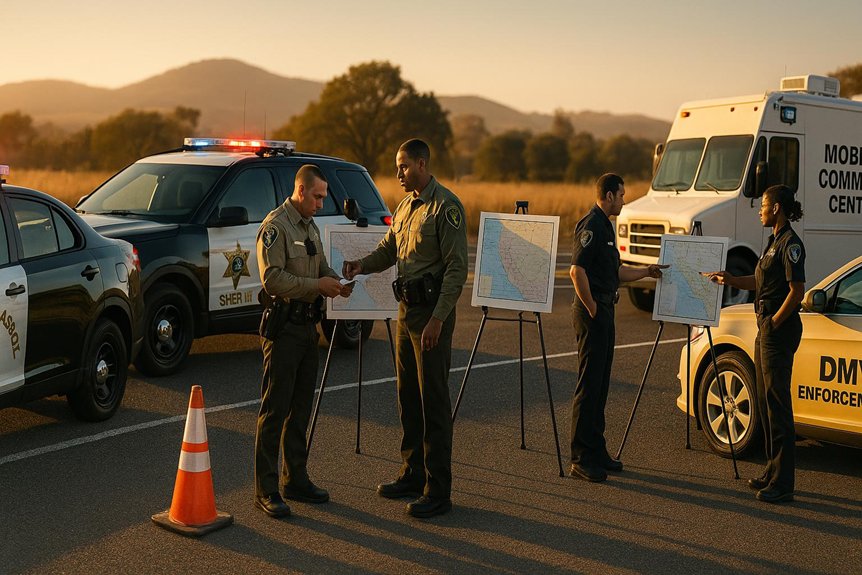
When you compare CHP, Sheriff, DMV, and Mobile patrols, the key difference is who they serve and where they operate. You’ll see CHP on state highways and interstates, focusing on traffic safety and statewide enforcement.
Sheriffs cover county areas, including unincorporated communities and jails, supporting local courts and regional policing. DMV investigators enforce vehicle-related laws behind the scenes—fraud, licensing, titles—not roadside traffic stops.
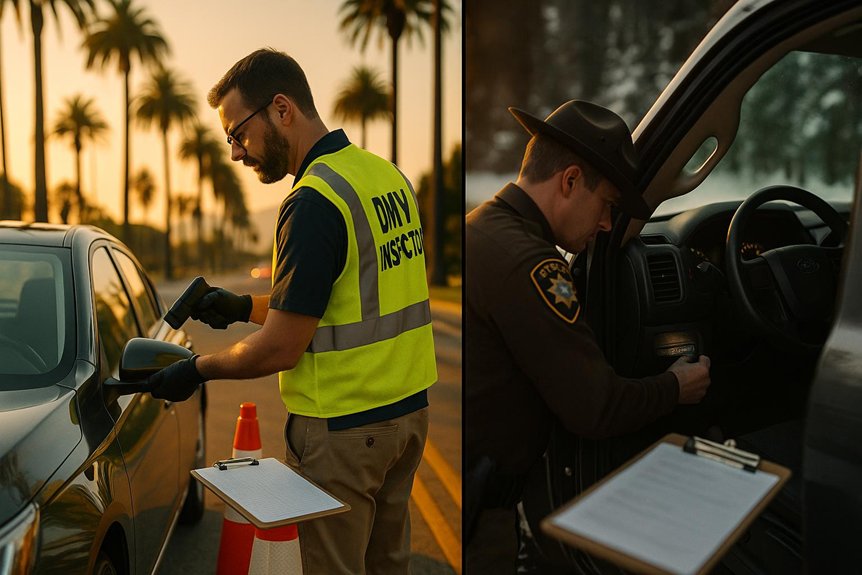
Mobile patrols serve private properties and communities, providing presence, deterrence, and quick coordination with public agencies. Both CHP and DMV can perform VIN verification at no cost, confirming your vehicle identification number matches official records. Knowing each role helps you feel grounded: you’ll know who to call, where authority begins, and how coverage fits your community.
Services You Can Get From Each Option
Understanding who does what sets you up to ask for the right help, so let’s map the services you can actually request. With CHP, you can report highway hazards, collisions, DUIs, aggressive drivers, and request freeway incident or commercial vehicle enforcement. You can also get VIN inspections and traffic crash reports.
From the Sheriff, you can request patrol response, welfare checks, restraining order service, neighborhood traffic enforcement, civil process, and detention-related info.
The DMV handles driver licensing, IDs, vehicle registration, titles, plates, records, disability placards, and testing.
Mobile services bring VIN verifications, registration renewals, plate delivery, title transfers, and onsite paperwork help to you. Mobile VIN verification is particularly useful when you need to inspect multiple vehicles at once, with services typically ranging from $50 for in-office verification to $100-$200 for mobile appointments.
When to Contact CHP, Sheriff, DMV, or Mobile Services
Think of each option as your go-to for a specific lane of problems: call CHP for highway collisions, hazards, DUIs, stranded vehicles on freeways, or traffic control during major incidents.
Reach the Sheriff for crimes in progress, threats to safety, rural road issues, welfare checks, or neighborhood enforcement concerns.
Contact the DMV when you need licensing, registration, titles, records, or reporting a sale.
Choose mobile services for roadside battery jumps, lockouts, tire changes, fuel delivery, or VIN verifications at your location.
Mobile VIN verifiers can complete the REG31 form on-site, eliminating long DMV wait times while providing the same certified verification needed for out-of-state vehicles or registration updates.
When in doubt, prioritize safety: emergencies go to 911; non-emergencies use local non-emergency lines or online portals.
Response Times, Costs, and Convenience
Although response times vary by location and workload, you’ll generally see CHP and the Sheriff prioritize emergencies first, with 911 calls getting the fastest dispatch and non-emergencies routed to queues or online reports.
For non-urgent traffic issues, expect callback windows or scheduled follow-ups. DMV timelines hinge on appointment availability; walk-ins can mean long waits.
Mobile services meet you where you are, often same day, cutting travel and queue time.
Costs differ: CHP and Sheriff responses are typically free, but citations, tows, or reports may carry fees. DMV charges standard transaction fees.
Mobile services add convenience premiums, yet you’ll save time and avoid crowds.
Best Choice by Common Scenarios and Use Cases
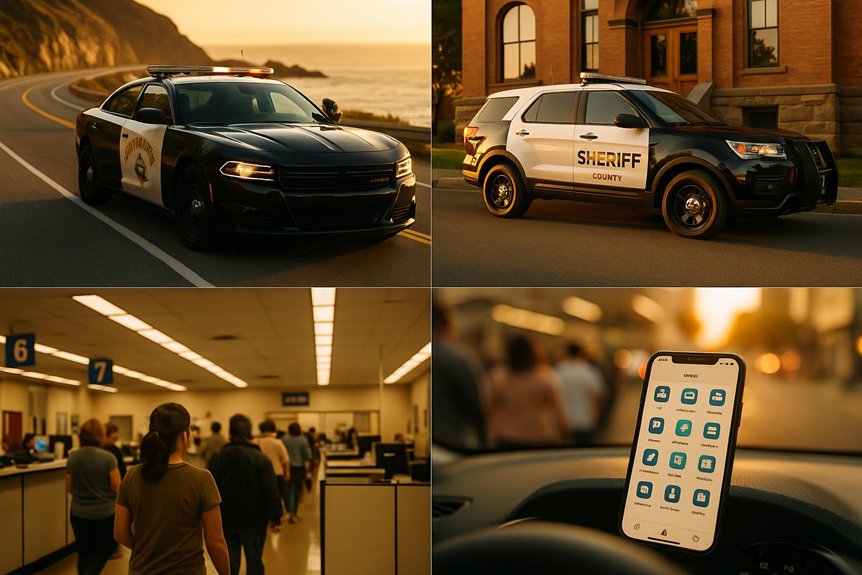
With response times, costs, and convenience in mind, the best choice depends on what you need done right now. If you’re stranded on a highway, call CHP for safety and quick traffic control. For neighborhood incidents, the Sheriff fits—reports, non-emergencies, or welfare checks. Need titles, registrations, or plates? Go DMV for official records. Choose mobile services when you want on-site VIN verifications, title transfers, or renewals without lines.
For collisions with injuries, dial 911; otherwise CHP or Sheriff based on location. For salvage inspections or out-of-state transfers, DMV or licensed mobile providers work. When time matters, mobile keeps you moving together.
Frequently Asked Questions
How Do CHP, Sheriff, DMV, and Mobile Services Share Data and Records?
They share data through secure state databases, CJIS connections, and DMV record systems, while mobile units sync via encrypted networks. You request updates, they verify identity, log access, and audit use, so everyone stays aligned, protected, and included in the loop.
What Accessibility Accommodations Do Each Agency’s Services Provide?
You’ll find each offers accessibility: CHP and sheriffs provide interpreters, ADA-compliant stations, assisted reporting, and TTY. DMV adds appointments, accessible forms, braille, large print, online renewals. Mobile units bring ramps, curbside assistance, multilingual support, and onsite accommodations.
How Do Language Support Options Differ Across These Agencies?
They differ in depth and availability. You’ll find CHP offers bilingual officers and interpreter access; sheriffs vary by county; DMV provides robust multilingual materials and appointments; mobile units rely on regional partners. Ask ahead to feel supported.
What Are the Complaint and Appeal Processes for Each Entity?
You file CHP and Sheriff complaints online or in-person; you can appeal through internal affairs, then oversight or civil channels. DMV complaints go online; appeal via hearings. Mobile vendors: contact support, escalate to supervisors, then regulatory or consumer agencies.
How Is Personal Data Privacy Handled by Each Service?
You’ll share data under strict rules: CHP follows state/federal law, Sheriff aligns with criminal-justice standards, DMV safeguards under DMV privacy statutes, and mobile providers use consent-driven policies. You can opt out, review records, and request corrections together.