Salvage Title to Rebuilt: VIN Verification Requirements
October 18, 2025
Commercial Truck VIN Verification: DOT Requirements and California
October 18, 2025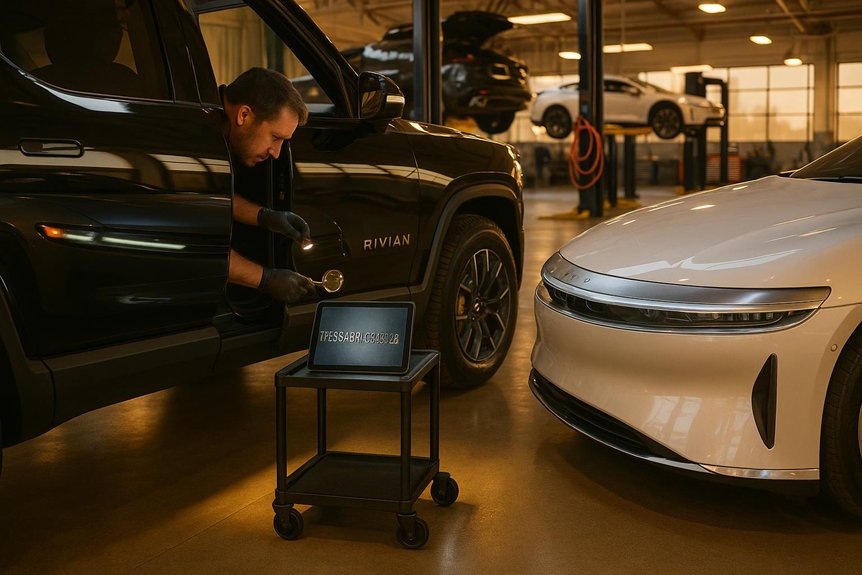
Verify any EV’s 17‑character VIN fast: decode WMI (positions 1–3) for maker (Rivian often 7FAR, Lucid 7JY), VDS (4–9) for body, restraints, motor/battery, and VIS (10–17) for year, plant, and serial. For Rivian, the 10th character marks year (M=2021…S=2025) and “N” signals Normal, IL; trims tie to motor count. For Lucid, position 8 flags powertrain. Avoid O/0 mix‑ups, mid‑year code shifts, and regional quirks. Use NHTSA decoders, history reports, and ECU‑scan PPIs to confirm more.
How EV VINs Are Structured and Decoded
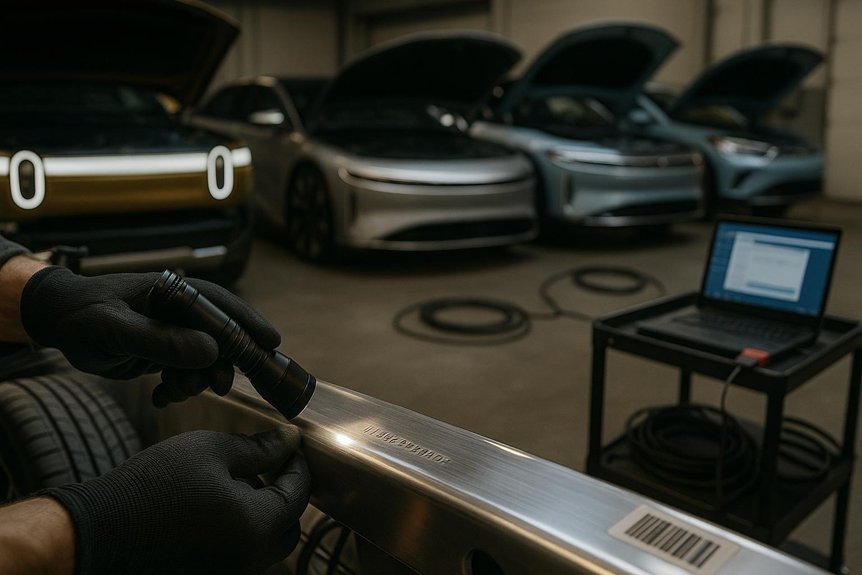
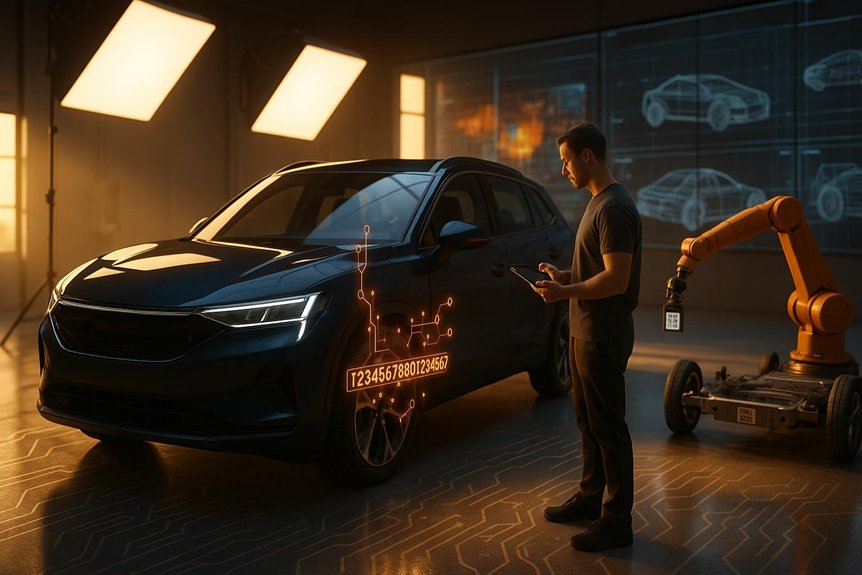
A Vehicle Identification Number (VIN) is a 17-character code that uniquely identifies an EV, and you can decode it in three parts: the WMI (positions 1–3) identifies the manufacturer and country, the VDS (4–9) describes the model, body, restraint systems, and in EVs often the motor/battery type, and the VIS (10–17) provides the model year, plant, and serial number.
You’ll read left to right: confirm the WMI, then map VDS characters to drivetrain and safety features, and finish with VIS for year and build sequence. Check digit position 9 validates integrity. Match labels on door jambs. Use trusted decoders. Share findings responsibly. Professional VIN verification services utilize state-of-the-art technology and comprehensive databases to ensure accurate decoding and validation of electric vehicle identification numbers.
Rivian VIN Patterns, Trims, and Year-to-Year Changes
Most Rivian VINs follow a consistent blueprint that lets you spot model, drivetrain, and build year quickly. You’ll read the WMI “7FAR” or similar Rivian prefix, then the VDS reveals body style and restraint codes. Look for model identifiers: R1T versus R1S.
Trim cues often align with motor count—Dual-Motor, Performance Dual-Motor, and Quad-Motor—encoded alongside GVWR. Battery size isn’t explicit, but the check digit and 10th character nail the year (M=2021, N=2022, P=2023, R=2024, S=2025). Assembly code “N” points to Normal, Illinois.
Over the years, Rivian refined motor/trim coding, so you’ll confirm updates by cross-checking model year tables. When registering an out-of-state Rivian in California, you’ll need an out-of-state title or registration card along with smog certification if the vehicle falls under state emissions requirements.
Lucid VIN Identifiers for Powertrains, Batteries, and Features
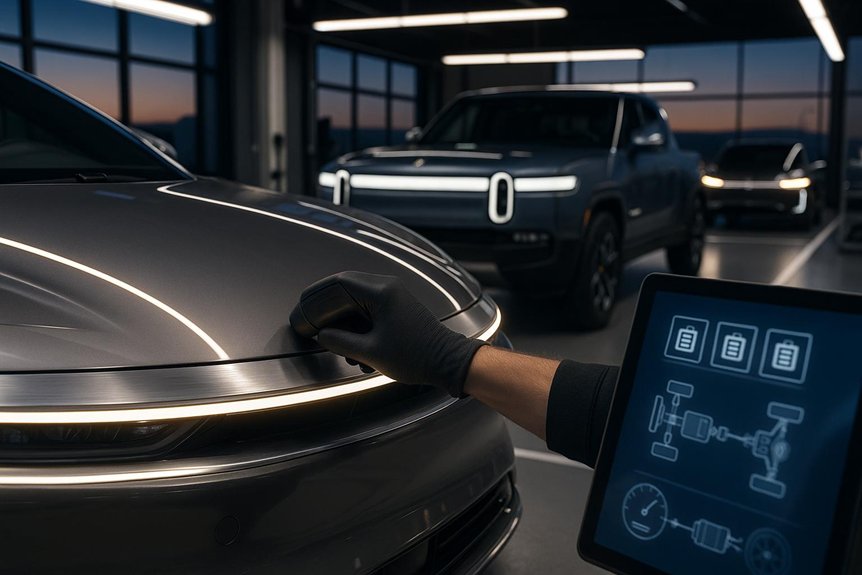
Though Lucid keeps marketing names fluid, its VINs still encode core specs you can verify quickly. You’ll read the WMI “7JY” for Lucid, then use positions 4–8 to confirm body, restraint, motor configuration, and series. Position 8 often flags powertrain: single‑motor RWD vs dual‑motor AWD.
Check position 10 for model year and 11 for plant. Battery capacity and chemistry map to the VDS and check digits—cross‑reference Lucid’s latest decoding tables to confirm pack size and rated voltage. Option codes tied to features—DreamDrive Pro, glass canopy, wheel size—appear in the descriptor section. Validate against the build sheet and service portal. A VIN verifier form documents vehicle existence and confirms the VIN matches your title during the physical inspection process.
Common Verification Pitfalls and Regional Variations
Even when a VIN looks valid, small mistakes can derail verification. You’ll see transposed characters, confusion between 0 and O, or missing check digits. EV makers update model codes mid-year, so a code that once meant “dual motor” might now map to a variant. Trim and battery identifiers vary across Rivian, Lucid, and others, and export versions complicate things.
Regional differences add traps. EU VINs often reflect type-approval nuances; Canadian records may lag; some Middle Eastern imports omit features expected in U.S. builds. Gray-market vehicles introduce mismatched options and warranty gaps. When details don’t align, you risk taxes, registration delays, and coverage surprises.
Practical Steps and Tools to Validate an EV VIN Before You Buy
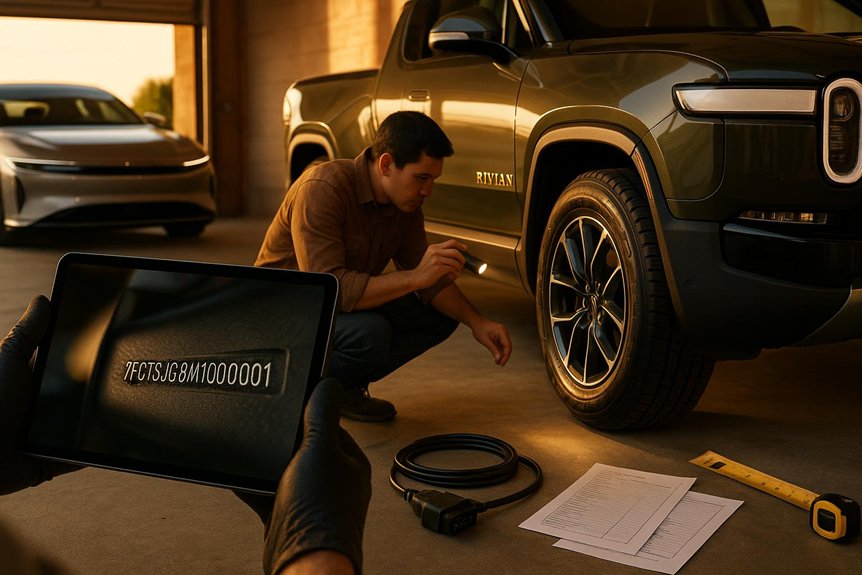
Start with what you can verify yourself, then layer trusted sources. Match the windshield VIN to door-jamb and title. Confirm length (17 characters), check for illegal characters (I, O, Q), and decode basics: make, model, year, plant. Use NHTSA’s free VIN decoder to validate structure.
Run a CARFAX or AutoCheck for ownership, mileage, and branded titles. Check recalls on NHTSA; confirm open campaigns are addressed. For Rivian or Lucid, confirm warranty status and software version with the manufacturer app or support. Cross-check build sheet or window sticker. Inspect etchings on glass.
Before paying, request a pre-purchase inspection that includes ECU scans.
Frequently Asked Questions
How Do VIN Discrepancies Affect EV Warranty and Service Eligibility?
VIN discrepancies can delay or void your EV’s warranty and service eligibility. You’ll face denied claims, scheduling hurdles, and parts mismatches. Verify records, correct titles, and sync dealer, insurer, and manufacturer databases early to protect coverage and community support.
Can Insurance Premiums Change Based on Specific EV VIN Attributes?
Yes. Insurers can adjust premiums based on EV VIN details—battery size, performance trim, safety features, build year, and theft risk. You’ll often save with advanced driver assistance, over-the-air security, strong crash ratings, and anti-theft markings.
Do Aftermarket Modifications Require Updating Any Vin-Related Records?
Yes. You don’t change the VIN, but you should update registration and insurance records after major mods—powertrain, battery, suspension, or autonomy hardware. You’ll protect coverage, align inspections, and keep your build welcomed on roads and in communities.
How Do Recalls Get Matched to EVS With Incomplete VIN Data?
They’re matched using partial VIN ranges, build dates, and component batch IDs. You check recalls by entering available VIN digits, your account info, or registration. Dealers cross-reference telematics, warranty records, and production logs so you’re included and supported.
Are Fleet or Leased EVS Assigned Different VIN Documentation Requirements?
Yes. You’ll follow the same VIN standard, but fleets and leases often face extra documentation: title/registration custodians, odometer disclosures, telematics IDs, and maintenance records. Coordinate with lessors and fleet managers so everyone’s data aligns and recall tracking stays seamless.