
Boat Trailer VIN Verification: When It’s Required
October 18, 2025
Food Truck VIN Verification: Commercial Vehicle Registration
October 18, 2025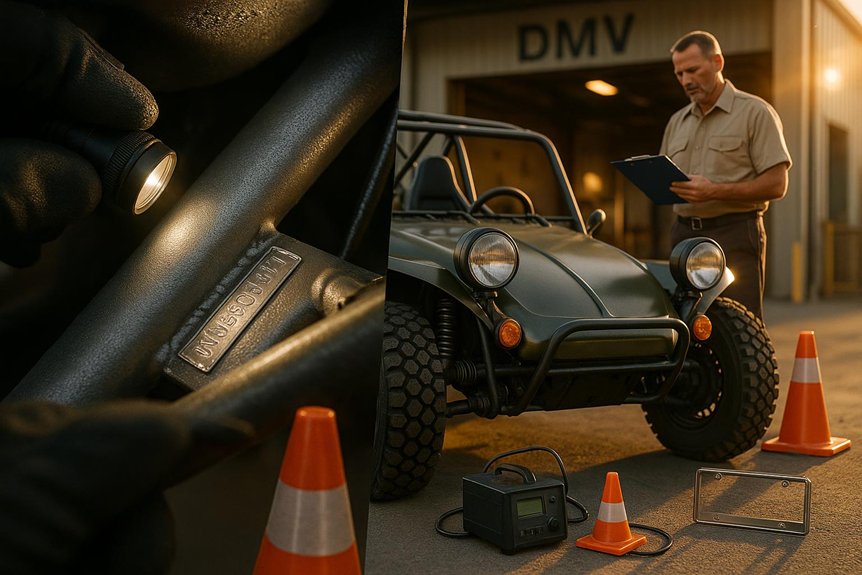
You need VIN verification to prove your dune buggy or sand rail’s identity so you can title, insure, and drive it on public roads. States may classify your build as assembled or reconstructed, which affects forms and emissions. Bring ownership proofs, notarized bills of sale, parts invoices, photos, and serial numbers. Expect inspections of lights, brakes, mirrors, horn, seatbelts, windshield, tires, and emissions gear. Fix mismatches early and book DMV/CHP appointments ahead. The next steps make approval smoother.
What VIN Verification Means for Dune Buggies and Sand Rails
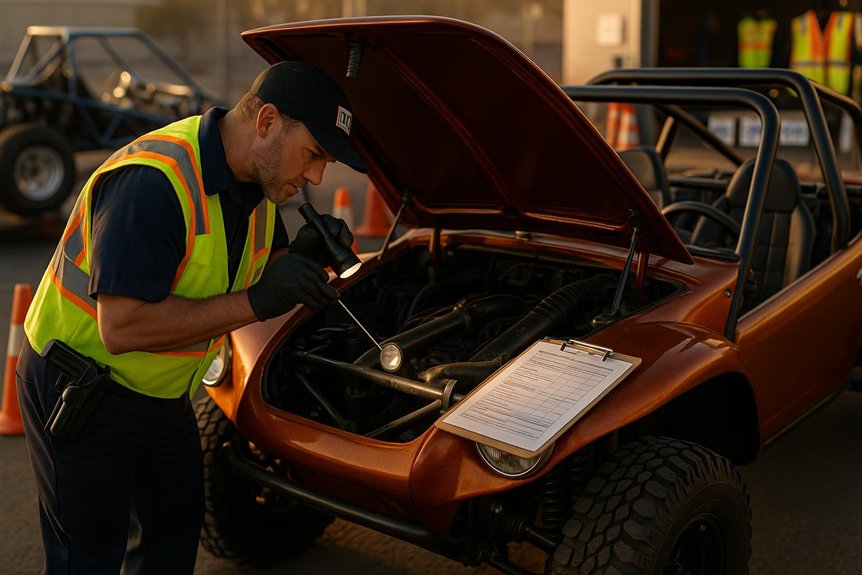
Although it might feel like paperwork, VIN verification confirms your dune buggy or sand rail’s identity so it can be legally titled, registered, and insured. You’re showing officials that your frame, engine, and stamped numbers match legitimate records, aren’t stolen, and meet the baseline for joining public roads. Inspectors check plates, placements, and condition, then document everything on official forms.
You’re not just passing a test; you’re proving your build belongs in the community of recognized vehicles. With a verified VIN, you can secure plates, buy proper insurance, and travel without hassle. The verification process also identifies discrepancies in VIN records across databases and acts as a protective measure against illegal activities. It’s a straightforward step that protects you, your investment, and your crew.
Assembled vs. Reconstructed: How States Classify Off-Road Builds
Before you chase plates, know how your state labels your build: assembled or reconstructed. “Assembled” usually means you created a vehicle from major components or a kit without a single donor VIN, while “reconstructed” typically means you restored or extensively modified a previously titled vehicle using replacement parts.
Your path depends on that label. Some states treat assembled buggies like homemade vehicles, assigning a new VIN and often titling by year of inspection. Others tag reconstructed builds to the original VIN and model year, with stricter equipment rules.
Check definitions, age-based exemptions, and emissions triggers. Align your build to fit the category confidently. Either way, you’ll need a VIN verification to confirm that your vehicle identification number matches the title and that the physical vehicle aligns with DMV records.
Documents, Forms, and Proof You’ll Likely Need
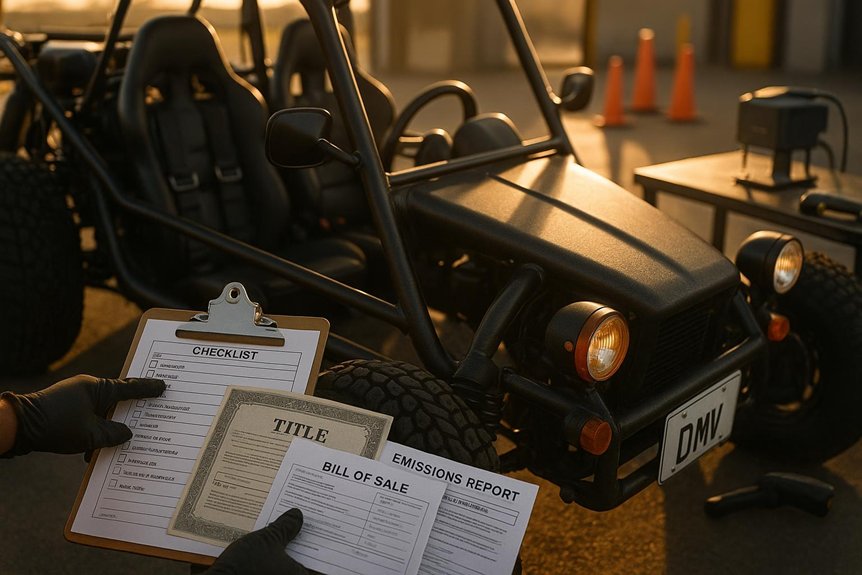
Once you know how your state classifies your dune buggy, you can gather the paperwork that proves what it’s and where its parts came from.
You’ll usually need ownership proof for the chassis or donor vehicle (title, previous registration, or bill of sale), plus a notarized bill of sale for the buggy itself.
Bring manufacturer invoices for major components: engine, transmission, frame, body, axles, lights, and tires.
Collect VINs/serials from engines and frames, and document any removed or missing VIN plates.
Complete your state’s specialty or assembled-vehicle application, odometer disclosure, and weight certificate if required.
Keep photos of the build stages.
Organize copies; carry originals to appointments.
The inspector will use a REG31 form to document your vehicle’s year, make, model, VIN location, number of wheels and axles, fuel type, and odometer reading during the physical inspection.
Inspection Steps: Safety Equipment, Emissions, and CHP/DMV Checks
When it’s time for inspections, you’ll move through three checkpoints: basic safety, emissions compliance, and an official VIN/identity review by the DMV or highway patrol.
First, confirm headlights, brake lights, turn signals, mirrors, horn, seatbelts, windshield, wipers, tires, and brakes meet state rules. Mount a visible rear plate light. Secure the battery, fuel lines, and exhaust; no leaks.
Next, meet emissions requirements for your model year—cat, PCV, charcoal canister, OBD readiness, or a referee visit if specially constructed.
Finally, present the VIN for verification; officers confirm numbers, receipts, and tamper-free tags. Stay respectful, prepared, and proud—you’re joining the roadworthy community.
Common Pitfalls and How to Streamline Your Registration Process
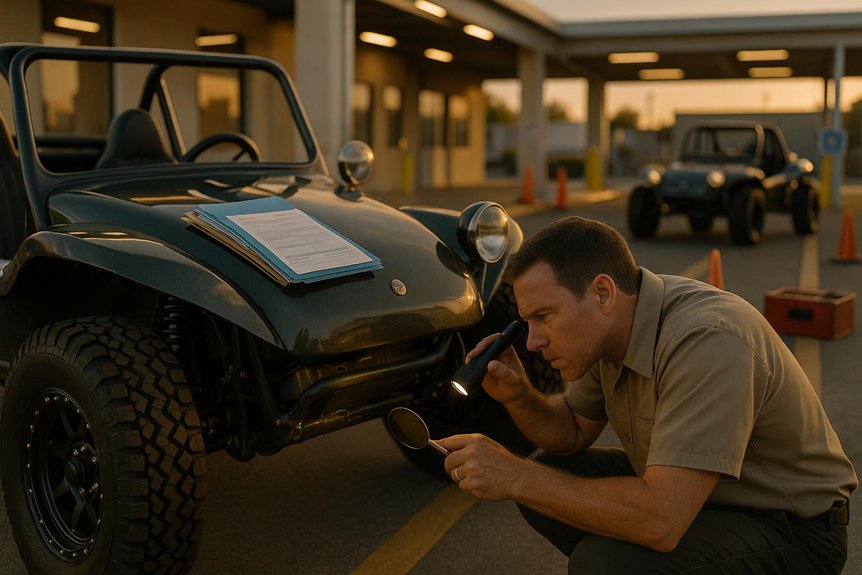
Cut through the red tape by sidestepping the mistakes that stall dune buggy registrations. Don’t show up without matching VINs on frame and paperwork. Fix unreadable plates, mismatched engine numbers, or missing receipts before any appointment. Bring a completed application, weight slip, brake/light certificates, insurance, and emissions documentation if required.
Book CHP and DMV early, and confirm your buggy’s classification: specially constructed, reconstructed, or kit. Label switches, mount mirrors, and verify lights, horn, wipers, and seatbelts work. Keep photos of the build and parts sources. Use checklists, copies of everything, and a binder. Be courteous; inspectors remember cooperative builders.
Frequently Asked Questions
Can I Insure a Street-Legal Dune Buggy, and Which Insurers Cover Them?
Yes, you can insure a street‑legal dune buggy. You’ll find coverage through specialty and mainstream carriers: Hagerty, Grundy, Progressive, GEICO, State Farm, and Nationwide. You’ll need a clean title, VIN, photos, safety equipment, and stated-value documentation.
How Do Seasonal or Temporary Registrations Affect Off-Road to On-Road Use?
They let you legally switch between off-road and on-road during set periods, but you must meet on-road equipment, insurance, and inspection rules when active. Plan start/stop dates, keep tags current, and document status. Your community’s experiences help.
What Costs Should I Expect Beyond DMV Fees for Legalization?
Expect costs for safety upgrades, parts, and labor: lights, mirrors, windshield, wipers, horn, DOT tires, muffler, catalytic converter, parking brake, seat belts. Budget inspections, emissions tests, alignment, insurance changes, title/bond fees, and possible engineering certificates.
Will Converting to Street Legal Impact Resale Value or Collector Status?
Yes—street-legal status often boosts resale value and broadens your buyer pool, but purist collectors may prefer untouched originals. Keep documentation, reversible mods, and period-correct parts. You’ll attract enthusiasts who want to drive together, not just display.
Are There Noise Limits or Curfew Restrictions for Street-Legal Dune Buggies?
Yes—most places impose exhaust noise limits and sometimes curfews. You’ll check local ordinances, state vehicle codes, and park or beach rules. Keep a compliant muffler, avoid “quiet hours,” and carry documentation. Neighbors appreciate respectful cruising together.