
Food Truck VIN Verification: Commercial Vehicle Registration
October 18, 2025
Same-Day Mobile VIN Verification: How Fast Can You Get Verified?
October 18, 2025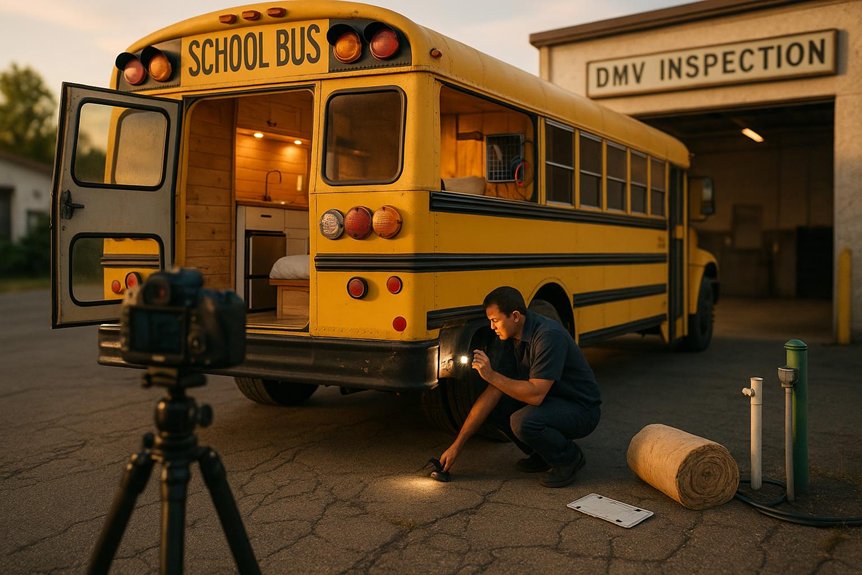
To reclassify a school bus as an RV, you’ll need a certified VIN verification to confirm identity, existence, and roadworthiness. Bring your title, bill of sale, insurance, lien releases, receipts for RV components, a build list, and clear photos of exterior, interior, utilities, and tanks. Book with your state’s approved agency, complete forms (like REG 31), and expect possible emissions or safety checks. Avoid missing documents, unclear VINs, or weak “habitable” features. Next, you’ll see exactly how to pass smoothly.
Understanding VIN Inspections for Converted School Buses

Even after you’ve finished the build, the VIN inspection is where your school bus officially begins its life as an RV. You’re confirming identity, safety basics, and that your rig matches what the state expects on the road. Inspectors verify the VIN plate, frame stamp, and exterior identifiers, then look for clear lighting, secure bodywork, and compliant tires.
You’ll guide them around the bus, answer simple questions, and show that nothing compromises roadworthiness. The purpose of this California VIN verification includes confirming the vehicle identification number matches the title, validating vehicle existence beyond paperwork, and preventing theft and fraud through the verification process. Treat it like welcoming a neighbor into your home-on-wheels.
Arrive with a clean exterior, easy access to VIN locations, and a calm plan. You’ve got this—and you’re not alone.
Required Documents, Photos, and Proof of Conversion
Before you schedule the VIN inspection, assemble a tight packet that proves your bus is now an RV. Gather your title, bill of sale, proof of insurance, and any lien releases. Include receipts for installed RV components: bed, galley, fixed stove, sink, potable water, fridge, toilet, permanent power, and seating with table. Add a build list summarizing materials, costs, and dates.
Print clear photos: exterior (all sides, VIN plate), interior zones (sleeping, cooking, sanitation, dining), utilities (propane, electrical panel, inverter, batteries), and tanks (fresh, gray, black). Label every image. Finish with a signed statement affirming permanent installation and personal use. The inspector will document everything on the REG31 form, recording your vehicle year, make, model, VIN location, fuel type, number of wheels and axles, and odometer reading to confirm your converted bus matches the title and meets reclassification requirements.
State-Specific Agencies and Appointment Procedures
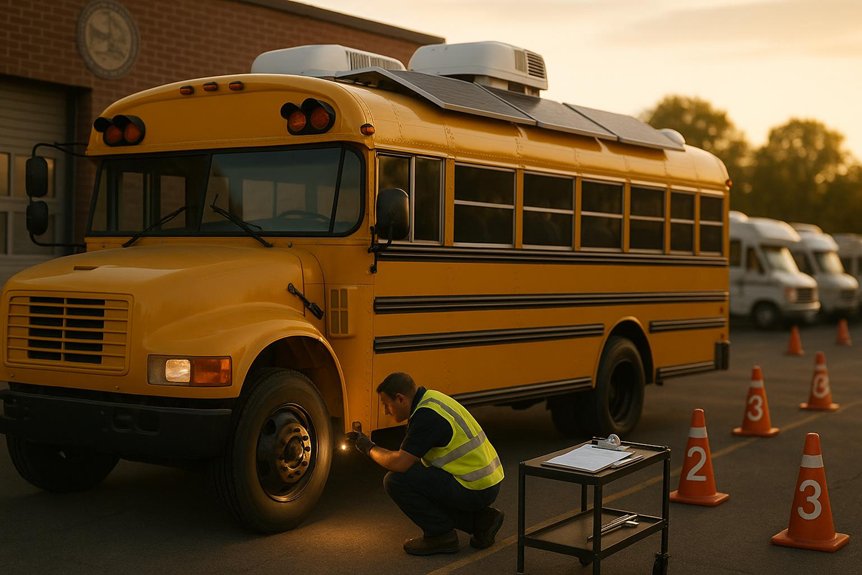
Confirm whether appointments happen at fixed offices, weigh stations, or mobile inspections. Some states require pre-clearance emails; others need in-person forms before booking.
Ask about fees, emissions or safety add-ons, and whether the inspector needs power or access to interior systems. Arrive early, bring originals, and keep digital backups ready.
In California, VIN verification must be documented on the REG31 form, capturing year, make, model, and VIN to ensure the number matches your title and prevents fraud during reclassification.
Common Mistakes That Cause Delays and How to Avoid Them
Although the process seems straightforward, small oversights routinely stall RV reclassification after a school bus conversion. You’re not alone—these hiccups happen to dedicated builders every week.
- Missing proof of ownership or lien release: gather titles, bills of sale, and any bond paperwork.
- Incomplete VIN visibility: clean stamping areas, photograph them, and verify plates match frame stampings.
- Safety equipment gaps: install a fire extinguisher, smoke/CO detector, and labeled exits.
- Inadequate “habitable” features: show permanent bed, galley, water, power, and storage.
- Sloppy documentation: date photos, label systems, and maintain receipts.
- Appointment surprises: confirm inspector checklists, bring duplicates, and arrive early.
Step-By-Step Path to Reclassification From Bus to RV
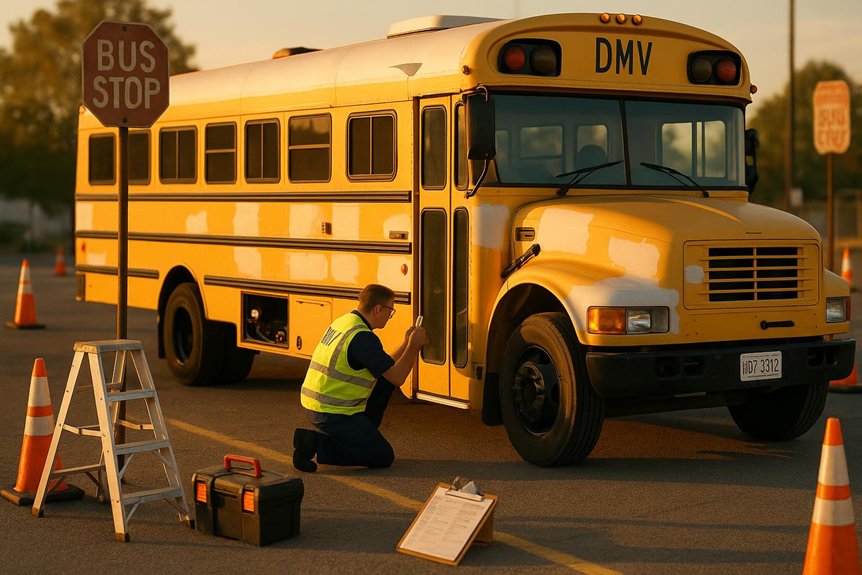
Once you’re ready to move from build to paperwork, break the process into clear checkpoints so nothing slips. Gather proof of conversion: photos of bed, galley, seating, power, plumbing. Secure receipts, weight slip, and insurance quoting the RV use. Confirm your VIN matches your title and frame.
Book a certified VIN verification; bring ID and documents. Request a temporary travel permit if required. Complete your state’s RV reclassification form; list installed amenities. Submit emissions or safety inspections as needed. Pay fees, then schedule DMV or state police inspection.
Receive the new title class. Update registration and insurance. Celebrate—your rig now belongs on the road.
Frequently Asked Questions
How Does RV Reclassification Affect Insurance Premiums for Converted School Buses?
It usually lowers premiums by classifying you as an RV, not a commercial bus. You’ll access RV insurers, mileage limits, and agreed-value options. Provide photos, receipts, and safety upgrades. Expect savings, though location, usage, and coverage levels still shape costs.
Are Emissions Testing Requirements Different After Converting a Bus to an RV?
Yes, they can change. After conversion and RV title, you’ll usually follow your state’s RV emissions rules, not commercial bus standards. Check local DMV and county programs, especially for diesel exemptions, age-based cutoffs, and inspection frequency.
Can I Finance or Refinance a Converted School Bus as an RV?
Yes, you can, but lenders vary. You’ll boost approval by titling it as an RV, documenting professional or quality DIY work, sharing photos, appraisals, and insurance, and targeting RV-specialist lenders or credit unions that welcome unique rigs.
What Taxes or Registration Fees Change After RV Reclassification?
Yes—after RV reclassification, you’ll typically pay RV registration fees, sometimes lower personal property taxes, and RV-specific excise or weight fees. You may qualify for campground-style permits and emissions exemptions. Check your state’s DMV and county tax assessor.
How Do HOA or Zoning Rules Impact Parking a Newly Classified RV?
They still can restrict parking. You’ll check HOA bylaws and city zoning codes for RV definitions, size limits, setbacks, and time limits. Ask for written approval, explore permits or screening, and coordinate with neighbors to keep harmony.