
REG 31 Form: Line-by-Line Completion Tutorial
October 18, 2025
Out-of-State Military: VIN Verification Extensions and Exceptions
October 18, 2025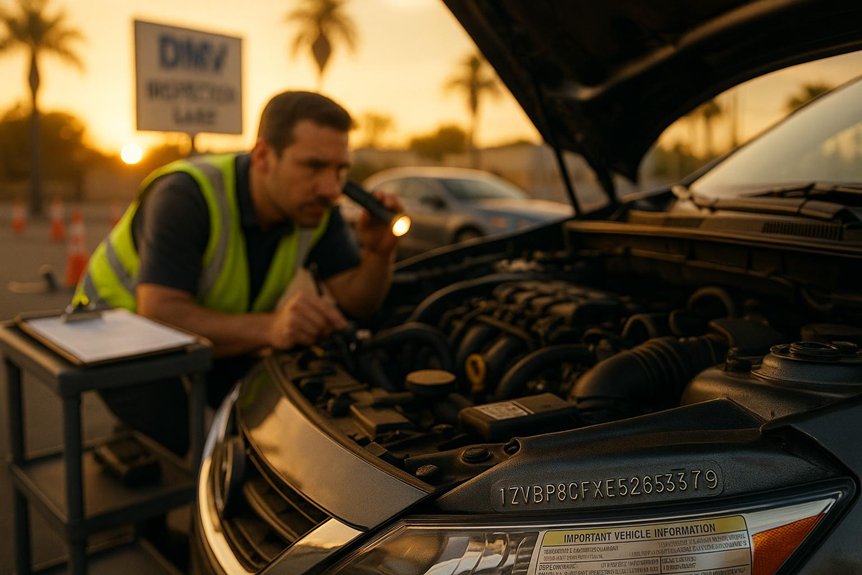
At a California VIN verification, you’ll show the title/registration, bill of sale, ID, and insurance, then inspectors match the dash, door jamb, and frame VINs, checking fonts, rivets, and plates for tampering. They verify make, model, body style, color, fuel type, odometer, emissions/federal labels, and note modifications. DMV, licensed verifiers, or law enforcement can do it; CHP handles salvage, no record, or altered VINs. Mismatches, missing labels, or sketchy plates trigger rejection. Here’s how to pass smoothly.
What DMV Inspectors Physically Examine on Your Vehicle
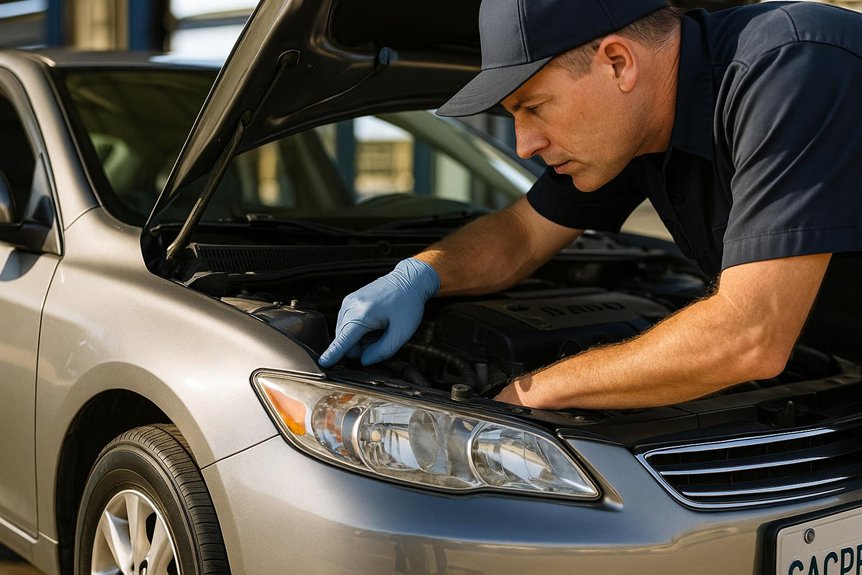
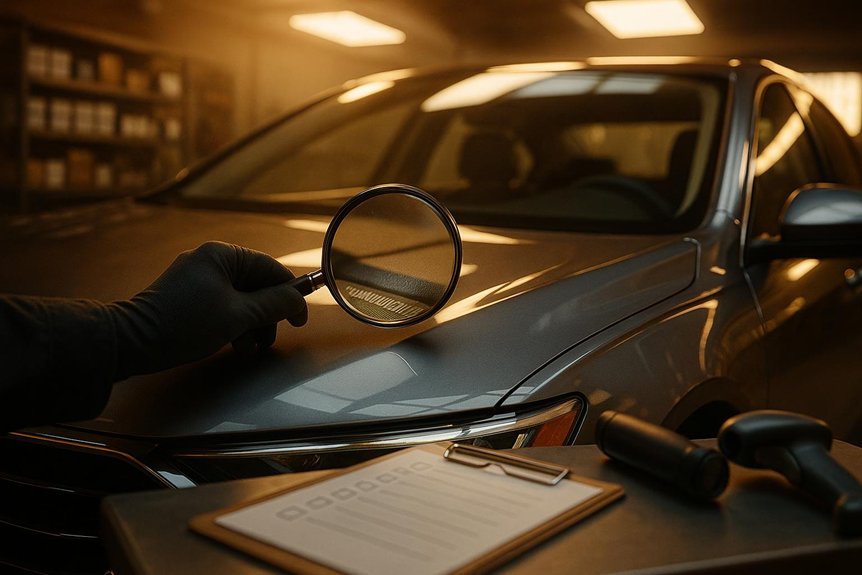
Ever wonder what a DMV inspector actually looks at during a VIN verification? They start with the primary VIN plate—usually on the dashboard by the windshield—and confirm it matches the stamped frame or door jamb VIN. They’ll check for tamper marks, mismatched rivets, odd fonts, or scratched surfaces.
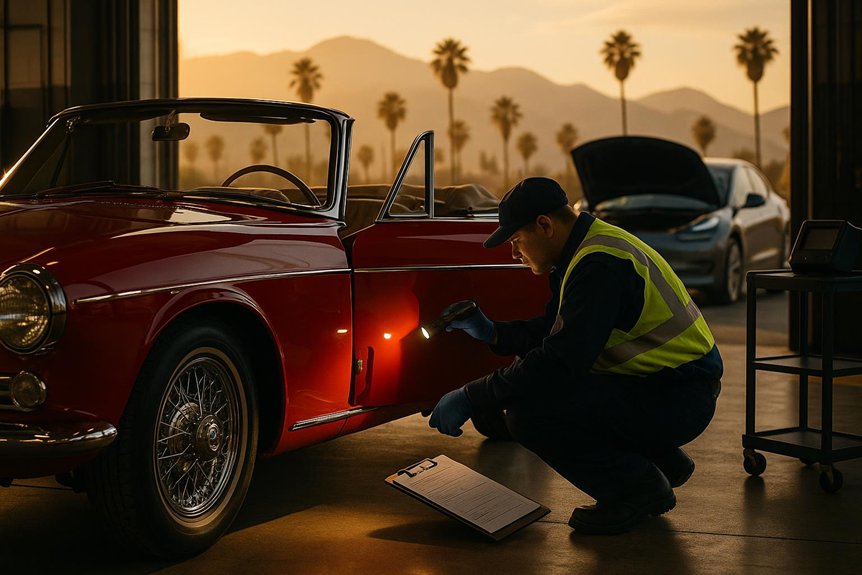
You’ll see them compare body style, make, model, color, and fuel type to what’s expected. They’ll note odometer reading and look for aftermarket changes that affect identification, like engine swaps or altered emissions equipment.
Expect a quick look at the engine bay and frame rails for clean, legible stamps so your vehicle’s identity feels solid. This verification process helps prevent theft and fraud by identifying discrepancies in VIN records across multiple databases.
Documents and Labels You Must Present
Paperwork matters. Bring your current title or out‑of‑state registration, proof of ownership (bill of sale or dealer invoice), and a valid government ID. Have any lien release, odometer disclosure for vehicles under 10 years old, and smog certificate if applicable. Match your insurance card name with your ID.
Present the federal certification label on the driver’s door jamb, the public VIN plate at the windshield, and any secondary VIN labels or frame stampings. If the manufacturer’s label is missing or damaged, bring supporting documents that explain why. Keep everything organized, originals handy, and copies ready. The inspector will record vehicle year, make, model, and VIN on the REG31/VIN verifier form to confirm that the identification number matches your title. You’ve got this, and you belong here.
Who Can Perform a VIN Verification and When CHP Is Required
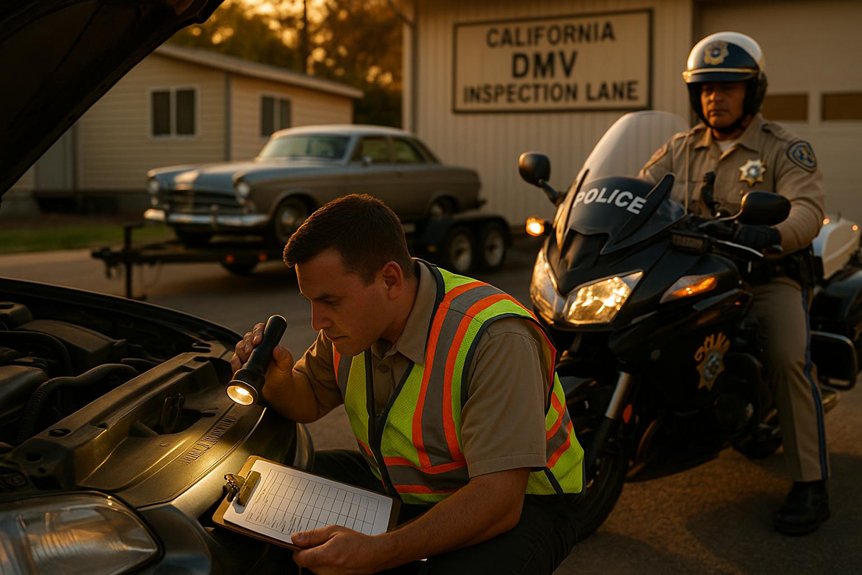
Although the rules vary by state, most VIN verifications can be done by DMV employees, licensed vehicle verifiers, or law enforcement. In California, you’ve got options: visit a DMV field office, schedule a licensed mobile verifier, or use local police when available. You’re part of a community that values doing it right the first time.
CHP becomes required when the vehicle has no record on file, a salvage or junk history, a VIN that’s altered or missing in standard locations, an out‑of‑state title with discrepancies, or a specially constructed, kit, or gray‑market vehicle. When in doubt, book CHP—they’re the final authority.
During the inspection, verifiers follow the REG31 form from top to bottom, documenting vehicle year, make, model, VIN location, number of wheels and axles, fuel type, US Federal Certification Label status, and odometer reading.
Common Red Flags and Reasons for Rejection
Knowing who can verify a VIN is only half the battle; you also need to spot the issues that get verifications rejected. Inspectors look for mismatched VINs between the dash, door sticker, frame, and paperwork. Missing or unreadable VIN plates, scratched-off rivets, or altered stamps raise alarms.
So do out-of-state titles with errors, salvage or junk histories without disclosures, and VINs that don’t decode to your make, model, or year.
Expect rejection for engine swaps without documentation, missing emissions labels, incorrect weight ratings on trucks, or odometer discrepancies. Loose plates, homemade tags, or tampered fasteners suggest fraud. If records conflict, they’ll halt verification.
Tips to Prepare and Speed Up Your Verification
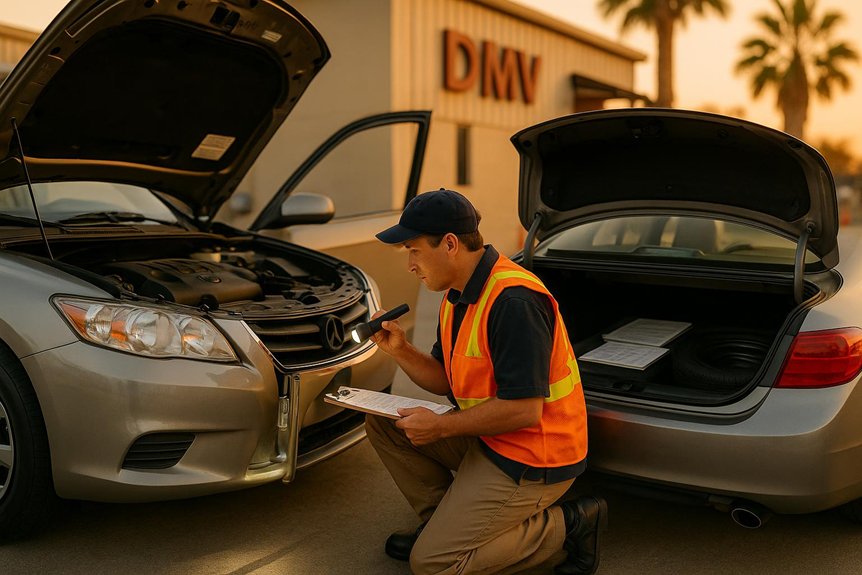
Preparation pays off when you show up with a clean car, matching documents, and clear VIN plates. Bring your title, registration, bill of sale, smog proof (if needed), and ID. Print any out-of-state lien release. Verify the VIN on the dash, door jamb, engine, and frame all match your paperwork.
Schedule an appointment or use a licensed mobile verifier to skip DMV lines. Park in good light, pop the hood, disengage doors, and remove plate frames or covers. Charge the battery so power locks and hood releases work. Arrive early, stay friendly, and follow directions. You’ll move through confidently—part of the prepared crowd.
Frequently Asked Questions
How Long Is a VIN Verification Certificate Valid in California?
It’s valid for 90 days. You’ll want to complete registration within that window so everything stays smooth. If it expires, you can always get a fresh verification. You’ve got this—stay on track, and your paperwork will align.
Can I Complete VIN Verification if the Vehicle Is Out of State?
Yes—you can. If the vehicle’s out of state, you’ll arrange VIN verification where it’s located. Use local law enforcement, DMV-equivalent, or licensed verifiers. Keep forms ready, confirm fees, and schedule early so everything flows smoothly.
What Fees Apply for DMV Versus Third-Party Verifications?
DMV VIN verifications are typically free, though you’ll still pay registration fees. Third-party verifiers charge, often $40–$120, plus travel or rush fees. Ask upfront for a written quote, accepted payment methods, and any mobile-service surcharges to feel included.
Is an Appointment Required, or Are Walk-Ins Accepted Statewide?
Walk-ins are accepted at many DMV offices, but availability varies; some locations require appointments. You’re safest booking ahead online. If lines stress you, consider licensed verifiers or AAA offices, which often accept members without appointments.
Does VIN Verification Affect Smog Check or Title Transfer Timelines?
Yes—VIN verification can delay smog checks and title transfers if scheduling’s tight or issues arise. Plan it first, bring complete documents, and you’ll keep momentum. Coordinate appointments together so you stay on track with the community’s timelines.