
Out-of-State Military: VIN Verification Extensions and Exceptions
October 18, 2025
Rental Car Conversion: VIN Verification for Fleet Disposal
October 18, 2025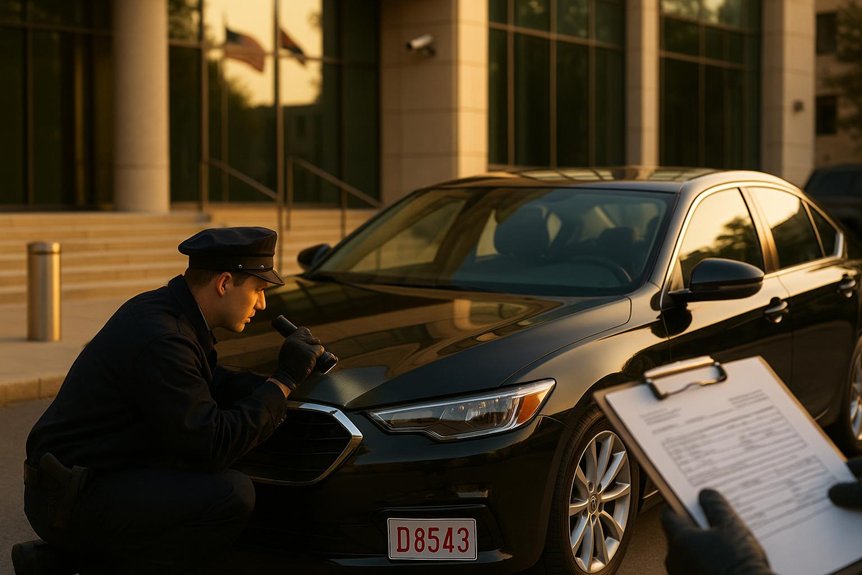
To verify a diplomatic vehicle’s VIN, match physical identifiers (dash, door jamb, chassis) to the title/registration or certificate of origin, plus the diplomatic plate assignment and credential. Coordinate with your DMV, the U.S. Department of State’s Office of Foreign Missions, and, if needed, local law enforcement. Photograph each VIN point, note anomalies, and cross-check OEM data. Respect immunities and share only necessary data. Log every step to avoid delays, penalties, or rejections. Next, you’ll see the exact workflow and pitfalls.
Understanding Diplomatic Plates, Immunities, and VIN Data Limits
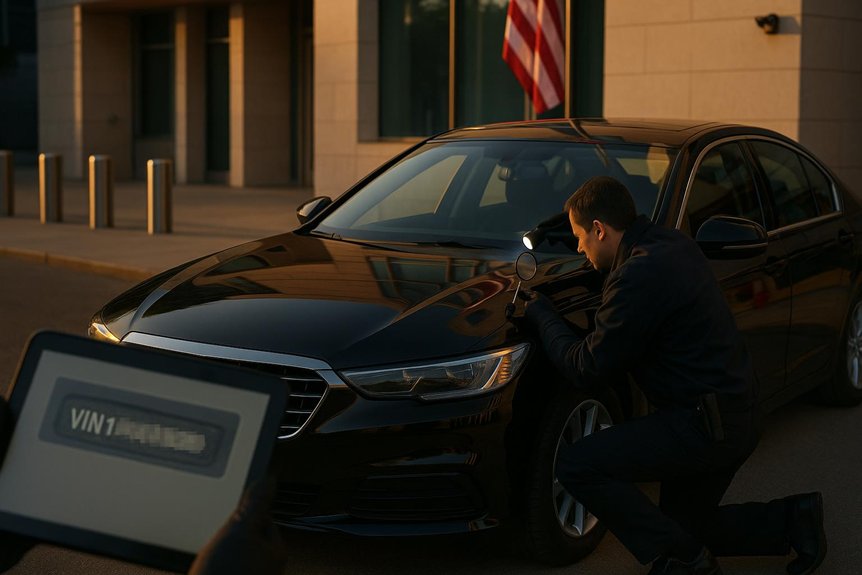
When you verify a diplomatic vehicle’s VIN, you’re working within a system shaped by special license plates, treaty-based immunities, and strict data access limits. You identify plate formats that signal embassy, consulate, or international organization status and respect that these plates link to privileges you can’t ignore.
Immunities don’t erase accountability, but they do narrow enforcement and contact paths. You confirm VINs without overreaching, sharing only the minimum necessary. Data from national and manufacturer databases may be partial or masked, so you corroborate through approved channels.
Your steady, respectful approach helps everyone feel protected, included, and professionally understood. VIN verification is a DMV inspection that confirms vehicle existence and ensures the vehicle identification number matches the title, even when working with diplomatic vehicles subject to special protocols.
Required Documents and Agencies Involved in Verification
At the counter or curbside, you’ll need a tight packet of proofs: the vehicle’s VIN-facing documents (manufacturer’s certificate of origin or current title/registration), the diplomatic plate assignment letter, and the owner’s diplomatic credential or mission ID. Bring a mission authorization memo if the custodian isn’t the titled owner. Include insurance evidence and any customs entry or exemption records for imported units.
You’ll coordinate with your state DMV or motor vehicle agency, plus the U.S. Department of State’s Office of Foreign Missions (OFM). Local law enforcement or inspection stations may validate VINs. Your mission’s administrative office helps align names, plate assignments, and document authenticity. The physical inspection documents not only the VIN but also the vehicle’s make, model, year, mileage, and GVWR specifications to confirm the vehicle configuration matches official records.
Step-by-Step Process for Verifying Embassy and Consulate Vehicles
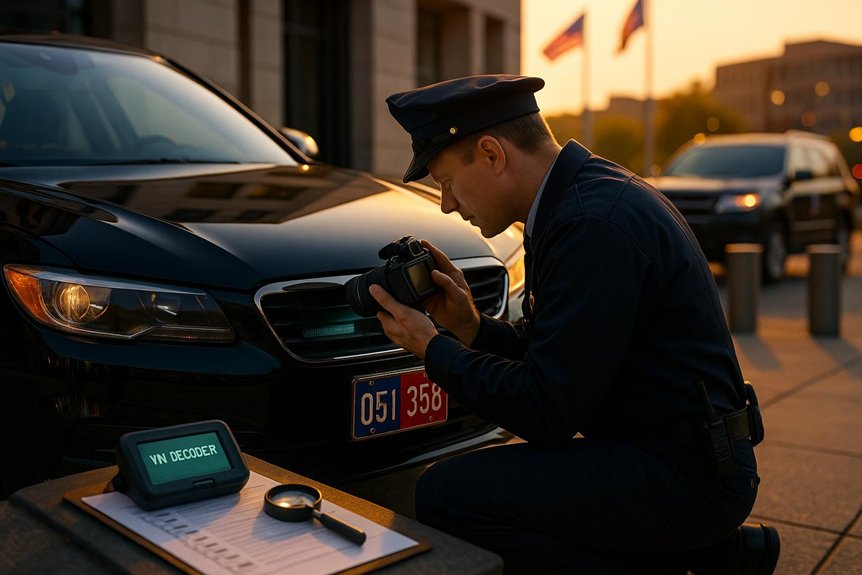
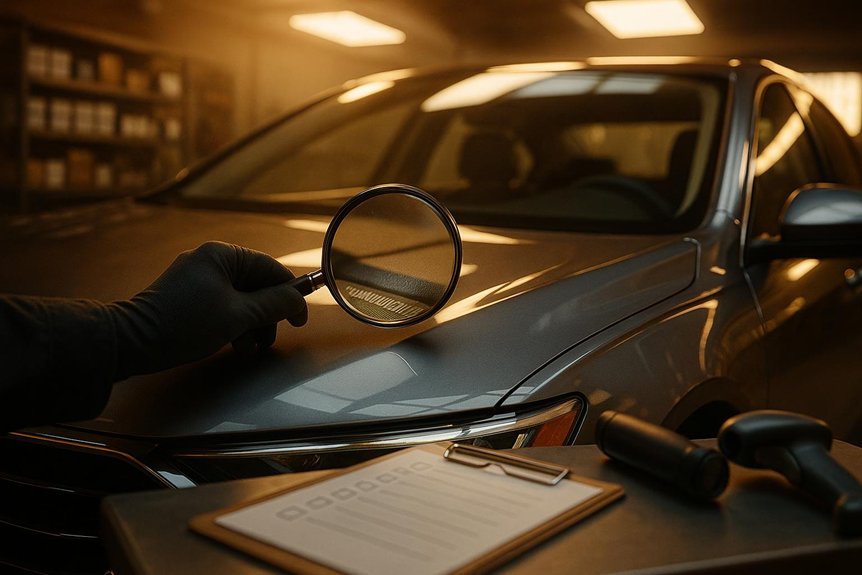
Although each jurisdiction has quirks, the verification starts with confirming you’ve got the right vehicle and records in hand, then scheduling the proper check. Gather your VIN sources: dashboard plate, door jamb label, chassis stamp, and any OEM build sheet. Match them against your diplomatic registration and title equivalents. Photograph identifiers and note deviations.
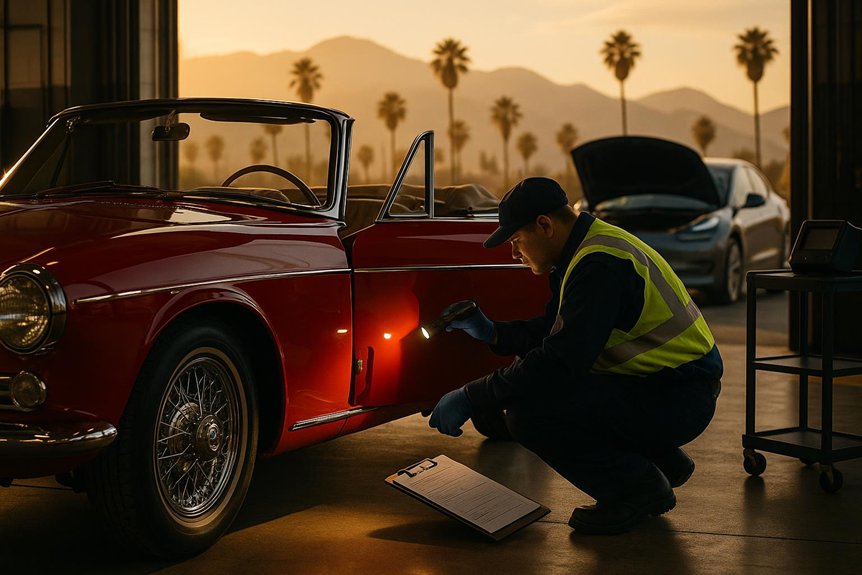
Next, book an inspection with the designated authority or authorized verifier. Arrive with the vehicle, keys, and documents. Let the inspector access compartments and lighting. They’ll compare VINs, engine numbers if applicable, and security features. When aligned, obtain the verification certificate and log chain-of-custody details for your mission’s records. The inspection validates that the vehicle identification number matches official records, helping prevent theft and fraud even for diplomatic vehicles.
Compliance Risks, Common Pitfalls, and How to Avoid Them
Even with diplomatic plates and privileges, VIN verification carries real compliance risk if you skip details or assume exemptions apply. You face penalties, rejected registrations, delayed clearances, and reputational damage that reflects on your mission. Don’t rely on verbal assurances or outdated lists; confirm current host-country rules and treaty carve‑outs.
Common pitfalls include misreading characters, ignoring secondary VIN locations, mismatching chassis and paperwork, and missing recalls or theft flags. Avoid them by photographing each VIN point, cross-checking manufacturer data, and documenting chain‑of‑custody. Log every step, keep copies accessible to your team, and timestamp communications. When unsure, pause, escalate, and verify before you submit.
Best Practices for Law Enforcement, Insurers, and Fleet Managers
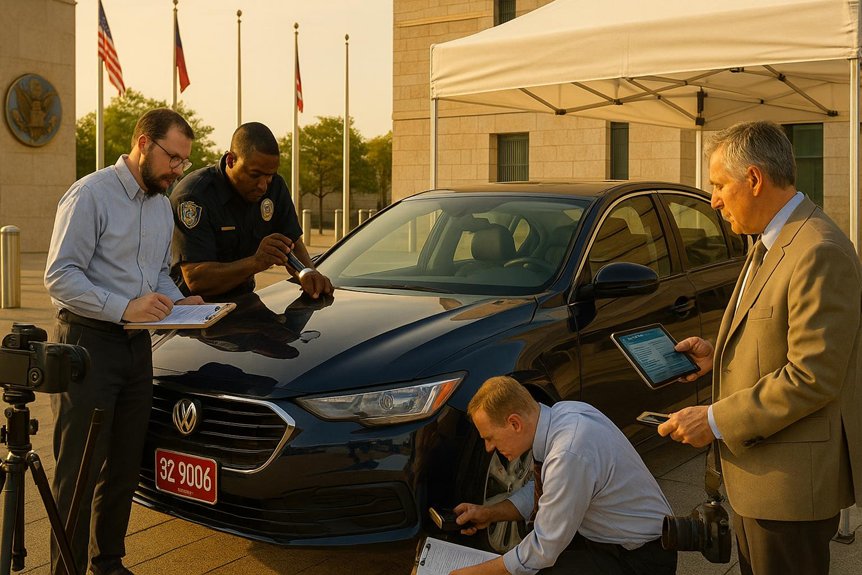
Clarity drives effective VIN verification when you’re a cop on a stop, an underwriter pricing risk, or a fleet lead managing assets. You work better together when you standardize checks and share context.
Confirm plates, VIN, and diplomatic identifiers across trusted databases before acting. Photograph the VIN plate and secondary stamp; note anomalies immediately.
For stops, announce the verification process and request liaison contact if needed. For underwriting, validate mission type, garaging, and prior claims tied to the VIN. For fleets, schedule quarterly audits, reconcile titles, and track chain-of-custody.
Log every lookup, source, and timestamp. When details disagree, escalate, don’t guess.
Frequently Asked Questions
How Do Diplomatic VINS Affect Resale Value and Secondary Market Transactions?
They often lower resale value and complicate transactions. You’ll face limited buyer pools, extra paperwork, and title quirks. Still, if you document provenance, verify duty clearance, and price transparently, you’ll build trust, attract enthusiasts, and close a fair deal.
Can Diplomatic Vehicles Be Retrofitted With Tracking or Telematics Legally?
Yes, but only with the owning mission’s consent and in compliance with host-country laws and Vienna Convention obligations. You’ll guarantee data minimization, clear access controls, and tamper transparency so everyone feels respected, secure, and aligned with privacy expectations.
What Happens to VIN Records When a Mission Closes or Relocates?
They transfer with the vehicle’s status. You’ll coordinate with the sending state and host authorities to update registration, export, or reissue. You won’t lose history; records persist, reflecting decommissioning, reassignment, or sale, keeping your community’s continuity intact.
Are Electric Diplomatic Vehicles Verified Differently Than Combustion Models?
Yes. You’ll follow the same VIN standards, but EVs add battery serials, high-voltage labeling, charger compatibility, and weight ratings. You’ll coordinate with host transport and security teams so your fleet stays compliant, safe, and welcomed.
How Are VIN Discrepancies Handled During Cross-Border Diplomatic Shipments?
You flag discrepancies immediately, coordinate with both border authorities and your mission’s transport officer, and submit corrected documentation. You request mutual verification, secure chain‑of‑custody records, and update manifests. You don’t move the vehicle until harmonized VIN data clears.