CarMax Out-of-State: Why VIN Verification Is Still Required
October 18, 2025
Barn Find Vehicle: VIN Verification for Long-Stored Cars
October 18, 2025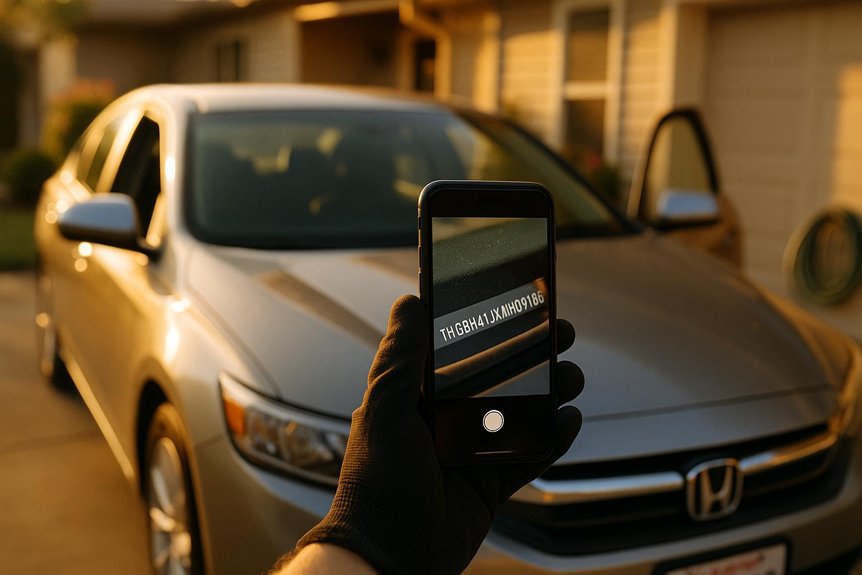
Before handing over cash for a Facebook Marketplace car, match the VIN on the dash, door jamb, and title, and photograph each. Decode the VIN to confirm year, make, model, and engine. Run NMVTIS/Carfax and NHTSA recall checks. Verify mileage and owners against service records. Watch for mismatched or tampered plates, blurry photos, cloned VINs, “lost title” claims, and urgency or deposit demands. Schedule a pre-purchase inspection and consider professional verification. You’ll avoid costly surprises and spot scams fast—here’s how.
Why VIN Verification Matters in Private Sales
Cut through the noise and start with the VIN—it’s your fastest way to confirm a car’s identity and history in a private sale. You’re not just buying wheels; you’re joining a community that values trust. A verified VIN helps you spot title issues, mileage rollbacks, theft records, open recalls, and past damage that photos and friendly messages won’t reveal. It protects your wallet, your safety, and your peace of mind.
When a seller welcomes a VIN check, you know you’re dealing with someone aligned with your standards. Verify early, compare reports, and walk away if details don’t match. The VIN verification process also identifies discrepancies in VIN records across databases and acts as a protective measure against illegal activities. That’s how you buy confidently.
How to Locate and Read the VIN on a Used Car
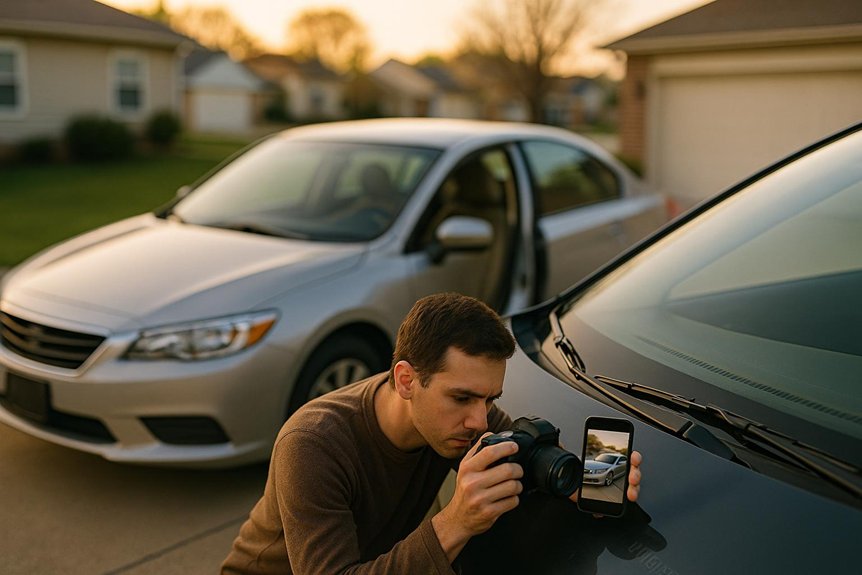
Usually, you’ll find the 17‑character VIN in three places: on the driver’s side dashboard at the base of the windshield, on the driver’s door jamb sticker, and on the vehicle’s title or registration.
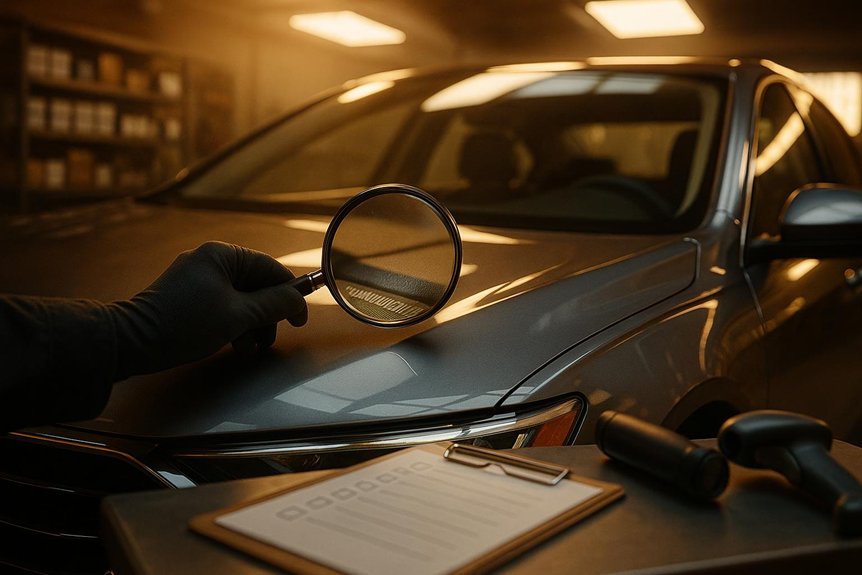
Stand outside the car and look through the windshield; snap a clear photo.
Open the driver’s door and match the door sticker’s VIN to the dash and paperwork. Read carefully: no I, O, or Q characters—those are zeros or ones. The first three characters show the manufacturer, the next five describe the model, and the last eight include the unique serial. Make sure every location matches exactly.
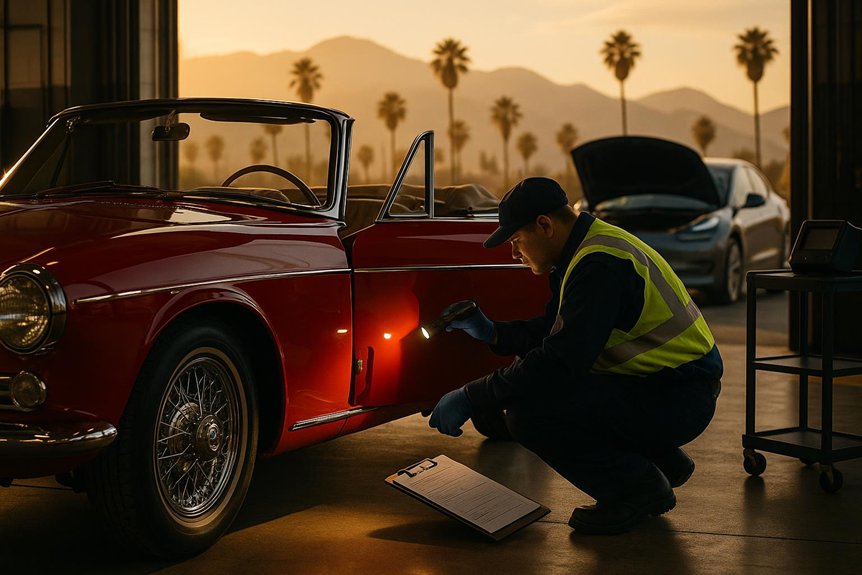
After verifying the VIN yourself, you’ll need a physical inspection documented on a REG31 form to register an out-of-state vehicle in California.
Step-by-Step Process to Verify a VIN Before Buying
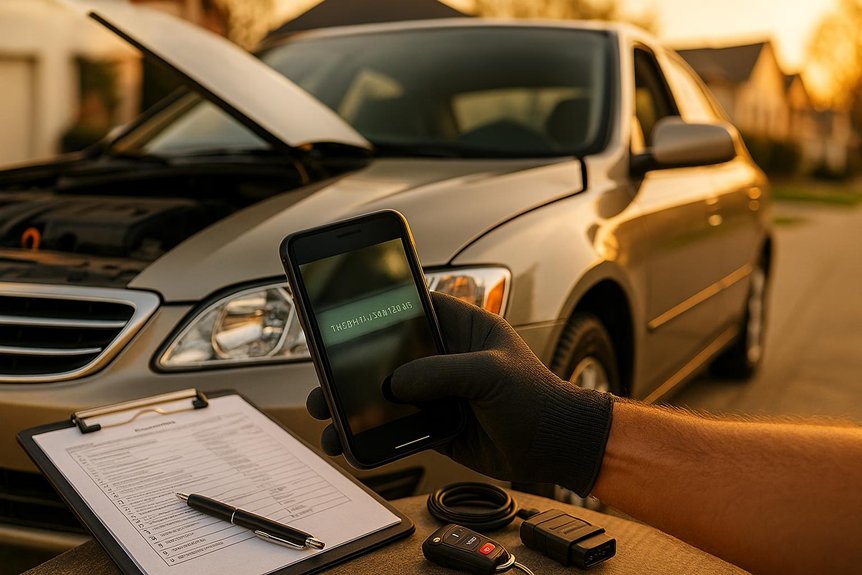
Before you commit, verify the VIN in a simple sequence to avoid costly surprises. Match the VIN on the dash, door jamb, and title. Photograph each.
Ask the seller for a clear title photo and service records showing the same VIN. Decode the VIN using NHTSA or manufacturer tools to confirm year, make, model, engine, and trim.
Run a trusted history report to check ownership, mileage, and recalls. Call your insurer to confirm insurability with that exact VIN. Contact a DMV or tag agency to verify title status.
Finally, schedule a pre-purchase inspection and confirm the VIN on the invoice. For added peace of mind, consider using a professional VIN verification service that offers convenient locations and affordable fees to ensure all documentation is accurate before finalizing your purchase.
Red Flags and Common VIN-Related Scams on Marketplace
You’ve checked the VIN in all the right places; now watch for the tricks sellers use to hide problems.
Spot mismatched VINs between dash, door jamb, windshield, and frame. Beware photos that hide the VIN plate or are conveniently blurry. If the seller refuses close-ups or live video of the VIN, walk away.
Scrutinize scratched rivets, crooked plates, or tampered labels. Compare the model year encoded in the VIN with badges and features. Watch for cloned VINs reused across multiple listings.
Decline sellers pushing deposits before viewing. If the story changes, titles seem “lost,” or urgency ramps up, trust your gut.
Tools, Reports, and Documents You Should Request and Review
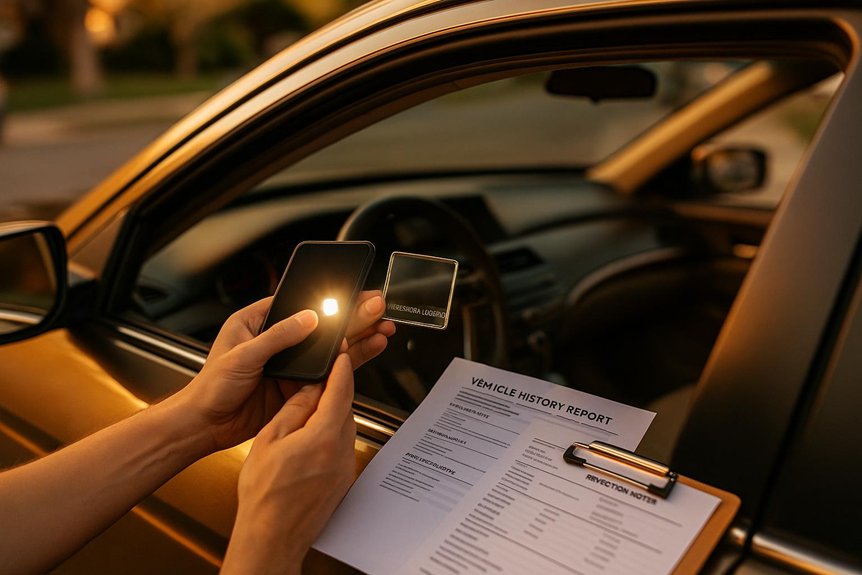
Even when a car looks clean and the VIN checks out in person, you still need paper and digital proof to back it up. Ask for a clear photo of the VIN plate, door-jamb sticker, and windshield etch. Run multiple VIN reports: NMVTIS-based (e.g., Bumper, AutoCheck), Carfax, and the free NHTSA recall lookup. Compare mileage, title brands, ownership count, and accident entries across reports.
Request: front and back of the title, lien release, service records, emissions/smog certificate, repair invoices, and recall completion letters. Verify seller’s ID matches the title. Use a paint meter, OBD-II scanner, and a pre-purchase inspection to confirm everything aligns.
Frequently Asked Questions
How Do State-Specific VIN Inspection Laws Affect Private Party Purchases?
They dictate what you must check before buying. You’ll confirm VIN legitimacy, meet inspection requirements, and handle paperwork timelines. You avoid registration surprises, fees, or penalties. Check your state’s rules first, then celebrate a smooth, community-supported purchase with confidence and peace.
Can I Verify a VIN if the Seller Lists an Out-Of-State Vehicle?
Yes, you can verify it. Run the VIN through NICB or your state’s NMVTIS provider, then cross-check the title and seller’s ID. Ask for photos of the VIN plate and stickers. Trust your instincts—community matters.
What Steps to Take if the VIN Plate Appears Tampered but Legal?
Report it to local law enforcement and your DMV, request a certified VIN inspection, and pause the purchase. Document photos, check secondary VIN locations, verify title history, and ask the seller for repair records. Trust instincts; walk away if uneasy.
How Do Insurance Companies Use VINS to Quote or Deny Coverage?
Insurers run your VIN to decode trim, safety features, and build data, then pull accident, theft, and title histories. You’ll get accurate rates or denials if records show salvage, branding, mismatches, or undisclosed modifications. Always verify together.
Are Salvage-Title VINS Eligible for Financing or Warranty Coverage?
Yes, but it’s tough. You’ll face limited lenders, higher rates, and stricter terms. Most factory warranties are void; some third‑party service contracts exist. You’ll need thorough inspections, clear rebuild documentation, and realistic resale expectations to feel confident together.