
Tesla VIN Verification: Direct-to-Consumer Sales and California Registration
October 18, 2025
Motorcycle VIN Verification: Different Rules, Same Day Service
October 18, 2025
To make your golf cart street legal, upgrade it to an LSV with DOT lights, mirrors, horn, windshield with wiper, seat belts, parking brake, VIN plate, license plate lamp, DOT tires, and fenders. Guarantee it reaches 20–25 mph with proper speedometer, odometer, and battery/fuel gauge. Confirm the VIN matches your title or bill of sale, document photos, receipts, and pass inspection. Most states allow LSVs on roads 35 mph or less. You’ll see exactly how to avoid pitfalls next.
What Makes a Golf Cart Street Legal vs. an LSV
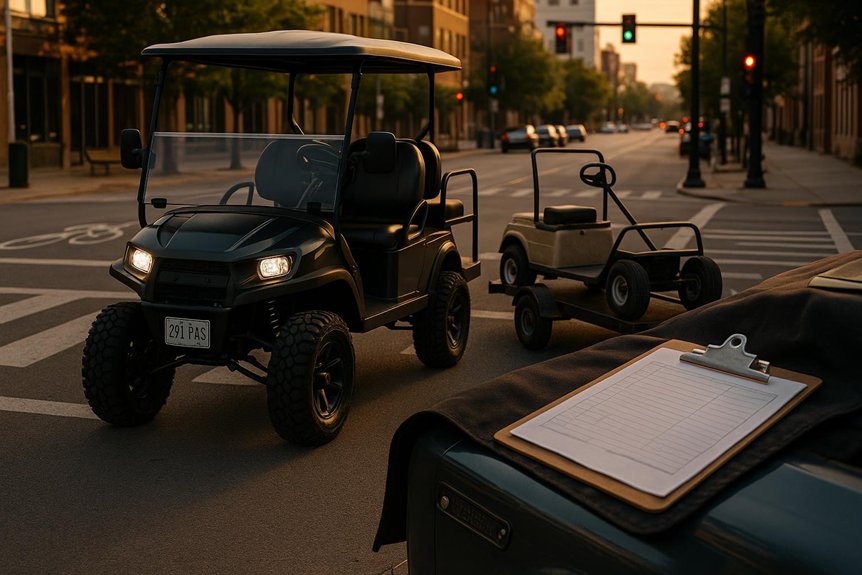
Not all small electric carts are equal—there’s a clear legal line between a basic golf cart and a Low-Speed Vehicle (LSV). You’re part of a community that values riding together, so it helps to know where your cart stands.
A golf cart is typically limited to neighborhood or private use, often capped at low speeds and restricted by local rules. An LSV is a distinct motor vehicle class with road privileges on streets posted up to 35 mph, plus DMV recognition.
To be “street legal,” a cart must be titled, registered, insured, and identifiable, including a compliant VIN. That’s where your LSV status begins. VIN verification is a DMV inspection that confirms your vehicle’s identification number matches the title, helping to prevent theft and fraud during the registration process.
Required Safety Equipment and Specs for LSV Compliance
Once you understand the difference between a golf cart and an LSV, the next step is meeting the hardware and performance standards that earn you road privileges.
You’ll need DOT-approved headlights, taillights, brake lights, turn signals, reflectors, and side mirrors on both sides plus an interior mirror. Add a horn, windshield with wiper, and seat belts for every seating position. Install a parking brake, rear license plate lamp, and VIN plate. Fit DOT tires and fenders.
Guarantee a speed capability of 20–25 mph and compliant acceleration and braking. Include a speedometer, odometer, and battery or fuel gauge. Keep everything securely mounted and functional. After installing all required safety equipment, you’ll need VIN verification to confirm your vehicle identification number matches the title before completing registration with the DMV.
Step-by-Step LSV VIN Verification and Documentation

Before you hit the DMV, gather and verify the identifiers that prove your cart qualifies as an LSV. Confirm the manufacturer’s VIN plate matches your title or bill of sale. Check the VIN’s length (17 characters), legibility, and attachment. Photograph the VIN plate and the cart’s overall condition.
Next, compile documents: proof of ownership, completed LSV compliance checklist, receipts for required equipment, weight rating, and proof of insurance. Add clear photos of lights, mirrors, seatbelts, and the VIN. Schedule an inspection if required. Bring originals and copies. Sign any verification forms on-site. Keep a dedicated folder so you’re ready, confident, and road‑community proud. Professional VIN verification services can streamline this process with experienced automotive experts who ensure accurate and up-to-date data for your LSV registration.
State-by-State Rules, Speed Limits, and Local Variations
Curious how far—and how fast—you can drive your LSV where you live? Rules vary widely, but you’re not alone traversing them. Most states cap LSVs at 25 mph, with access limited to roads posted 35 mph or less. Some counties allow 30–35 mph streets; others restrict you to neighborhood routes only.
You’ll likely need headlights, taillights, turn signals, mirrors, windshield, seat belts, and a VIN. States differ on insurance, registration, and plate placement. Expect local twists: curfews near schools, beach-town permits, or seasonal zones. Check your state DMV, then city and HOA rules. Align with local norms, and you’ll fit right in.
Common Mistakes, Inspection Tips, and Approval Timeline
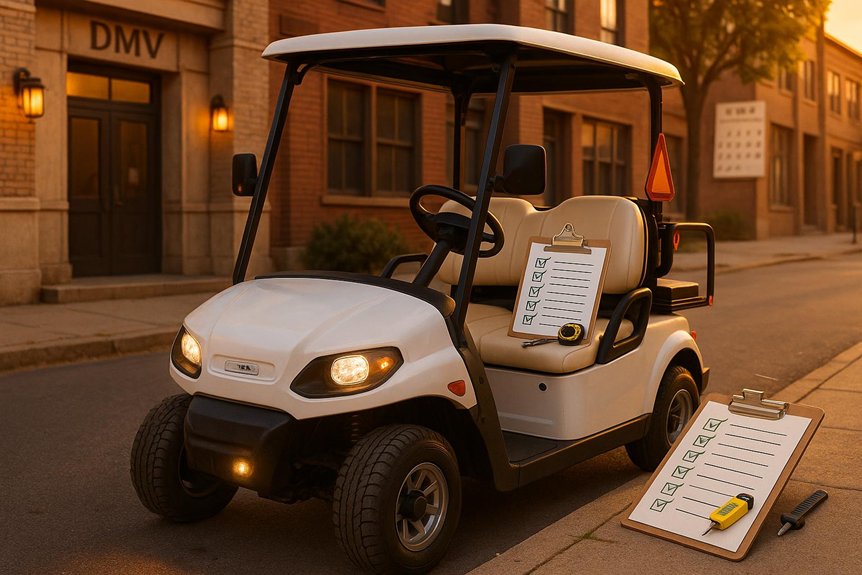
Something simple can derail your LSV approval: missing safety gear, an unreadable VIN, or paperwork that doesn’t match the cart. Avoid mismatched tire ratings, dim brake lights, and horn or mirror omissions. Don’t forget DOT windshield glass, seat belts, reflectors, and turn signals. Clean the VIN plate; verify it matches the title and receipts.
Before inspection, torque lug nuts, test every light, check brake responsiveness, photograph the VIN, and bring proof of ownership, insurance, and forms. Arrive with a charged battery and visible plates.
Approval timeline: scheduling 1–2 weeks, inspection day-of, corrections 3–10 days, plate issuance 1–2 weeks. Stay proactive and connected.
Frequently Asked Questions
Can I Finance an LSV Conversion or Purchase Through Dealerships?
Yes, you can finance an LSV conversion or purchase through many dealerships. Ask about in-house financing, credit unions, promotional APRs, and warranties. Bring income proof and credit details. You’ve got options—join their programs and drive confidently together.
How Does Insurance Differ Between Golf Carts and LSVS?
Insurance differs because golf carts are often covered under homeowners or specialty policies, while LSVs need auto-style liability, collision, and uninsured motorist coverage. You’ll carry state-required limits, add VIN-based underwriting, and qualify for broader endorsements and discounts.
What Tax Credits or Incentives Apply to Electric LSVS?
You can claim federal clean vehicle credits if the LSV meets IRS criteria, plus possible state rebates, utility incentives, and local tax breaks. Check battery capacity, MSRP caps, income limits, and registration class. Save purchase receipts and certification documents.
Can Businesses Write off LSVS as Commercial Vehicles?
Yes, you can often write off LSVs as commercial vehicles if used primarily for business. You’ll depreciate them (Section 179/bonus), deduct operating costs, and track mileage. Keep solid records. Consult your tax pro for eligibility and limits.
How Do Resale Values Compare for LSVS Vs Modified Golf Carts?
LSVs typically hold value better than modified golf carts. You benefit from VINs, safety features, and insurability that buyers trust. Modified carts vary widely, so resale’s inconsistent. Choose LSVs for steadier demand, recognizable compliance, and community-friendly, street-legal confidence.