
Classic Car VIN Verification: Pre-1981 Vehicles and Missing VINs
October 18, 2025
Salvage Title to Rebuilt: VIN Verification Requirements
October 18, 2025
Building a kit car as a Specially Constructed Vehicle means you’ll get a state-assigned VIN, not a factory one. Gather airtight proof of ownership: receipts, donor titles, serial-number photos, and matching details. Schedule DMV/CHP inspection; they’ll verify frame, engine, transmission, and affix a VIN if needed. Guarantee emissions gear (PCV, canister, cats) and safety items (belts, DOT glass, lights, mirrors) meet rules. Avoid delays with complete paperwork and current forms. You’ll find the exact steps and pitfalls next.
Defining a Specially Constructed Vehicle and Why VINs Differ
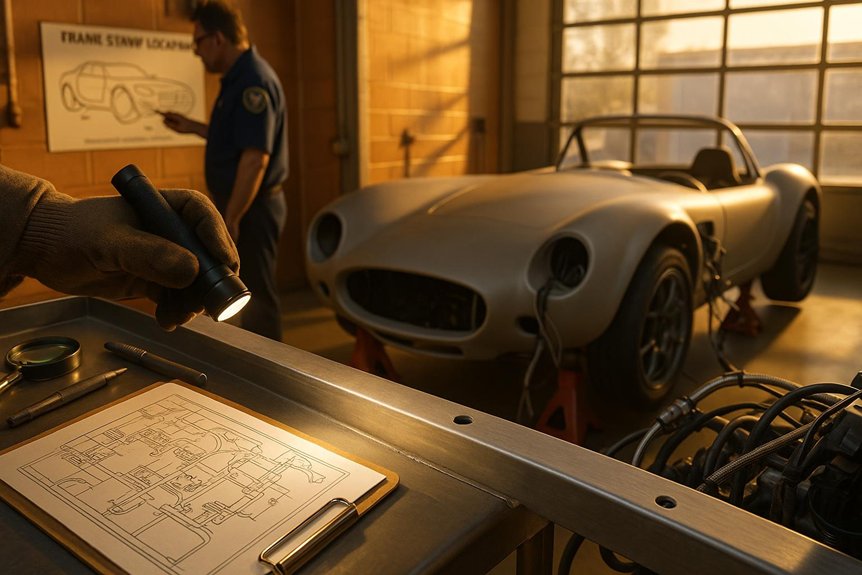
Although it might look like any other car on the road, a specially constructed vehicle (SCV) is built from a mix of new, used, or aftermarket parts rather than assembled by a single manufacturer. You’re crafting a one-of-a-kind machine, and that uniqueness shapes how its identity gets recorded.
Because an SCV doesn’t roll out of a single factory, its VIN can’t mirror a standard production VIN. Instead, states assign VINs that reflect assembled origins, component variety, or completion year. You’ll see differences in format, length, and encoding. These VINs help officials match your build to safety and emissions standards—and help your community celebrate legitimate, traceable craftsmanship.
A VIN verification service can confirm that your assembled vehicle’s identification number matches state records and meets regulatory requirements for registration.
Documents and Proof of Ownership You Need Before Inspection
Before inspection day, gather clear proof that you own every major component in your build. You’ll need invoices, receipts, and bills of sale for the chassis, engine, transmission, body, and suspension. Include donor vehicle titles or dismantler bills when applicable. Make sure names, dates, serial numbers, and prices match across documents.
Keep copies of any correspondence that confirms transfers or refunds. Photograph parts with visible serial numbers, then label each image to the related receipt. Organize everything in a binder and digital folder. If parts were gifted, get a notarized gift affidavit. Bring your ID and any tax or customs paperwork. Documentation is completed on the REG31/VIN verifier form, which records key details such as vehicle year, make, model, and VIN during the verification process.
The Step-by-Step SPCNS Inspection and Verification Workflow
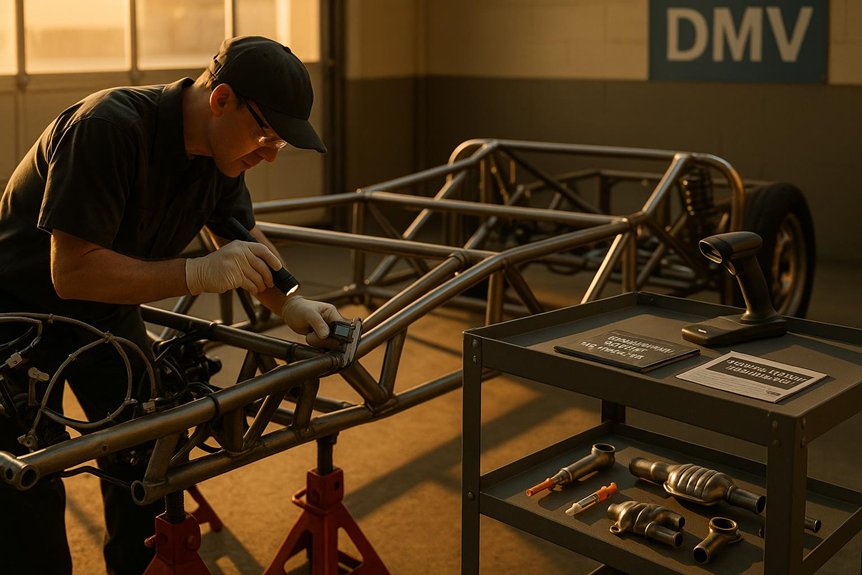
With your ownership records organized, you can move into the SPCNS inspection and VIN verification sequence. Schedule your appointment with the DMV or CHP, then arrive early with your receipts, build photos, and ID.
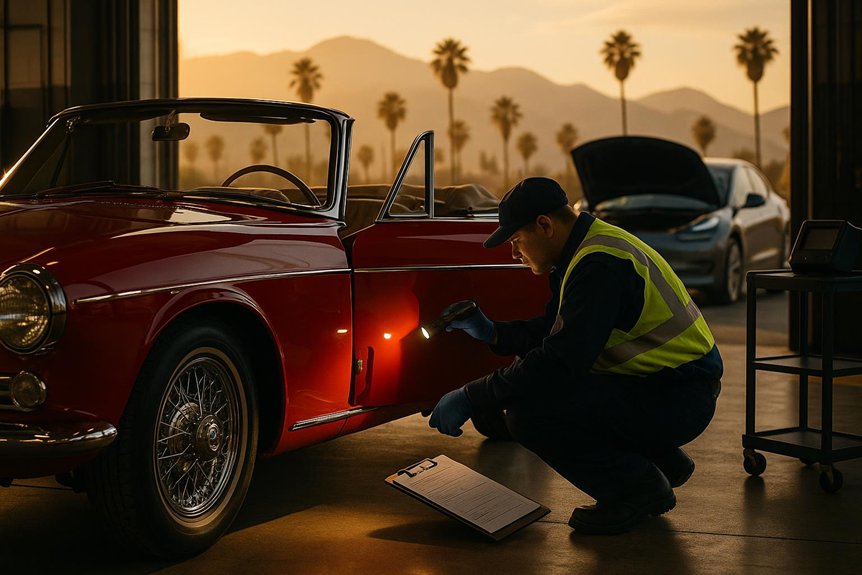
You’ll present the vehicle, confirm major component origins, and answer straightforward questions about assembly. Inspectors will check frame numbers, engine and transmission identifiers, and compare them to your paperwork. If no VIN exists, they’ll affix a state-assigned number.
Expect photos, a physical inspection, and signature on the verification form. Keep copies of everything. When you leave with the verified VIN, you’re ready to continue registration with confidence. Note that specially constructed vehicles (SPCNS) are exempt from licensed private verifier inspections and must be processed through DMV or CHP directly.
Emissions, Safety Equipment, and Compliance Requirements
Every kit car must meet baseline emissions and safety standards to earn plates, and the specifics depend on your state and how the vehicle’s classified. You’ll verify whether you’re inspected by model year of engine, body style, or SPCNS rules. Know which standard applies before you schedule tests.
For emissions, you may need a functional PCV, charcoal canister, closed fuel system, catalytic converters, EO-marked components, and a visual/OBD check where required. For safety, expect seat belts, DOT glass, lights, reflectors, mirrors, horn, parking brake, fenders or mud flaps, and compliant tires. Keep documentation: receipts, EO numbers, installation photos, and inspection forms.
Common Mistakes That Delay Approval and How to Avoid Them
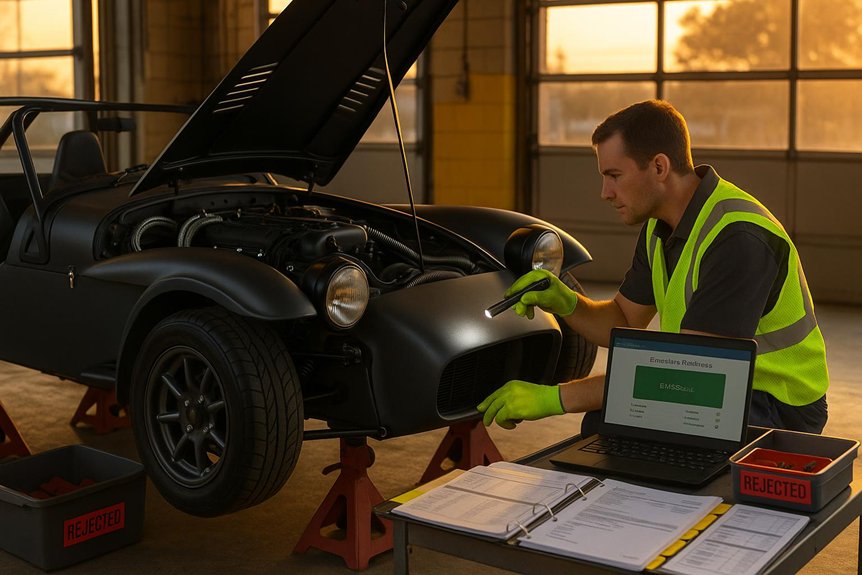
A few avoidable missteps can stall your kit car’s VIN verification for weeks. Don’t show up with incomplete receipts—bring originals and copies for every major component, including engine, chassis, and drivetrain. Match numbers on parts to paperwork.
Verify your VIN plate meets state specs and is affixed correctly. Photograph build stages and label files for easy review. Schedule inspections after confirming emissions and safety equipment are installed and functional. Use the latest DMV forms; outdated versions trigger re-submissions.
Arrive with insurance, ID, and appointment confirmation. Keep fasteners visible—no fresh paint hiding stamps. Ask questions early; shared knowledge keeps everyone moving.
Frequently Asked Questions
Can I Insure a Kit Car Before VIN Verification Is Complete?
Yes, you usually can get contingent or builder’s-risk coverage before VIN verification, but full policies often wait. Contact specialty insurers, gather build documents, photos, and receipts, and ask about binders. You’ve got this—join communities for recommendations and support.
How Long Does a Temporary Operating Permit Last for SPCNS?
It typically lasts 60–90 days, depending on your state and progress. You’ll apply at the DMV, show build documentation, and keep insurance. If you need more time, you can usually renew by proving continued steps toward completion.
Does Repainting After Verification Require Updating Registration Records?
Yes. If the color changes after verification, you should update your registration to keep records accurate. Visit your DMV portal or office, submit a statement of facts, and request an updated title/registration reflecting the new color.
Can I Transfer an SPCNS VIN to Another Chassis Later?
No—you can’t transfer an SPCNS VIN to another chassis. It’s permanently tied to the verified build. If you switch frames, you’ll pursue a new SPCNS process and VIN. Keep your documentation; communities can guide you.
Are Out-Of-State SPCNS Inspections Recognized or Require Re-Verification?
They’re usually not recognized; you’ll need re-verification in your new state. You’ll schedule a local inspection, bring prior documents, and align with that state’s SPCNS rules. You’ve got this—show up prepared, and you’ll be welcomed onto the road.