
Lemon Law Buyback: VIN Verification Requirements
October 18, 2025
Divorce Settlement Vehicles: VIN Verification and Title Transfer
October 18, 2025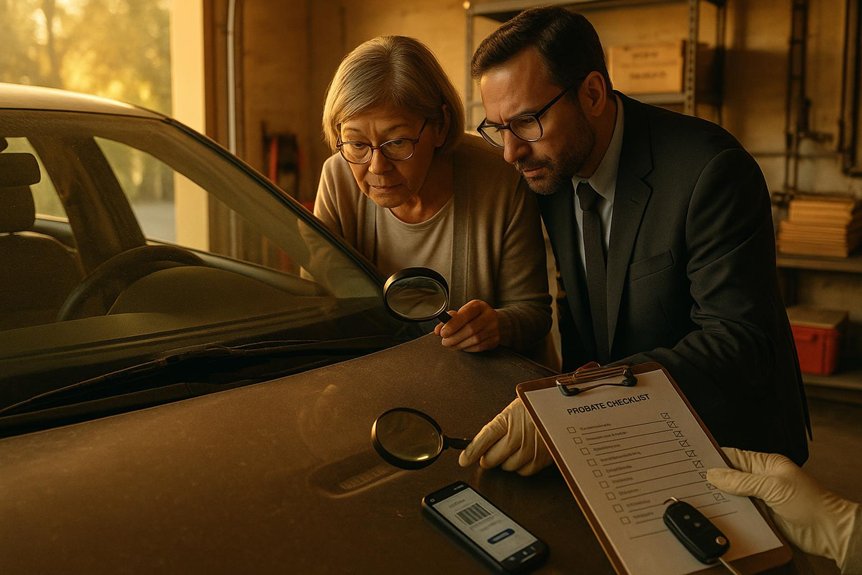
Inherit a car? Verify the VIN to confirm ownership, avoid title errors, prevent fraud, and keep insurance and registration moving. Find it on the windshield, driver-door jamb, engine bay, and in the title, registration, and insurance. Cross-check digits, photograph each source, and decode year and build from the VIN. Resolve mismatches, theft or salvage flags, and any liens with the lender before transfer. Gather probate or trust papers, title, odometer form, and ID—next, you’ll see exactly how.
Why VIN Verification Matters in Trusts and Estates
Two key reasons make VIN verification essential in trusts and estates: clear ownership and risk reduction. You want confidence that the vehicle named in documents is the one you’re actually administering.
Matching the VIN to legal papers prevents title mistakes, identity confusion, and disputes among beneficiaries. It also protects your group from fraud, liens tied to the wrong car, and insurance or registration delays. The physical inspection is completed on the REG31/VIN verifier form, recording key details such as vehicle year, make, model, and VIN to confirm the vehicle matches official records.
Where to Find the VIN on the Vehicle and in Estate Records
Before you start paperwork, locate the VIN on the car and in the decedent’s files so everything matches. You’ll usually find it at the base of the windshield on the driver’s side, on the driver-door jamb sticker, and stamped on the engine bay or frame. Check the steering column or under the spare tire well on some models.
In the home files, look for the VIN on the title, registration, insurance cards, service invoices, and loan or lease documents. Cross-check digits carefully. If records conflict, photograph each source, note locations, and ask the executor or DMV for guidance so your family stays aligned. Many executors choose a professional VIN verification service to ensure all documentation is accurate before transferring ownership.
How to Decode a VIN for Make, Model, Year, and Build Details
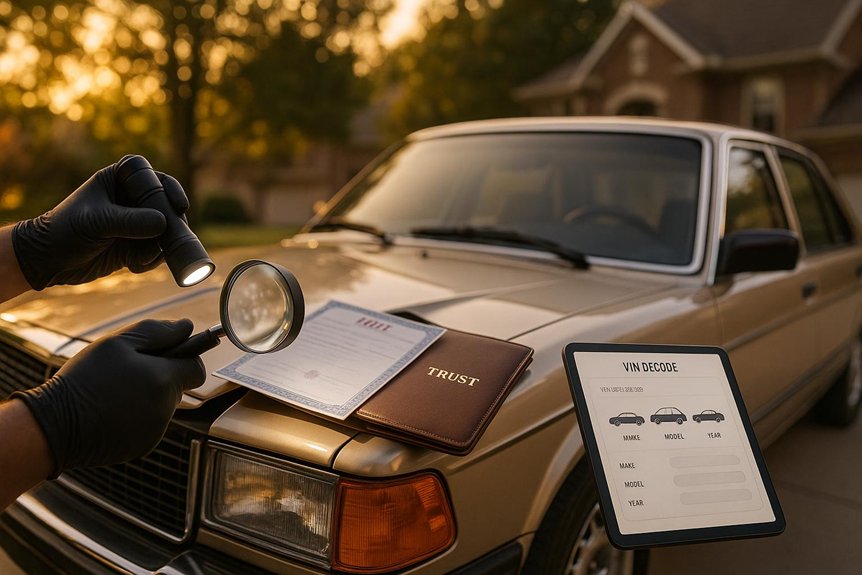
Once you’ve got the VIN in hand, decode its 17 characters to confirm exactly what you inherited. You’re not alone—this is how families verify a vehicle’s identity together.
Read it left to right:
- Positions 1–3: World Manufacturer Identifier (brand, region).
- Positions 4–8: Vehicle Descriptor (model, body, engine).
- Position 9: Check digit (validates the VIN).
- Position 10: Model year code (e.g., A=2010, B=2011; cycles every 30 years).
- Position 11: Plant code.
- Positions 12–17: Sequential production number.
Use the manufacturer’s decoder or NHTSA’s VIN decoder to confirm make, model, year, engine, and build plant. Save results with your estate records. If the vehicle doesn’t appear in the DMV database, you’ll need a physical VIN inspection documented on the REG31 form to complete registration.
Troubleshooting Mismatched or Altered VINs and Addressing Liens
If your decoded VIN details don’t match the car in front of you, treat it as a red flag and slow everything down. Compare the windshield VIN plate, door-jamb label, engine bay stamp, and frame stamp. Differences suggest tampering, part-swapping, or a clerical error. Photograph each location.
Check the title, registration, and service records for the same 17 characters. Run the VIN through reputable databases to spot theft reports, salvage branding, or odometer fraud. For liens, contact the named lender to confirm payoff status and obtain a release. Don’t exchange money or transfer possession until identities align and encumbrances are cleared.
Documentation Steps to Satisfy DMV, Insurers, and Estate Files
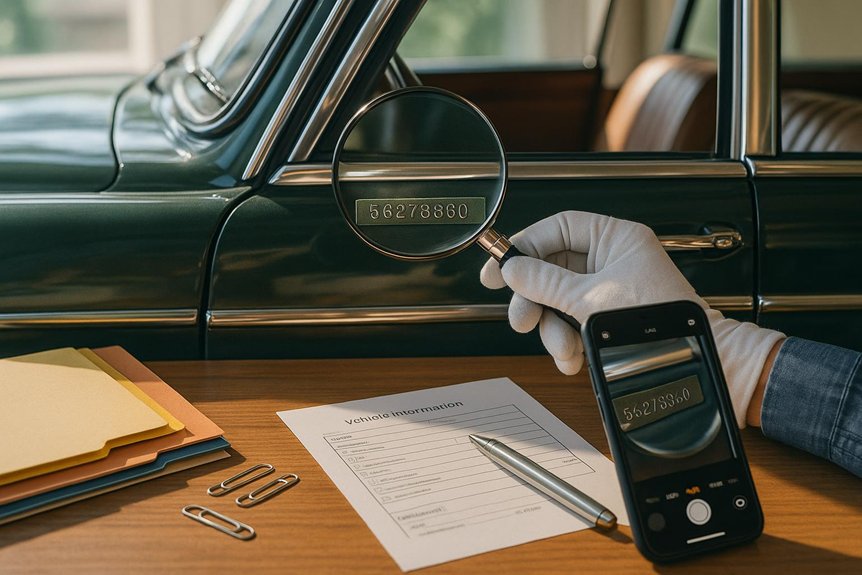
Start by creating a clean paper trail that ties the inherited vehicle to you and the estate. Gather the death certificate, letters probate or trust instrument, and the will or trust pages naming you. Copy the title, registration, and bill of sale, if any.
Photograph the VIN plate and engine stamp; attach a VIN verification form if your DMV requires it. Secure lien releases or payoff letters. Complete the DMV transfer application and odometer disclosure. Add proof of insurance and your ID. File everything in one labeled packet.
Upload digital scans to a shared folder so family, the executor, and insurer stay aligned.
Frequently Asked Questions
How Do International Heirs Handle VIN Verification Across Borders?
You coordinate with the estate, obtain certified ownership documents, then schedule VIN inspections through consulates, licensed inspectors, or customs. You translate and apostille papers, verify databases, and align import rules so authorities recognize your shared, rightful connection to the vehicle.
Can a Classic Car Without a Modern VIN Be Verified?
Yes, you can. You’ll verify using chassis or engine numbers, manufacturer plates, build records, and historical documentation. Work with your DMV, a certified inspector, or a marque club. Keep photos, provenance, and affidavits to support identification.
What Privacy Concerns Arise When Sharing VINS During Probate?
You risk identity exposure, vehicle cloning, targeted theft, doxxing of heirs, warranty or recall data leaks, and insurance profiling. Share only necessary digits, use secure channels, limit recipients, redact documents, and coordinate with your executor and counsel for protection.
How Do Digital License Plates Affect VIN Verification?
Digital plates don’t change VINs, but they streamline verification. You’ll access plate-linked apps to confirm VIN data, receive instant updates, and reduce paperwork. Still, you’ll visually cross-check the dashboard/VIN plate to guarantee consistency and prevent mismatches.
Are Mobile VIN Inspectors Acceptable for Court Filings?
Yes, if they’re licensed and follow your jurisdiction’s rules. You’ll confirm their credentials, guarantee they use official forms, and keep clear photos. You’ll also attach their signed verification to your filing, so everyone reviewing it feels confident.