Expedited VIN Verification: 24-Hour Registration Process
October 18, 2025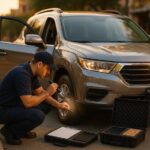
Mobile VIN Verifier: What They Bring to You
October 18, 2025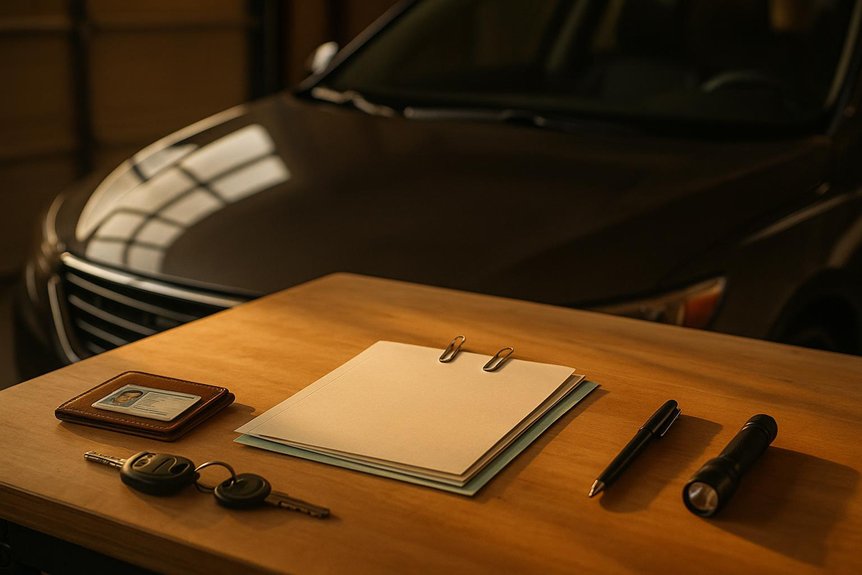
Bring a government ID, proof of ownership (title or MCO), current registration, bill of sale, and proof of address. Check your state’s VIN inspection form, who can verify (officer, licensed verifier, DMV), and whether you need appointments, emissions, insurance, photos, or fees. For out-of-state, salvage, or rebuilt titles, add repair receipts, photos, lien releases, and temporary registration. Trailers, motorcycles, and commercial vehicles have extra label/weight details. Verify all VIN locations and watch for tampering—there’s more that can save you time.
Must-Have Documents for Any VIN Verification
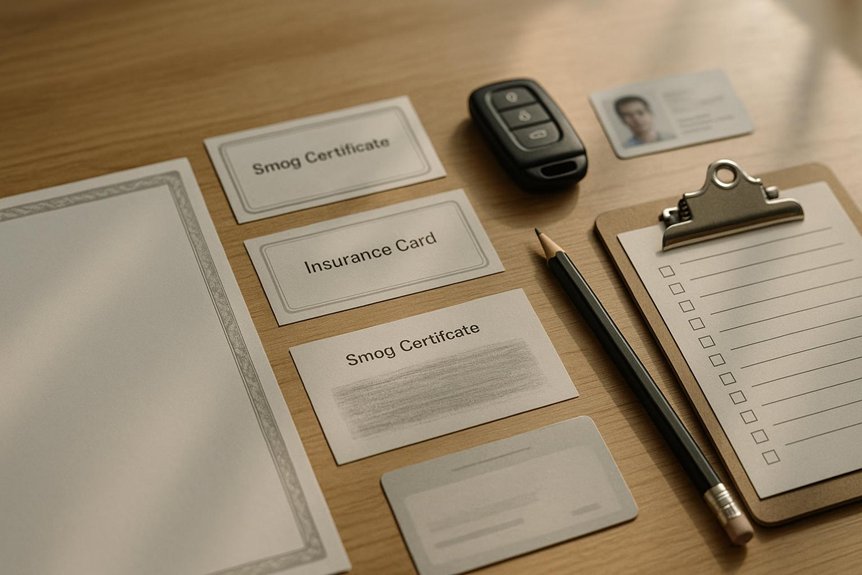
Before you schedule a VIN inspection, gather the essentials so the process goes fast and smooth. Bring your government-issued ID, proof of ownership (title or manufacturer’s certificate of origin), and current registration if available.
Have the bill of sale for recent purchases. Pack proof of address that matches your paperwork. If there’s a lien, include the lien release or finance agreement. For out-of-country vehicles, carry customs or import documents.
Make sure the VIN on the vehicle matches every document exactly. Print or download digital copies, organize them in one folder, and keep originals handy so you feel ready, confident, and connected. For gas-powered and certain diesel vehicles, don’t forget your smog certification as part of the required documentation.
State-by-State Requirements and Common Variations
With your documents organized, the next step is understanding how rules change by state. You’ll see familiar basics everywhere: ID, title or registration, and a VIN inspection form.
Still, each DMV tweaks the details. Some states require an officer, licensed verifier, or DMV clerk to inspect; others accept a mobile notary. A few mandate appointments, emissions paperwork, or proof of insurance.
Rural offices may want pencil rubbings; urban centers rely on digital photos. Fees, forms, and signatures vary, too. In California, for example, out-of-state vehicles need a smog certification for gas and some diesel vehicles as part of the registration process. Check your DMV’s current list, print the exact form, and confirm who can verify your VIN. Bring originals, plus one clean copy.
Special Cases: Out-of-State, Salvage, and Rebuilt Titles
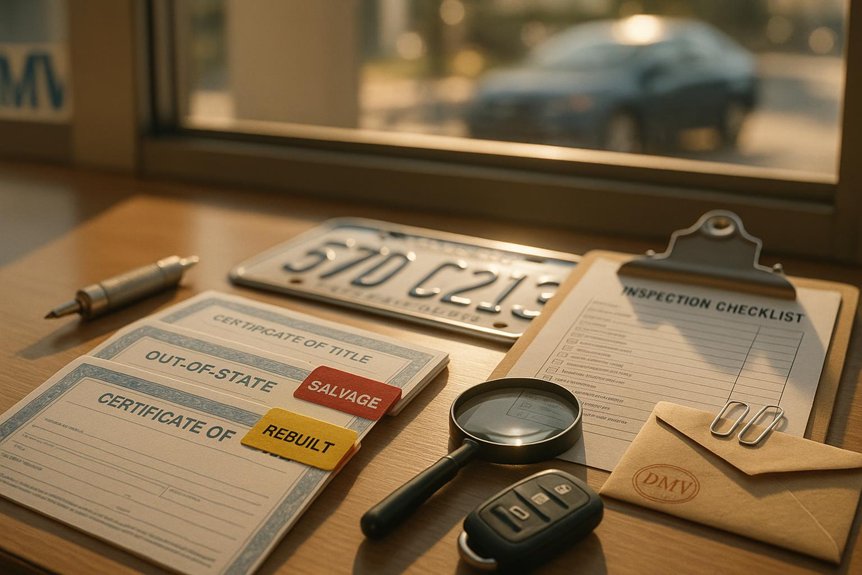
Sometimes the VIN check gets trickier—especially for out-of-state purchases, salvage vehicles, or rebuilt titles. You’re not alone.
For out-of-state cars, bring the signed title, bill of sale, ID, and any temporary registration. Expect a physical VIN inspection to confirm the plate matches documents. Note that for out-of-state vehicle registration, you’ll also need smog certification for gas and some diesel vehicles.
For salvage titles, gather the salvage certificate, repair receipts, parts invoices with VINs, and photos from before and after repairs.
Rebuilt titles usually need a completed inspection form, proof of repairs, and lien releases. Keep everything organized in one folder. Double-check your state’s inspection location and fee.
Arrive early, stay patient, and you’ll clear this hurdle together.
Trailers, Motorcycles, and Commercial Vehicles: What Changes
Handled the tricky titles? Now let’s dial in what changes for trailers, motorcycles, and commercial vehicles. You’ll bring the standard ID, proof of ownership, and insurance, but you’ll adjust the details.
For trailers, confirm the VIN plate on the tongue or frame, axle count, and weight rating; some states need a weight slip.
For motorcycles, verify the frame VIN and engine number, plus emissions or noise labels when required.
For commercial vehicles, add USDOT or fleet info, gross vehicle weight, and body type (box, flatbed, reefer). Bring any upfit invoices.
Arrive with clear photos of VIN locations to speed verification.
Handling Mismatched VINs, Missing Paperwork, and Red Flags
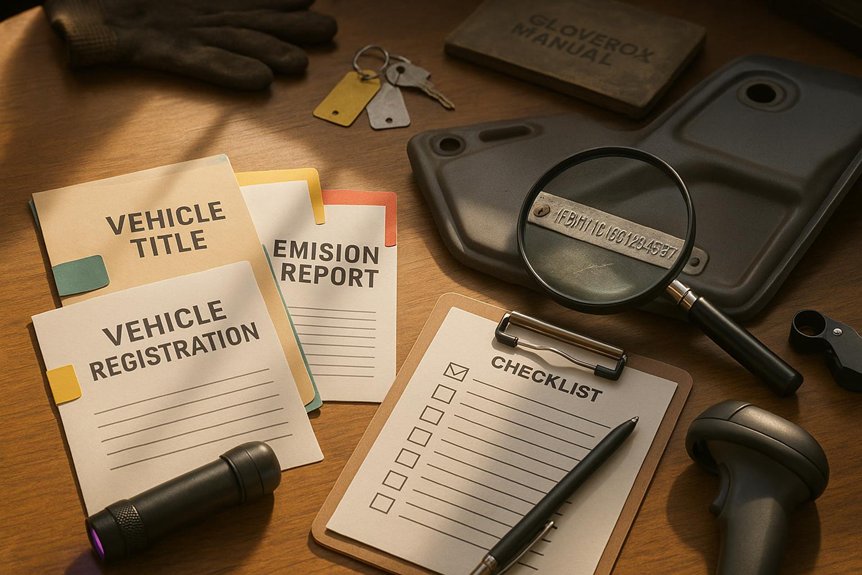
Diligence pays off when a VIN doesn’t line up, a title’s missing, or something feels off. You’re not alone—trust your gut and pause the deal.
First, verify the VIN on the dash, door jamb, frame, and engine; all should match the title and bill of sale. Check for tampering: uneven rivets, scratched plates, mismatched fonts, or paint disturbed around tags.
If paperwork’s missing, request a duplicate title, lien release, and a signed bill of sale with IDs. Run a NMVTIS or state title check. Walk if the seller resists. Document everything, bring a friend, and schedule an official VIN inspection before paying.
Frequently Asked Questions
How Long Does a VIN Verification Appointment Typically Take?
It typically takes 10–20 minutes. You’ll check in, present your ID and VIN, then the inspector confirms numbers and condition. Plan a little buffer for lines. You’ve got this—show up prepared, and you’ll breeze through together.
Can I Complete VIN Verification at Home or Mobile Service?
Yes, you often can. Many states let licensed verifiers, law enforcement, or DMV-contracted mobile services come to you. Check local rules, fees, and availability. Schedule online, prep your ID and vehicle, and you’ll feel supported.
What Fees Should I Expect for VIN Verification?
Expect $10–$30 at DMV or CHP, $40–$100 for licensed mobile verifiers, plus travel or after-hours surcharges. You’ll also pay separate registration/title fees. Ask upfront for a bundled quote so you feel included and avoid surprises.
Do VIN Verifications Expire if I Delay Registration?
Yes, most VIN verifications expire, often after 60–90 days, though timelines vary by state. Check your DMV’s rule. If it lapses, you’ll need a fresh inspection. Don’t worry—you’ve got this, and we’ll navigate it together.
Who Is Authorized to Perform VIN Verifications in My Area?
Authorized verifiers usually include DMV staff, licensed VIN verifiers, law enforcement, and AAA or dealer personnel. Check your state DMV locator to find nearby options. Ask about mobile verification—it’s convenient and keeps you connected with your local community.