Mobile VIN Verifier: What They Bring to You
October 18, 2025
Multiple Vehicle VIN Verification: Fleet Processing Time
October 18, 2025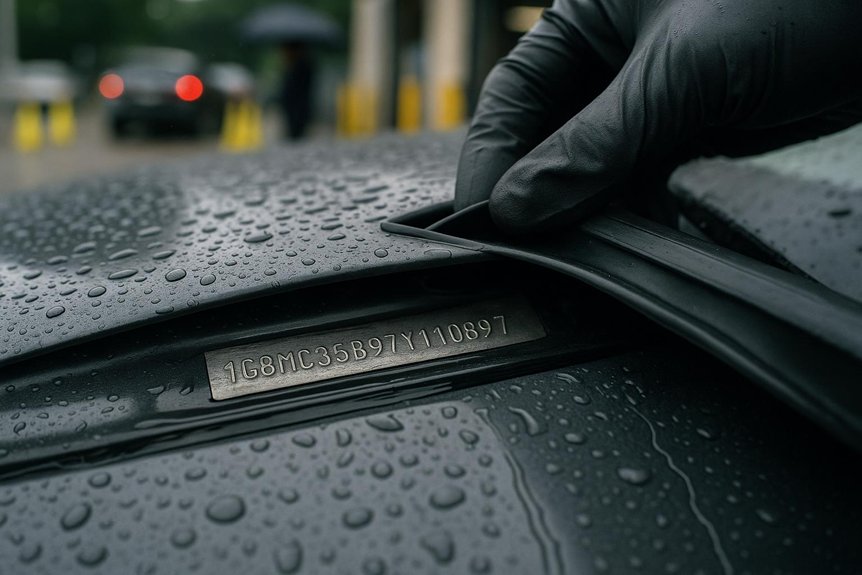
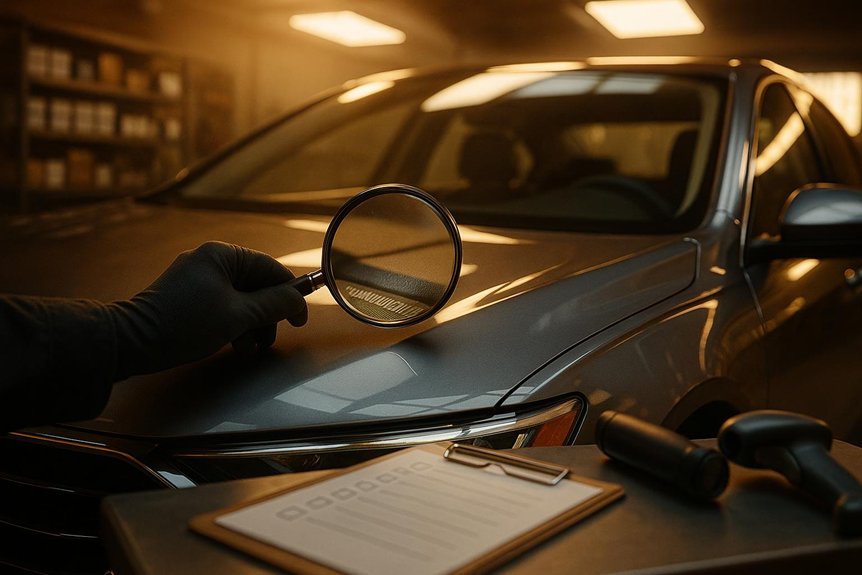
Rain can distort VIN digits with water beads, glare, and fogged glass, so control lighting and clear surfaces. Park safely, angle the car, use a warm headlamp, and wipe the dashboard plate, door-jamb sticker, B-pillar, firewall, or frame rail. Wear high-vis gear, lock wheels, kill the engine, and use gloves, towels, a squeegee, and an inspection mirror. Photograph each location and confirm sequences immediately. Follow your jurisdiction’s form and note weather and personnel. There’s a simple process that makes this easier.
How Rain Impacts Visibility, Access, and Accuracy
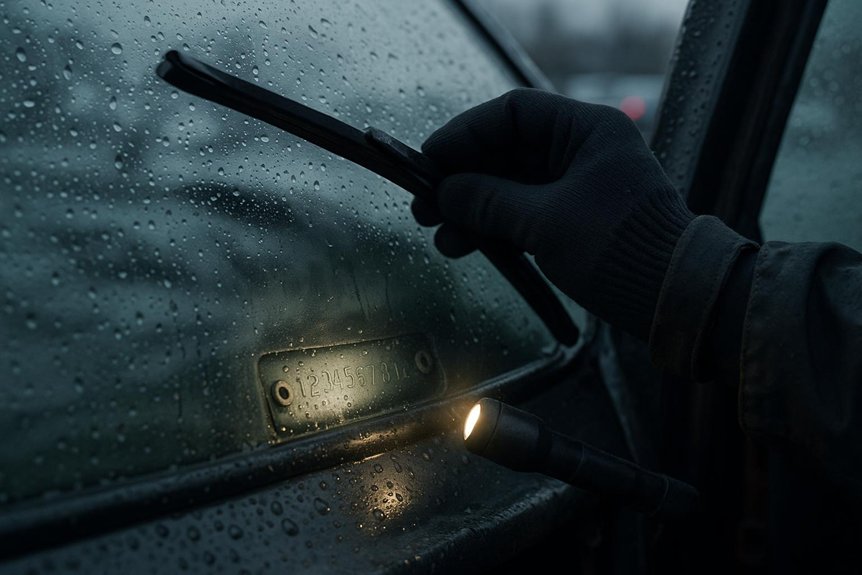
Although a light drizzle might seem harmless, rain quickly complicates VIN verification. Water beads distort digits, glare bounces off wet glass, and fogged windows blur your view. Smudged ink on paperwork adds doubt. You feel rushed, and that pressure invites mistakes—transposed numbers, skipped characters, or unreadable photos.
Access suffers too. Slick hoods, muddy ground, and stuck doors slow you down. You might hesitate to kneel, lift, or lean, and that limits how closely you inspect. Moisture seeps into flashlights and phones, draining batteries and dulling light. Together, these factors chip away at accuracy, and shared confidence, unless you adapt. Poor conditions can lead to common errors such as misidentifying the vehicle year or recording incorrect VIN details, which may trigger unnecessary referrals.
Common VIN Locations and Rain-Friendly Alternatives
When the rain picks up, you need fast access to VINs without fighting slick panels or fogged glass. Start at the driver-side dashboard plate, viewed through the windshield’s lower corner. If droplets distort it, open the driver door and check the door-jamb sticker.
Can’t lean in? Look at the driver-side B-pillar. On trucks and SUVs, peek at the frame rail near the front wheel or inside the engine bay at the firewall. For motorcycles, glance at the steering neck. Trailers often place VINs on the tongue.
When crowds or weather press you, choose the spot you can reach safely together. During the physical inspection, your verifier will also document the vehicle’s make, model, year, and GVWR to complete the REG31 form.
Tools and Materials That Improve Wet-Weather Inspections
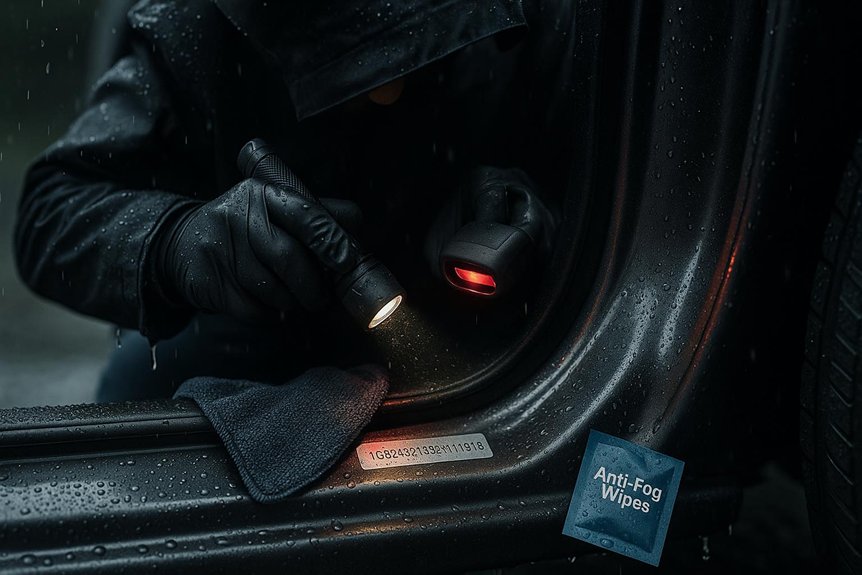
You’ve got your go-to VIN spots, but wet weather still fights visibility and grip, so equip yourself to beat the rain. Pack a compact, high-lumen headlamp with a warm color temperature to cut glare on wet metal.
Keep a folding LED inspection mirror for cowl and frame checks. Use a rubberized, non-slip kneeling pad and nitrile-dipped gloves for traction. Bring microfiber towels and a quick-dry windshield squeegee to clear droplets fast. Slip vinyl document sleeves over forms.
Stash painter’s tape to mark a clean view window on fogged glass. Carry alcohol wipes and a soft brush to lift grit before reading. With the right equipment and a streamlined VIN verification procedure, even challenging weather conditions won’t compromise the accuracy of your inspection results.
Step-by-Step Process for Conducting a VIN Check in the Rain
Even with solid prep, a rainy-day VIN check demands a deliberate flow that keeps water, glare, and smudges from wrecking readability. Park safely, angle the vehicle away from wind, and set your light.
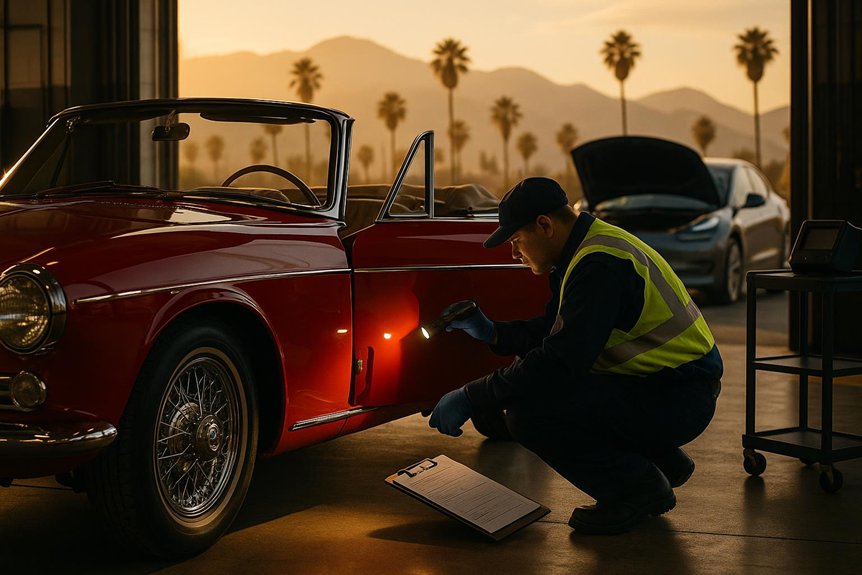
Put on gloves, secure your hood or umbrella, and keep a dry cloth ready. Start with the dashboard plate; shield it, wipe gently, and light from the side. Photograph, then confirm characters aloud.
Move to the door jamb, engine bay, and frame stamp, repeating the wipe-light-photo cadence. Cross-check sequences immediately. If fog creeps in, pause, defog, and recheck.
Finish with quick notes on locations inspected and confirmed.
Compliance, Safety, and Documentation Best Practices
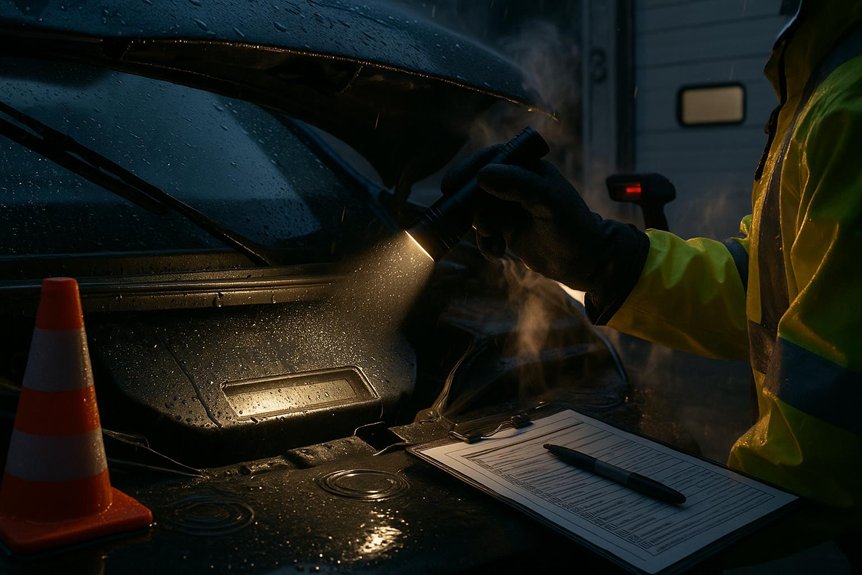
Rain doesn’t excuse sloppy compliance, so build your inspection around safety, legality, and a clean audit trail. You’re part of a professional community, and your standards lift everyone.
Wear high-visibility gear, set cones, and use a spotter. Lock wheels, kill the engine, and keep lighting steady to read the VIN without rushing. Follow your jurisdiction’s verification form exactly, including location, weather, and any obstructions. Photograph the VIN plate, secondary stamps, and the whole vehicle. Time-stamp everything. Use waterproof notebooks and sealed bags for devices. Record who was present and why decisions were made. Save files to your agency’s system immediately, then review for errors before you leave.
Frequently Asked Questions
Can I Reschedule a VIN Inspection Due to Severe Weather Without Penalties?
Yes, you usually can reschedule without penalties. Contact the issuing agency or inspector ASAP, explain severe weather, and request a new slot. Document alerts, confirm fee policies, and keep your community’s safety first. You’ve got options—ask confidently.
Do Mobile VIN Inspectors Operate During Heavy Rain or Storms?
Yes, most mobile VIN inspectors pause during heavy rain or storms for safety and accuracy. You’ll usually get quick updates and easy rescheduling. Ask about weather policies, same-day windows, covered-area options, and documentation needs so you feel supported.
How Does Rain Affect Digital VIN Scanning Apps’ Performance and Accuracy?
Rain degrades digital VIN scanning by blurring characters, creating glare, and triggering autofocus errors. You’ll improve accuracy by drying surfaces, shielding with a hood, boosting exposure, using manual capture, enabling image stabilization, and confirming results manually to stay confident together.
Are There Insurance Implications if VIN Verification Is Delayed by Weather?
Yes. You could face registration delays, temporary coverage gaps, or claim complications if verification stalls. Communicate early with your insurer, document weather issues, request extensions, and ask for binders or temporary ID cards so you’re protected and feel supported together.
What Should I Wear to Stay Safe and Dry During a Rainy Inspection?
Wear a waterproof jacket with hood, breathable layers, quick-dry pants, and non-slip waterproof boots. Add a brimmed cap, light gloves, and reflective accents. Pack a compact umbrella and microfiber towel. You’ve got this—we’re prepared together.