
Finding a Certified VIN Expert in San Bernardino.
July 7, 2025
Why a Clean AutoCheck Report Doesn’t Replace VIN Verification
October 18, 2025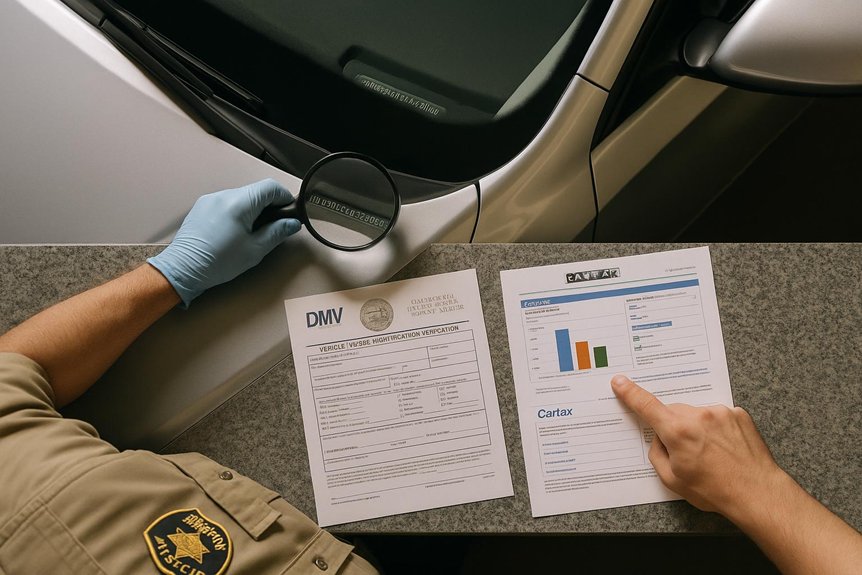
You’ll need both a VIN verification and a Carfax report when registering your vehicle in California, but they serve different purposes. The DMV requires a physical VIN verification—an official inspection by authorized personnel to confirm your vehicle’s identity matches its documentation—especially for out-of-state purchases or private sales. Carfax only provides historical records like accidents and ownership changes from databases. While a clean Carfax is valuable for purchasing decisions, it doesn’t replace the mandatory VIN verification needed to complete your California registration, and understanding how these processes work together guarantees a smooth transaction.
What Is a VIN Verification and Why Does California DMV Require It
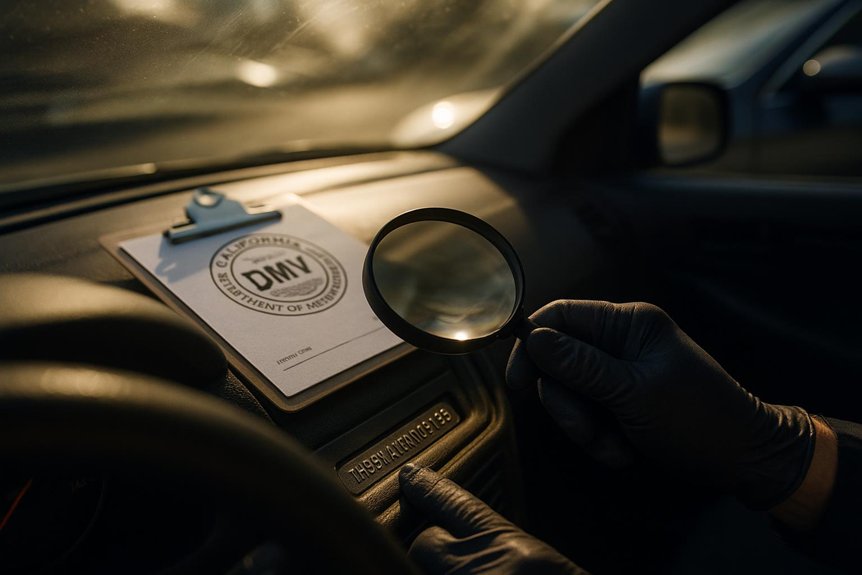
When you’re registering a vehicle in California, the DMV often requires a VIN verification to confirm your car’s identity matches its documentation.
This official inspection validates that the 17-character Vehicle Identification Number on your car matches what’s listed on your title and registration papers. You’ll need this verification when you’re bringing a vehicle from out-of-state, purchasing from a private seller, or if there’s any title discrepancy.
The DMV mandates this process to protect you and other California drivers from vehicle theft and fraud. A certified verifier physically examines your VIN plates to guarantee they haven’t been tampered with or altered.
Think of it as your vehicle’s official welcome into California’s registration system—it’s a standard requirement that all California vehicle owners navigate together. The verification process also helps identify discrepancies in VIN records across different databases to ensure your vehicle’s documentation is accurate and consistent.
Understanding Carfax Reports: What Information They Provide for Buyers
A Carfax report gives you a detailed history of any used vehicle you’re considering purchasing. You’ll discover previous ownership records, accident reports, and service maintenance logs that help you make informed decisions alongside other buyers in California’s market.
The report reveals title information, including salvage or flood damage designations that affect your vehicle’s value and safety. You’ll see odometer readings to confirm mileage accuracy and detect potential fraud. Carfax also shows registration history across different states and any recalls issued by manufacturers.
However, understand that Carfax isn’t perfect. It only includes information reported to their database, meaning some accidents or repairs mightn’t appear. That’s why you need both Carfax reports and California DMV’s VIN verification for complete vehicle documentation. Unlike a Carfax history report, a VIN verification involves a physical inspection that documents the vehicle’s configuration, public VIN, federal safety label, and emissions label.
California DMV’s Mandatory Requirements for Vehicle Registration
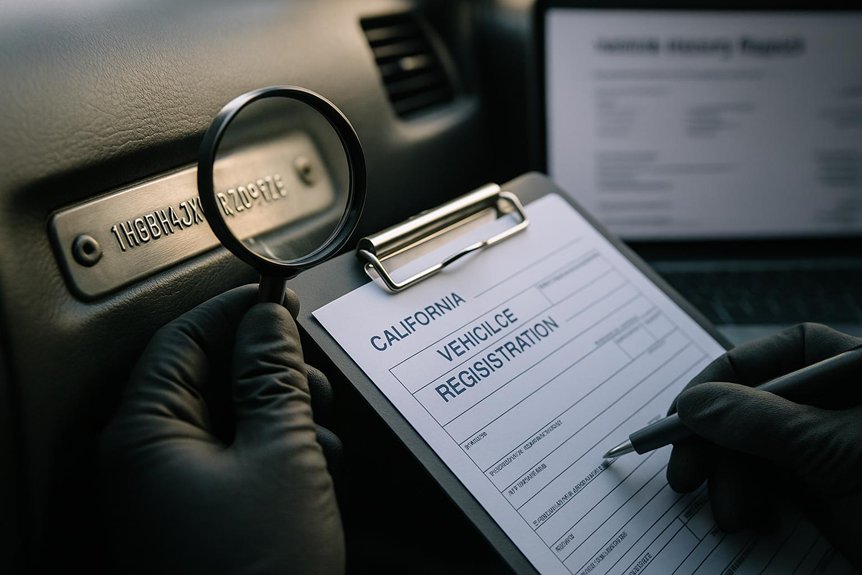
Before you can legally drive your newly purchased vehicle in California, you’ll need to complete the DMV’s registration process within 20 days of purchase or establishing residency. Here’s what fellow California drivers must provide: a completed Application for Title or Registration (Form REG 343), proof of ownership like your title or bill of sale, and valid auto insurance meeting state minimums.
You’ll also need a VIN verification—this is where many new residents get confused. The DMV requires physical inspection of your vehicle’s VIN by an authorized verifier, which differs from simply running a Carfax report. During this inspection, the verifier examines your vehicle’s year, make, model, VIN location, odometer reading, and other key details documented on the REG31 VIN verifier form. Don’t forget smog certification if your vehicle isn’t exempt, plus applicable fees and taxes. Missing these requirements delays your registration considerably.
When You Need a VIN Verification in California and Who Can Perform It
California law mandates VIN verification for several specific situations beyond initial registration. You’ll need one when bringing a vehicle from out-of-state, purchasing from a private party, or if your title’s been lost. It’s also required for rebuilt salvage vehicles and trailers.
You’re not limited to DMV staff for this service. Licensed vehicle verifiers, California Highway Patrol officers, and DMV-authorized employees can all perform verifications. Many AAA offices offer this convenience for members, and mobile verifiers will come to your location.
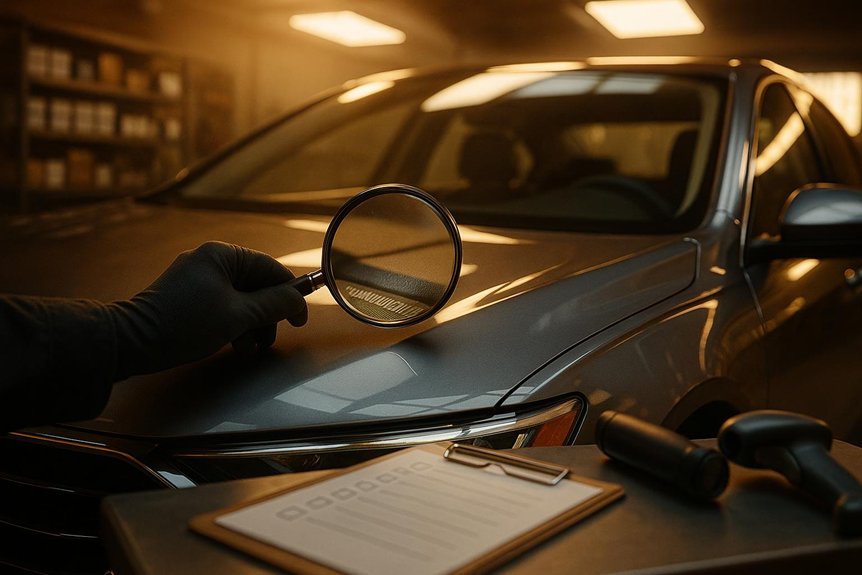
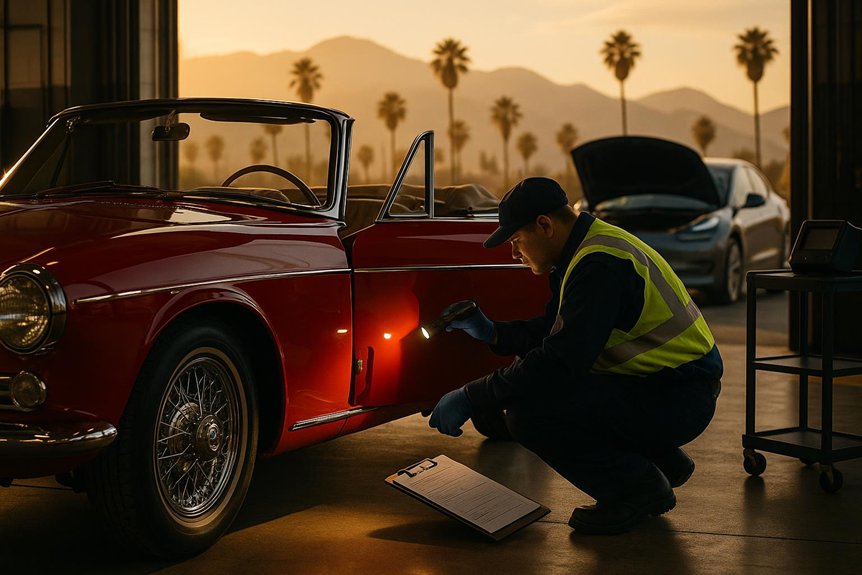
The verifier physically inspects your vehicle, confirming the VIN matches your documentation. They’ll check the dashboard plate, driver’s door jamb, and sometimes the engine block. Once completed, you’ll receive form REG 31, which you’ll submit with your registration paperwork. This process protects you from purchasing stolen vehicles and identifies discrepancies in VIN records that could indicate fraud.
How VIN Verification and Carfax Work Together in the Vehicle Purchase Process
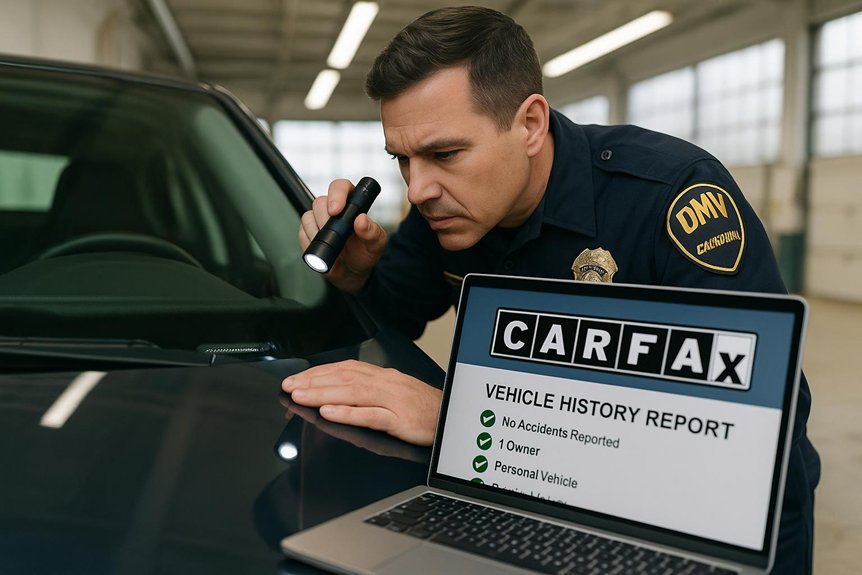
While VIN verification confirms your vehicle’s physical identity, Carfax reveals its documented history—and you need both for a complete picture when buying a car.
First, run a Carfax report to check for accidents, title issues, and odometer discrepancies. If the report looks clean, you’ll still need VIN verification for DMV registration—it’s California law for out-of-state vehicles and most private party sales.
Think of it this way: Carfax tells you what’s happened to the vehicle, while VIN verification authenticates it’s actually the vehicle in question. They’re not competing services—they’re complementary steps that protect you from fraud and guarantee you’re registering a legitimate vehicle. The physical inspection documents critical details on the REG31 form, including the vehicle’s year, make, model, VIN location, number of wheels and axles, fuel type, and odometer reading. Smart buyers don’t skip either one.
Frequently Asked Questions
Does California DMV Accept VIN Verifications Completed in Other States?
Yes, California DMV accepts out-of-state VIN verifications if they’re completed by authorized entities like law enforcement or DMV officials. You’ll need proper documentation showing the verification meets California’s requirements. Always confirm your specific situation with DMV directly.
How Much Does an Official VIN Verification Cost in California?
You’ll typically pay between $10 and $75 for an official VIN verification in California, depending on who performs it. AAA members often get discounted rates, while mobile verifiers might charge more for convenience and on-site service.
Can I Register a Vehicle Without a Carfax Report in California?
Yes, you can absolutely register your vehicle without a Carfax report in California. The DMV doesn’t require it—you’ll only need proper documentation like title, registration application, and sometimes a VIN verification. You’re good to go!
What Happens if My VIN Verification Reveals the Number Doesn’t Match?
If your VIN doesn’t match, you’ll face registration denial and potential legal issues. Don’t panic—work with the DMV immediately to investigate the discrepancy. It might be a clerical error, but you’ll need proper documentation to resolve it successfully.
Are Mobile VIN Verification Services Legally Recognized by California DMV?
Yes, California DMV recognizes mobile VIN verification services. You’ll need a DMV-licensed verifier who comes to you. They’re just as legitimate as brick-and-mortar locations, making your registration process much more convenient and hassle-free.