
RV and Motorhome VIN Verification: What Full-Timers Need to Know
October 18, 2025
Kit Car VIN Verification: Specially Constructed Vehicle Process
October 18, 2025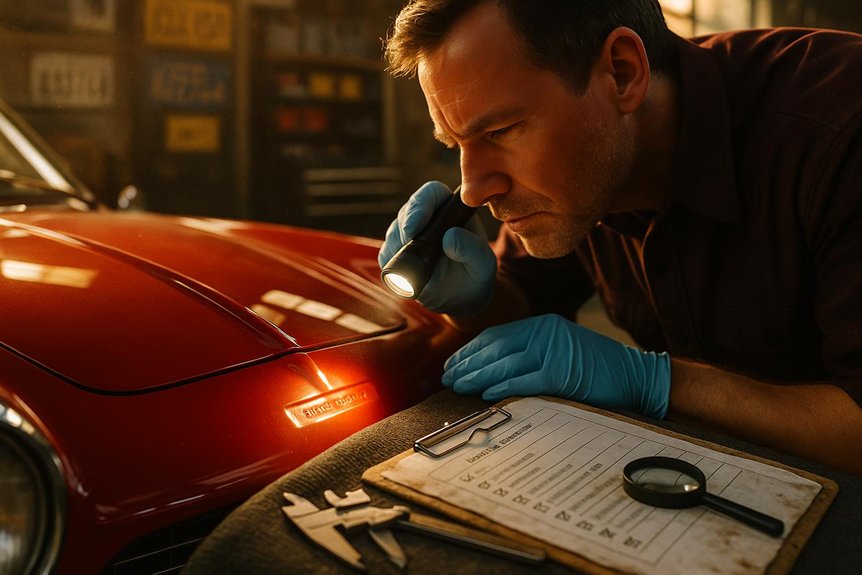
Pre-1981 IDs aren’t standardized like today’s 17-character VINs, so you’ll decode era-specific tags and stamps on the door jamb, firewall, cowl, or frame. Verify plant, year, and body codes, and inspect fasteners and stamp fonts. For missing or illegible numbers, try non-invasive recovery, then approved methods or a state-assigned ID with a bonded title. Build provenance with titles, registrations, and bills of sale to satisfy DMV. Avoid rebodied cars and mismatched numbers. The next steps make this process clear and doable.
How Pre-1981 Identification Numbers Differ From Modern VINs
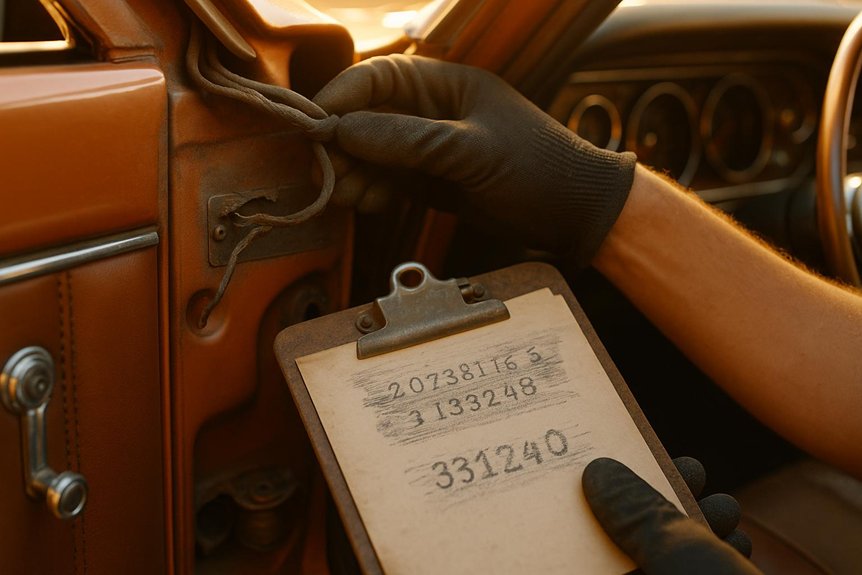
Two key differences set pre-1981 vehicle identification numbers apart from modern VINs: length and standardization. Before 1981, automakers used varying formats—often 5 to 13 characters—reflecting each brand’s practices. Today’s 17-character VINs follow a global standard, so you can decode make, model, year, plant, and check digits consistently.
With older numbers, you won’t get uniform positions for year or engine, and checksum validation usually isn’t possible.
You navigate these quirks by expecting inconsistency and confirming details against period documentation. Matching numbers may still matter, but context rules. When you embrace the era’s variety, you’re aligned with enthusiasts who value authenticity. A comprehensive VIN database can help cross-reference these non-standard identifiers against historical records and manufacturer documentation.
Locating and Decoding Manufacturer Plates, Tags, and Stamps
Before you can verify a classic’s identity, you need to find—and read—the factory plates, tags, and stamped numbers on the car. Start where enthusiasts always look: driver’s door jamb, firewall, cowl, core support, and dashboard top.
Check the engine block pad, transmission case, and frame rails for partial sequence stamps.
Decode deliberately. Match plant codes, model years, body styles, and sequential build numbers to period-correct charts. Confirm the plate rivets or rosette fasteners look right for the marque. Cross-check engine and axle codes against casting dates. Photograph everything, note locations, and keep copies. When details align, you’re part of the car’s story. Pre-1981 vehicles without a Federal Safety label require special attention during VIN verification, as discrepancies in records may need resolution before registration can proceed.
Handling Missing or Illegible Numbers: Legal Paths and Alternatives
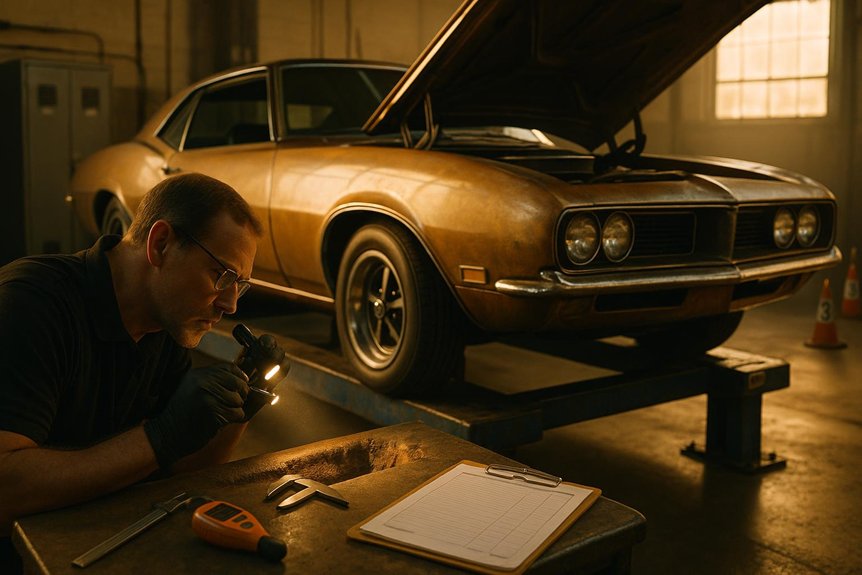
Even when a classic’s numbers are missing, painted over, or pitted beyond reading, you still have lawful options to prove identity. Start with non-invasive recovery: careful cleaning, angled light, chalk rubs, and UV or infrared photography. If that fails, ask a certified inspector about chemical etching or magnetic particle methods approved in your jurisdiction.
When recovery isn’t possible, pursue legal alternatives. Request an assigned state ID number after a theft check and lien search. Consider bonded title paths that protect both you and the community. Work with recognized clubs and licensed professionals; their involvement signals good faith and keeps your project welcome. A licensed vehicle verifier can complete the required REG31 form documenting your vehicle’s configuration and confirming the inspection results for DMV registration purposes.
Documentation, Provenance, and Meeting DMV Requirements
Once you’ve exhausted recovery methods or secured a state-assigned number, the paper trail becomes your strongest asset. Gather prior titles, registrations, bills of sale, old insurance cards, restoration invoices, period photos, club rosters, and factory literature. Cross-check engine, chassis, and body tags against catalogs and marque guides.
Build a provenance timeline: who owned it, where it lived, and when major work happened. Create a binder and a digital folder with scans, clearly labeled. For DMV compliance, complete required forms, VIN verification statements, weight or smog exemptions (if applicable), and lien releases. Bring originals, notarizations, and witnesses. You’re showing stewardship, not just ownership.
Common Pitfalls, Red Flags, and Ethical Best Practices
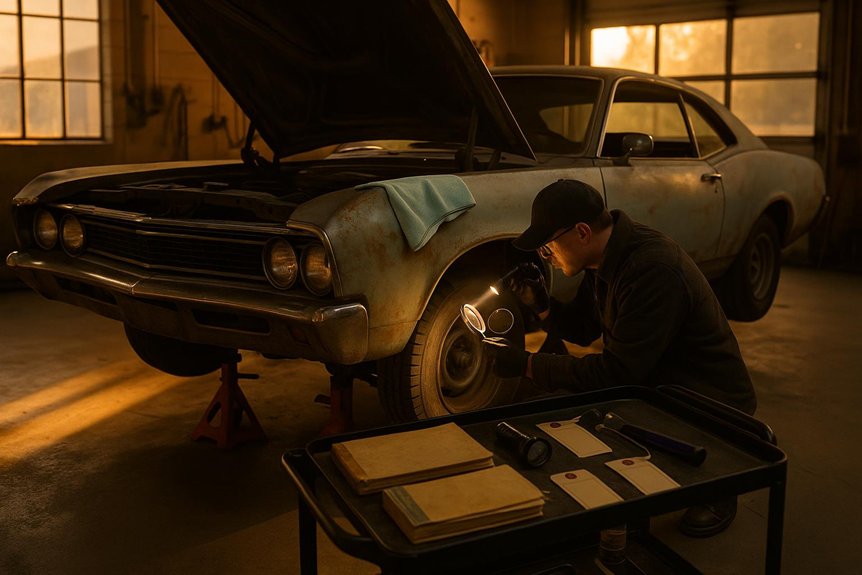
Although the chase can be exciting, you need to spot traps that jeopardize legality and value. Watch for mismatched plates, inconsistent stamp fonts, fresh welds near number locations, ground-off rivets, or tags fixed with hardware a factory wouldn’t use. Verify frame, engine, and body numbers align with period records.
Question sellers who dodge paperwork, push urgency, or dismiss inspection. Avoid “rebodying” without disclosure. Don’t buy loose VIN tags or restamped blocks; they risk seizure and stigma.
Do the right thing: document findings, keep photos, consult marque clubs, and use licensed verifiers. If doubts linger, walk away together, preserving trust and the hobby.
Frequently Asked Questions
How Do VIN Verifications Affect Classic Car Insurance Premiums and Coverage?
They can lower premiums and broaden coverage by confirming identity, build specs, and condition. You’ll qualify for agreed value, theft protection, and fewer disputes. Without verification, insurers may surcharge, restrict mileage, exclude extras, or deny claims. Get documented early.
Can International Imports Use Foreign Chassis Numbers for U.S. Verification?
Yes, you can often use the foreign chassis number, but you’ll still need U.S. verification. You’ll present import documents, compliance labels, and translations. Work with DMV, CBP, and your insurer so everything matches and everyone’s aligned.
What Tools Help Authenticate Period-Correct Components Without a VIN?
Use factory parts catalogs, marque-specific judging guides, period brochures, casting/date-code charts, and forum registries. You’ll cross-check stampings with magnification, UV light, borescopes, and paint-depth gauges. Consult club historians and archive build sheets to confirm provenance and period correctness.
How Do Appraisals Interact With VIN Verification for Valuation Disputes?
They’re intertwined: you anchor valuation with verified identity, and you defend price with documented provenance. You commission an independent appraisal, align it with verification records, resolve discrepancies, then present both as a cohesive narrative to insurers, buyers, or arbitrators.
Are Club Registries or Marque Experts Recognized by Insurers or Courts?
Yes. You’ll often see insurers and courts accept respected club registries and marque experts as corroborating evidence. You strengthen credibility by documenting membership, expert credentials, chain of custody, and consensus records, then pairing that with independent appraisals and photos.