Faded VIN Sticker: Readable Standards for Verification
October 18, 2025
Accident Damaged VIN Area: Alternative Inspection Points
October 18, 2025
European cars often use 11–14 character pre‑standard VINs tied to local approvals and production sequences. California treats these as nonconforming but accepts them with proof: foreign registration/title, bill of sale, import papers, ID, and clear photos of all stampings. CHP will inspect and document identity on a REG 31. You must also satisfy strict smog rules, show EPA/DOT or CARB compliance, or use certified conversions. Then file REG 343, pay taxes/fees, and complete verification—there’s a clear path ahead.
Why European VINs Can Be Shorter Than U.S. Standards
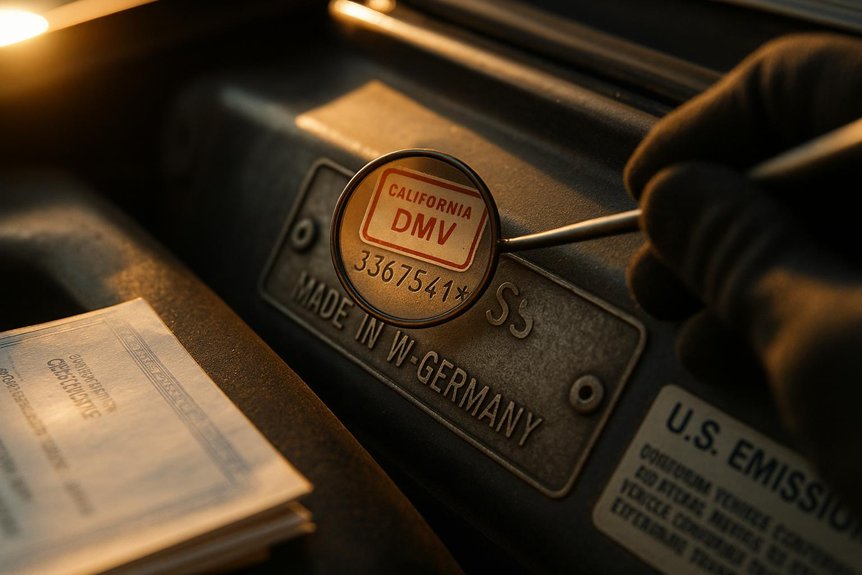
Although VINs are globally standardized at 17 characters today, you’ll still encounter shorter identifiers on older or region-specific European vehicles because some countries and manufacturers used pre-standard formats before full harmonization.
You might see 11–14 characters on classics, imports, or limited-market models. Those shorter codes often reflect local approval systems, manufacturer-specific numbering, and era-specific constraints before unified ISO rules took hold.
You’re not doing anything wrong if your vehicle’s tag looks brief; it simply mirrors its origin story. When you decode it, focus on make, model year, production sequence, and market designation. Keep documentation handy so your vehicle’s identity stays clear.
If you need to verify an unusual or shortened VIN for registration purposes, professional VIN verification services can access comprehensive databases to confirm your vehicle’s authenticity and provide the documentation required by state authorities.
How California Interprets Non‑17‑Character VINs
Because California enforces the 17‑character VIN standard for modern vehicles, the DMV treats shorter European identifiers as “nonconforming” and verifies them through alternate proof. You’re not rejected for having fewer characters; instead, officials confirm your vehicle’s identity through structured checks. They’ll compare stamped chassis numbers, manufacturer data, and model‑year clues to guarantee your car fits within California’s system.
You’ll see two outcomes. If the number’s unique and traceable, the DMV records it as the primary identifier and flags it as nonstandard. If ambiguity remains, CHP conducts a physical verification, then assigns a California identification number. You’re still welcomed onto California roads. This physical inspection is documented on the REG31 form and confirms the vehicle’s existence matches the title to prevent fraud and theft.
Documents You’ll Need for DMV and CHP Verification
Start by gathering the core proofs the DMV and CHP expect: your foreign registration or title that shows the chassis/VIN, a bill of sale or purchase invoice, government-issued ID, and proof of ownership chain if the car changed hands.
Bring any import paperwork, customs entry forms, and a translation if documents aren’t in English. Prepare clear photos of all VIN or chassis stamp locations and any manufacturer plates.
Have insurance ready, plus a completed REG 343 and a Statement of Facts if details need explaining. Keep copies of everything. Organize documents in order, so inspectors see you’ve done this thoughtfully, like an insider.
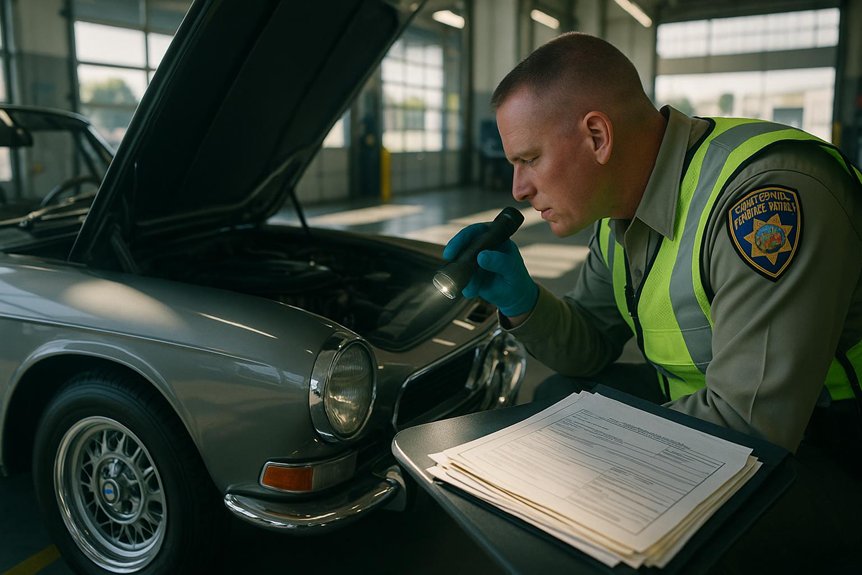
The inspector will record your vehicle’s key details on the REG31/VIN verifier form, ensuring the VIN matches your title and confirms the vehicle exists beyond paper records.
Emissions, Smog, and Federalization Considerations
With your paperwork squared away, turn to what makes or breaks many Euro imports in California: emissions and federalization. California’s smog rules go beyond federal standards, so you’ll confirm whether your car meets EPA and CARB requirements.
Check the underhood emissions label; if it lacks a U.S. or California compliance statement, you’ll likely need certified modifications and lab testing. Gray-market diesels face opacity checks and equipment verification. Catalysts, evaporative controls, OBD readiness, and fuel-system integrity matter.
Keep invoices from recognized converters and emissions labs. Know that some model years are exempt, but most aren’t. Do the homework now, and you’ll fit right in.
Step‑by‑Step Process to Register a European‑Imported Car in California
Kick things off by mapping the path from port to plates: you’ll verify eligibility, gather core documents, clear customs, address emissions/federalization, and then navigate California DMV and CHP checkpoints.
Start with EPA and DOT compliance proof, bill of sale, foreign title, and EPA Form 3520-1/DOT HS-7. Pay duty, get the CBP entry summary. Schedule BAR referee if needed; secure CARB compliance or exemptions. Obtain insurance and a weight certificate if required.
At the DMV, file REG 343, pay use tax/fees, and request a VIN verification. The CHP confirms identity on older or non‑17‑digit VINs. Finish with smog, plates, and registration.
Frequently Asked Questions
Can Classic European Motorcycles With Short VINS Use Year-Of-Manufacture Plates?
Yes, you can, but you’ll need proof the bike’s vintage and proper VIN verification. Work with DMV and CHP to confirm identity. Bring matching-era plates, registration, and documentation. Stay patient—enthusiasts like you make preservation possible.
How Do Insurers Handle Non-17-Character VINS for Policy Issuance?
Insurers usually accept legacy VINs by manually underwriting. You’ll provide photos, frame/engine numbers, and registration docs. They assign an internal ID, note the short VIN, and bind coverage. Ask classic-friendly carriers; you’ll feel supported and accurately documented.
Are There Penalties for Mis-Stamped or Duplicated European VINS?
Yes—penalties can include fines, registration denial, title revocation, and potential seizure if fraud’s suspected. You should document provenance, get a certified inspection, and correct records promptly. Don’t wait; involve DMV, manufacturer, and law enforcement to protect your standing.
Do Auction Purchases With Short VINS Affect California Titling Timelines?
Yes, they can slow California titling. You’ll face extra VIN verification, possible CHP inspection, and manual review. Plan for longer processing, keep auction documents handy, and stay patient—your preparation and persistence help you feel supported while traversing bureaucracy.
Can You Decode Short VINS to Verify Factory Options and Recalls?
Yes, you can decode short VINs, but it’s limited. You’ll confirm model, year, and some specs. Factory options and recall checks usually need full 17-digit VINs. Ask the manufacturer or dealer; they’ll help validate details together.