
Diplomatic Vehicle VIN Verification: Embassy and Consulate Cars
October 18, 2025
Lemon Law Buyback: VIN Verification Requirements
October 18, 2025
You can’t convert rental units to cash cleanly without VIN verification. It proves identity, aligns titles, mileage, trim, and recalls, and satisfies state and lienholder rules that auctions and lenders quietly use to delay funding when they’re wrong. Avoid misreads, missing trim codes, sticker/dash mismatches, and fat‑fingered odometers by validating checksums, cross-checking DMV/NMVTIS, and logging chain‑of‑ownership. Standardize with mobile scanning, batch decoders, and audits to speed resale and protect margins—and there’s a proven workflow that makes it repeatable.
Why VIN Verification Is Mission-Critical in Fleet Disposal

Often overlooked, VIN verification is the safeguard that keeps your fleet disposal clean, compliant, and profitable. You use it to confirm identity, provenance, and configuration before a title moves and a buyer commits. It proves you honor standards the whole industry trusts.
When you verify early, you align titles, mileage, trim, and recalls with what you’re selling. That transparency strengthens your auctions, retail channels, and partner confidence. It also speeds funding, reduces holdbacks, and protects margins.
Your team avoids last-minute surprises, and your reputation stays intact. The physical inspection documents VIN, model, type, make, mileage, year, and GVWR to establish a complete vehicle record. Do it consistently, document it well, and your buyers will keep choosing your lanes.
Common Errors and Discrepancies That Derail Conversions
You can do everything right on verification and still watch a sale stall because of preventable mistakes. You’re not alone—these trip up tight teams every day.
Misread characters (5/S, 0/O, 1/I) ripple into title mismatches. Missing trim digits or body codes confuse buyers and auctions. Plate-sticker VINs that don’t match dash stamps raise red flags. Fat-fingered odometer entries invite holds. Skipping secondary VIN locations costs hours.
Outdated fleet records conflict with inspection results. Smudged photos or glare hide characters. Incomplete condition notes trigger rechecks.
Fix it: slow-read every character, cross-check sources, photo clearly, document odometer, and align internal data before listing. Professional VIN verification services rely on comprehensive databases and state-of-the-art technology to catch these errors before they reach buyers.
State-by-State Requirements and Lienholder Considerations
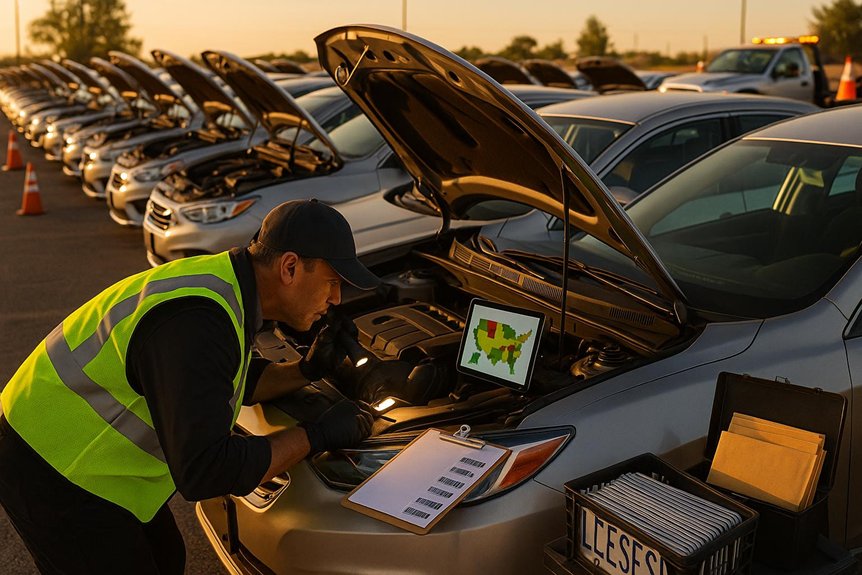
Although VINs are standardized, the paperwork around them isn’t—each state sets its own verification form, who can inspect, and whether an out-of-state vehicle needs a physical VIN check. You’ll navigate DMV, law enforcement, or licensed verifier rules that vary on signatures, seals, and odometer disclosures. Some states accept electronic inspections; others require in-person stamping. Honor emission-area carve‑outs and salvage brand triggers.
Lienholders matter. Confirm who holds title, required consent language, payoff methods, and where to send notarized releases. Some states demand original lien satisfactions; others accept electronic title drops. Align names across title, payoff letter, and VIN. Keep timestamps, carrier proofs, and contact escalation paths. In California, the REG31/VIN verifier form records key details such as vehicle year, make, model, and VIN during the mandatory physical inspection.
A Step-by-Step VIN Verification Workflow for Fleet Managers
Before listing a single unit, map a repeatable VIN verification workflow that pairs your fleet data with state-specific rules. Gather titles, prior registrations, and lien releases.
Pull VINs from your master inventory, then validate each VIN’s format and checksum. Cross-check against NMVTIS and state DMV databases to confirm make, model, year, and branding. Flag mismatches and resolve with corrected records or inspections.
Capture odometer statements and emission or safety notes where required. Document chain-of-ownership for each unit. Log approvals, dates, and who verified. Batch units by state to streamline forms. Lock the dataset, then schedule listings with confidence and unity.
Tools, Audits, and Data Controls to Accelerate Resale Readiness
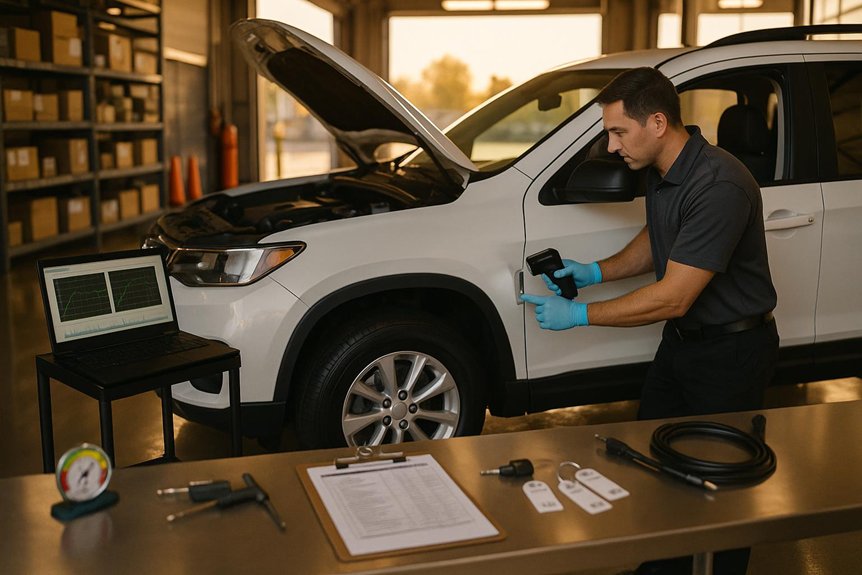
Two categories of enablers accelerate resale readiness: automation tools and governance controls. You’ll move faster when you standardize VIN capture with mobile scan apps, API-connected DMS integrations, and batch decoders that flag exceptions instantly. Use RPA to pull titles, warranty status, and recall data, then push clean records to your resale channels.
Backstop speed with trust. Run scheduled data audits, role-based access, and field-level validation rules. Maintain an immutable VIN change log, approval workflows for corrections, and segregation of duties. Add dashboards for aging exceptions and audit trails tied to unit IDs. With this shared framework, your team sells sooner, together.
Frequently Asked Questions
How Do VIN Verification Timelines Impact Seasonal Demand Peaks in Used Car Markets?
They delay listings, tighten supply, and push prices higher during peaks. You plan earlier, batch inspections, and pre-book verifiers to stay stocked. You also communicate timelines transparently, so your community trusts your pipeline and shops confidently when demand surges.
What Training Reduces Frontline Staff Errors During Bulk VIN Verification Events?
Hands-on VIN decoding drills, standardized checklist training, and brief daily huddles reduce errors. You practice scanner/device workflows, red-flag pattern recognition, and peer double-checks. You role-play edge cases, use shadowing, and refresh microlearning modules so everyone feels confident and aligned.
How Should Cross-Border De-Fleeting Handle Bilingual VIN Documentation and Translations?
You standardize bilingual templates, require certified translations, and embed dual-language fields in your VIN systems. You staff native speakers, run glossary-driven QA, and audit samples. You align with cross-border regulations, timestamp versions, and train teams to respect regional terminology.
Which KPIS Best Quantify Verification Efficiency Beyond Basic Pass/Fail Rates?
Track verification cycle time, touchpoints per record, first-pass yield, rework rate, exception queue aging, auditor acceptance rate, cost per verification, automation coverage, and defect density. You’ll foster shared accountability, celebrate improvements, and feel progress together across teams.
How Do Subscription Fleets Differ From Traditional Rentals in VIN Documentation Needs?
They require richer, recurring VIN attestations tied to subscriber agreements, mileage tiers, and multi-month custody changes. You’ll manage digital provenance, over-the-air updates, maintenance events, and transfer logs—aligning with OEM APIs—so regulators, insurers, and community partners trust your shared, evolving asset history.