
Facebook Marketplace Car: Private Party VIN Verification
October 18, 2025
Tow Yard Release: VIN Verification After Impound
October 18, 2025
You need to verify a barn-find VIN to confirm what it is, prove ownership, and avoid clones, rebodies, theft history, or title shocks. Check the driver-side door jamb, dash lip, firewall, cowl, radiator support, and under carpets; compare plates, stamps, and title. Decode era-specific formats and confirm consistency across body, frame, and drivetrain. Follow your DMV’s verification path, fees, and photo/notary rules. Photograph everything, keep bills of sale, and build a custody timeline. There’s more that’ll save you grief.
Why VIN Verification Matters for Barn Finds

Even if a barn find looks complete, you can’t trust its story without confirming the VIN. You’re not just buying metal; you’re joining a community that values truth.
A verified VIN ties the car to its build records, options, and provenance, protecting you from clones, rebodies, and title surprises. It shields your budget from mismatched parts and hidden theft history, and it strengthens resale value when you share documentation at shows.
You also avoid registration headaches and insurance gaps. With a clean VIN, you can order correct parts, decode authenticity, and celebrate the car’s real identity—confident you belong with the car, and it belongs with you. Professional VIN verification services use state-of-the-art technology and comprehensive databases to ensure accurate results for all vehicle types.
Where to Find VINs on Classic and Vintage Cars
Before you grab a flashlight, know that VINs on classics aren’t always in the modern windshield spot. You’ll find tags and stampings where builders once hid them with pride.
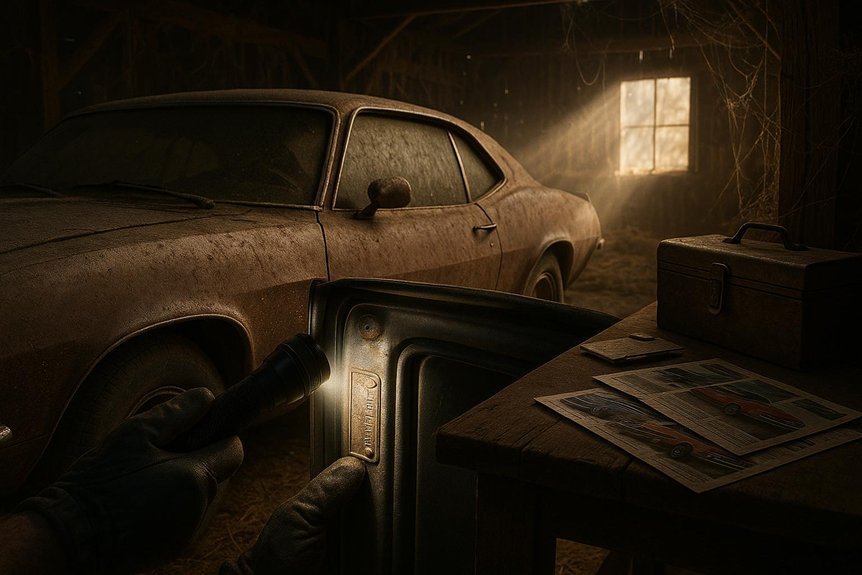
Start at the driver-side door jamb, latch pillar, or door edge. Check the dashboard lip, visible through the windshield on later cars. Look on the steering column, glovebox door, or under the ashtray.
Scan the firewall, cowl, and radiator support. Inspect frame rails, front crossmember, or trunk gutter. Lift carpets near the transmission tunnel.
Clean gently; corrosion obscures digits. Compare plates, stamps, and titles. Photograph everything. You’re preserving your car’s story. Once located, a physical inspection will document the VIN on a REG31 form to confirm your vehicle’s existence and match it with the title.
How to Decode VINs Across Different Eras and Manufacturers
While modern VINs follow a global 17-character format, classics span a patchwork of lengths, codes, and placements that vary by decade and brand. You’ll decode by era first, then by manufacturer.
For 1950s–60s domestics, shorter sequences often embed assembly plant, body style, and engine. Late-1960s–1980s makers add model year and production sequence. European marques may use chassis series plus engine/type codes, sometimes split across plates.
Japanese VINs evolve in the late ’70s, mixing frame codes with engine families. Cross-reference factory charts, service manuals, and club registries. Verify consistency across body, frame, and drivetrain stampings to confirm identity.
Post-1970 vehicles also require federal safety labels to be present during the physical inspection, as those lacking these labels cannot be verified by licensed private verifiers.
Navigating DMV and State Requirements for Verification
Because rules vary by state and vehicle age, you’ll start by identifying your DMV’s specific path for verifying a long-stored car: who can inspect the VIN (DMV agent, licensed verifier, law enforcement), what form they require, and whether the car must be trailered in or can be inspected on-site.
Next, check appointment lead times and whether you need a temporary permit to move the car. Confirm fees, notarization, and photo requirements. If your state supports mobile verification, coordinate a safe, accessible location. Bring your ID and any prior registration numbers. Keep copies of every submission.
Join local clubs; members share state-specific know-how.
Red Flags, Documentation Tips, and Proof for Registration
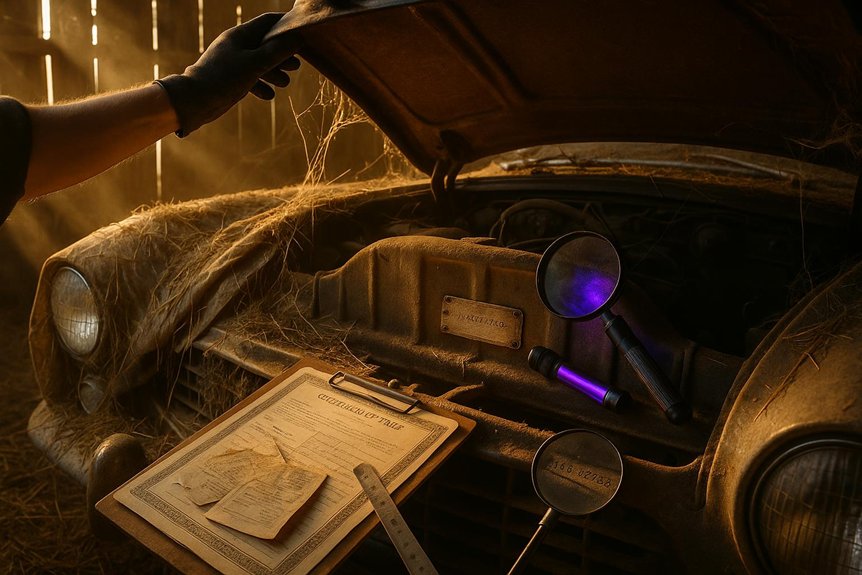
Spot red flags early so you don’t sink time into a VIN that won’t pass. Scrutinize plates for tampering, mismatched rivets, uneven stamp depth, or altered fonts. Cross-check VIN on frame, dash, door, engine pad, and body tags—everything should align. If numbers don’t match, walk.
Document everything. Photograph VINs, odometer, engine casting, and body numbers. Keep bills of sale, prior registrations, and any plates. Get notarized affidavits from sellers or property owners.
Prove lawful ownership. Use a title, bonded title, or court-ordered ownership if needed. Keep a timeline of custody. Bring ID, insurance, and receipts. You’re building trust—and a clean paper trail.
Frequently Asked Questions
Can Mobile VIN Verifiers Inspect a Vehicle That Doesn’T Run or Roll?
Yes, they usually can. You schedule a mobile verifier, guarantee safe access, and they’ll inspect visible VIN locations even if it doesn’t run or roll. You’ll provide ID and paperwork; they’ll complete required forms on-site.
How Do Weathered, Illegible VIN Tags Get Professionally Restored or Conserved?
Professionals clean gently, stabilize corrosion, and use oblique lighting, acid etching, or magnetic particle imaging to recover characters. You document each step, photograph results, and secure the tag. You avoid alterations, follow legal standards, and protect your community’s shared history.
What Insurance Coverage Is Needed During VIN Inspection or Transport?
You’ll want garagekeepers or on-hook/cargo during transport, general liability at inspection sites, and all-inclusive/physical damage with agreed value. Add roadside assistance, uninsured motorist, and temporary coverage extensions. Ask your club or broker for tailored, community-friendly policy bundles.
Will a VIN Verification Affect the Car’s Appraised Value or Auction Eligibility?
Yes—VIN verification itself won’t change value, but it confirms identity, boosting buyer confidence. If numbers don’t match or show tampering, you’ll face value drops and eligibility issues. Keep documentation organized, photograph stamps, and use reputable inspectors to belong.
Can Hidden or Secondary VINS Be Imaged With Borescopes or Paint Meters?
Yes, you can image hidden or secondary VINs with borescopes; paint meters help locate disturbed areas. Use flexible probes, angled mirrors, strong lighting, and high-resolution capture. Document everything, avoid abrasion, and invite a trusted inspector so everyone shares confidence.