Cloned VIN Detection: Protecting Against Fraud
October 18, 2025
VIN Verification in California Vs Other States
October 18, 2025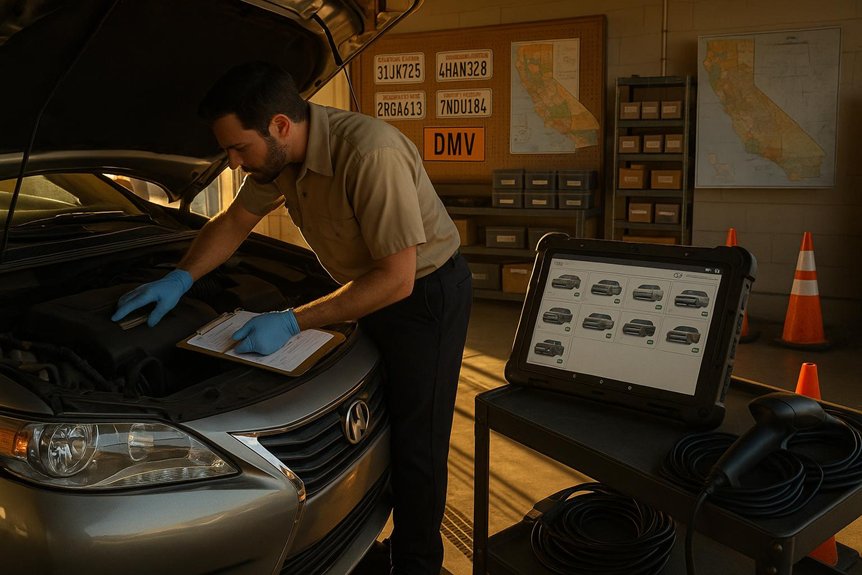
California logs your VIN verification in a secure statewide database. DMV staff, licensed verifiers, law enforcement, or CHP record the VIN, labels, odometer, and ownership details, then upload findings tied to their credentials and your application. The system syncs statewide and auto-checks NMVTIS, NCIC theft lists, and recalls to flag clones, rollbacks, or title issues. Clean results speed registration; flags can pause processing or require fixes like bonded titles. You’ll see how this protects you and streamlines title rebuilds next.
Who Performs VIN Verifications in California
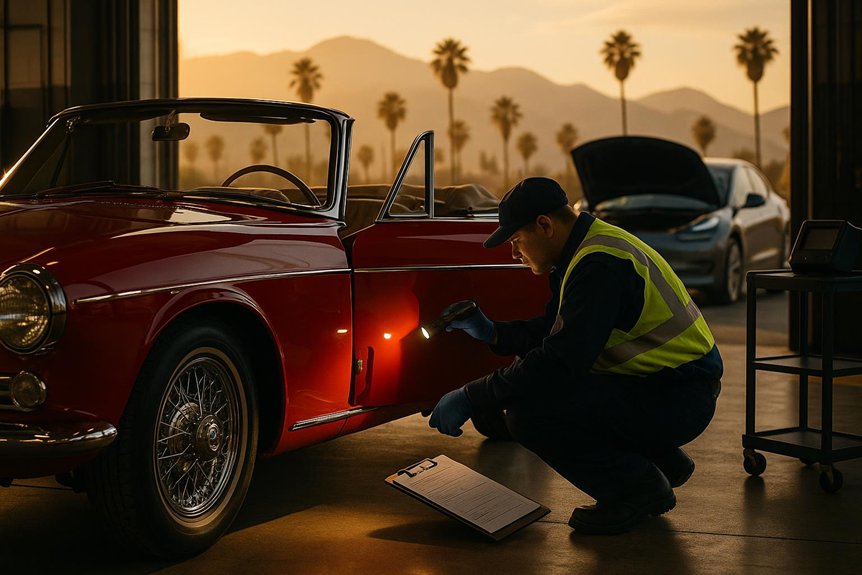
Wondering who can legally verify a VIN in California? You’ve got several trusted options. DMV employees can verify at field offices. Licensed vehicle verifiers—independent professionals registered with the state—can come to you.
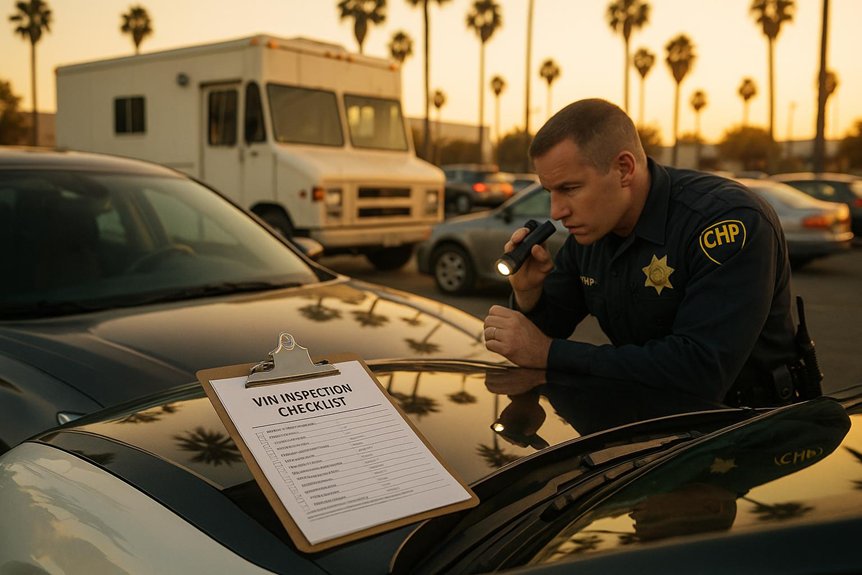
Law enforcement officers may verify, especially for recovered or special cases. Certain CHP officers handle complex situations like out-of-state or salvaged vehicles. Some licensed dealers can verify during sales or transfers.
Choose a verifier who’s authorized, current on California requirements, and willing to document your vehicle’s specifics on the proper DMV form. Quick VIN Verification offers convenient mobile service throughout Los Angeles, Orange, Riverside, and San Bernardino counties for $150, or $45 at their Torrance location. You’re not alone—these professionals help you move smoothly through registration, title corrections, and ownership changes with confidence.
What Data Is Collected During an Inspection
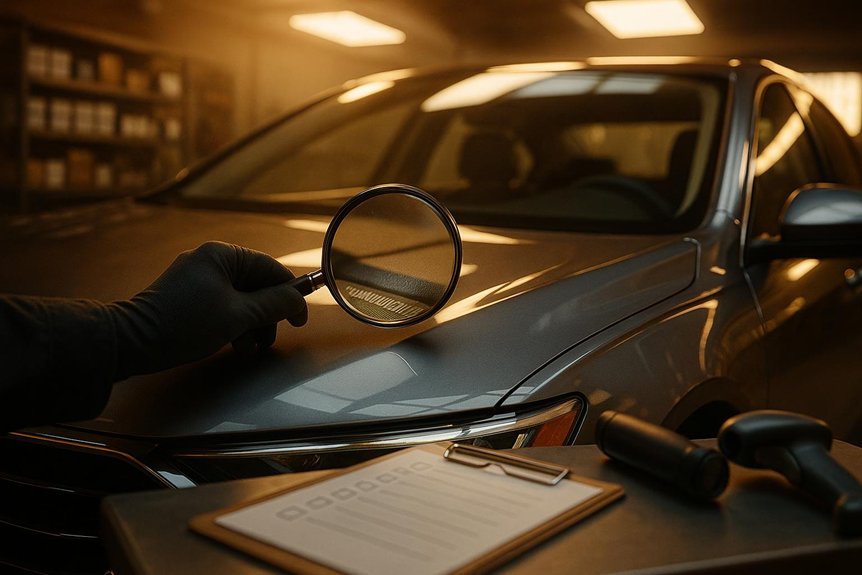
During a California VIN inspection, the verifier records the VIN exactly as stamped on the vehicle, its location on the car, and any secondary VINs or labels. They also note the make, model, year, body type, fuel type, and odometer reading.
You’ll see them check federal certification labels, emission stickers, and any tamper-evident marks. They confirm plate numbers, temporary permits, and ownership documents match the vehicle. If there are alterations, missing labels, or mismatches, they document them clearly. Photos or rubbings may be taken when allowed.
The inspector follows the REG31 form from top to bottom, recording the number of wheels, axles, and vehicle license plate to ensure complete documentation.
You’re part of the process: your accurate answers and access to labels help guarantee everything aligns.
How Information Flows Into the Statewide Database

Once the inspection wraps, the verifier enters your vehicle’s details directly into the DMV’s secure system, tying the VIN, make/model, year, and label checks to your application record. You see the result in your account soon after submission. The entry time-stamps the visit and links the verifier’s ID, so your file stays accountable and consistent.
From there, your record syncs across the statewide database. County offices and DMV staff access the same source, reducing repeated paperwork and mismatched forms. If something needs clarification, they message you through your chosen contact channel. You stay in the loop, and your application keeps moving without extra trips. This comprehensive VIN database ensures that all vehicle information remains accurate and accessible throughout the verification process.
Cross-Checks With National Systems and Fraud Flags
With your record synced statewide, the system automatically runs your VIN against national sources like NMVTIS, NCIC theft lists, and manufacturer recall databases. These cross-checks confirm identity, detect cloned numbers, and surface title anomalies. You’ll see clear status indicators: green for clean, yellow for mismatches, red for suspected fraud or theft.
The database also flags odometer rollbacks, export/import conflicts, and duplicate ownership trails. If a flag appears, you’re guided to verify documents, submit photos, or schedule a secondary inspection. Auditable logs show who reviewed what, so you’re not alone. Transparent steps help you resolve issues quickly and keep trust intact.
Impacts on Registration, Title Rebuilds, and Consumer Protection
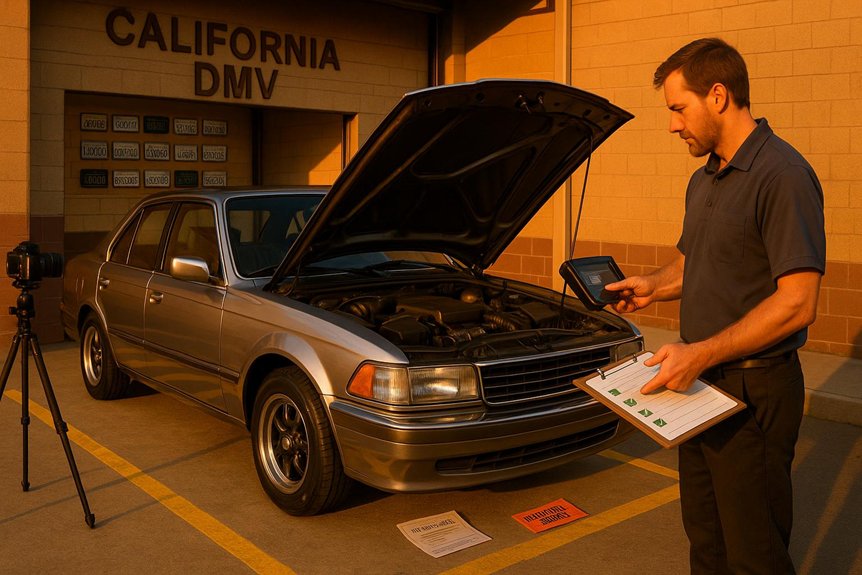
Although verification runs quietly in the background, its results directly shape your next steps: a clean record speeds registration and title issuance, while yellow or red flags can pause processing, trigger holds, or require a bonded title.
You’ll see salvage, theft, odometer, or duplicate VIN alerts, each guiding what paperwork and inspections come next. If you’re rebuilding a title, the database confirms parts sources, prior damage, and law-enforcement clearances before you rejoin the road legally.
This protects you and the community from unsafe cars and shady sales. By resolving discrepancies early, you save fees, avoid rejections, and strengthen buyer trust.
Frequently Asked Questions
How Long Is VIN Verification Data Retained in California’s Database?
It’s typically retained for several years, often aligning with DMV record schedules of about 4–7 years. You can request copies, appeal inaccuracies, and feel confident your verification supports registration, fraud prevention, and community safety across California’s roads.
Can Vehicle Owners Access Their Own VIN Verification Records Online?
Yes, but not directly. You can’t browse a public VIN verification database. You’ll access your record by logging into your DMV online account, requesting vehicle history, or contacting DMV/CHP. Bring your VIN, plate, ID, and inspection date.
What Privacy Protections Apply to VIN Verification Information?
You’re protected by state privacy laws, limited-use DMV policies, and redaction of sensitive data. Agencies restrict access, log queries, and share only for lawful purposes. You can request your records, correct errors, and file complaints if misuse occurs.
Are Out-Of-State VIN Verifications Recognized by California DMV Systems?
Yes, but only if a California‑approved form and verifier completed it. You’ll need a CHP officer, DMV employee, or licensed verifier signature. Bring originals; photocopies aren’t accepted. If standards don’t match, you’ll redo verification in California.
How Do Errors in VIN Entries Get Corrected or Disputed?
You correct VIN entry errors by filing a Statement of Facts (REG 256), showing proof like title or photos, and requesting a DMV re-verification by a licensed verifier or CHP. Keep copies, follow up, and advocate politely.