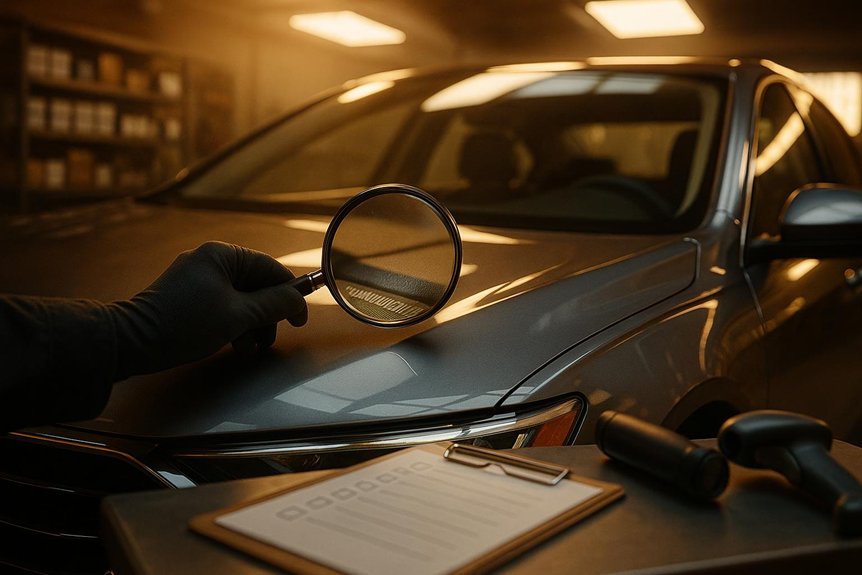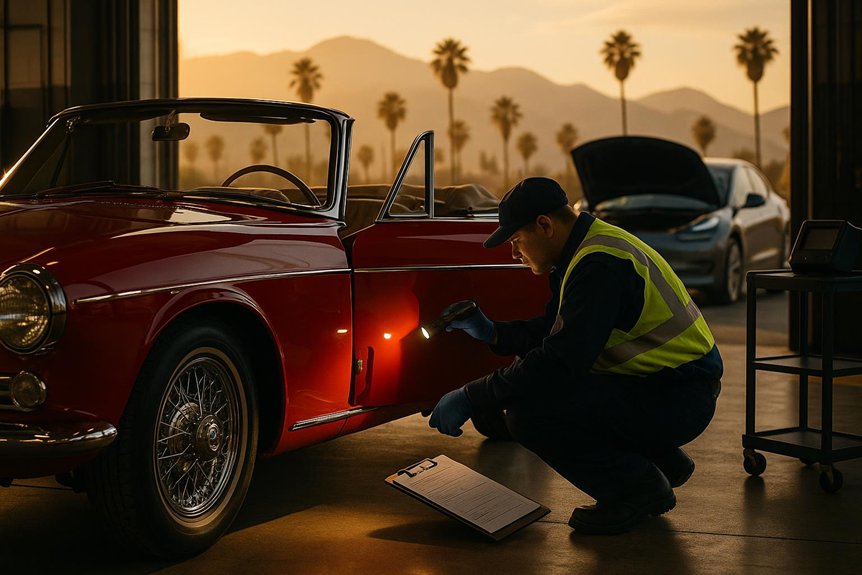
VIN Tampering Detection: What Inspectors Look For
October 18, 2025
VIN Verification Photography: Documentation Requirements
October 18, 2025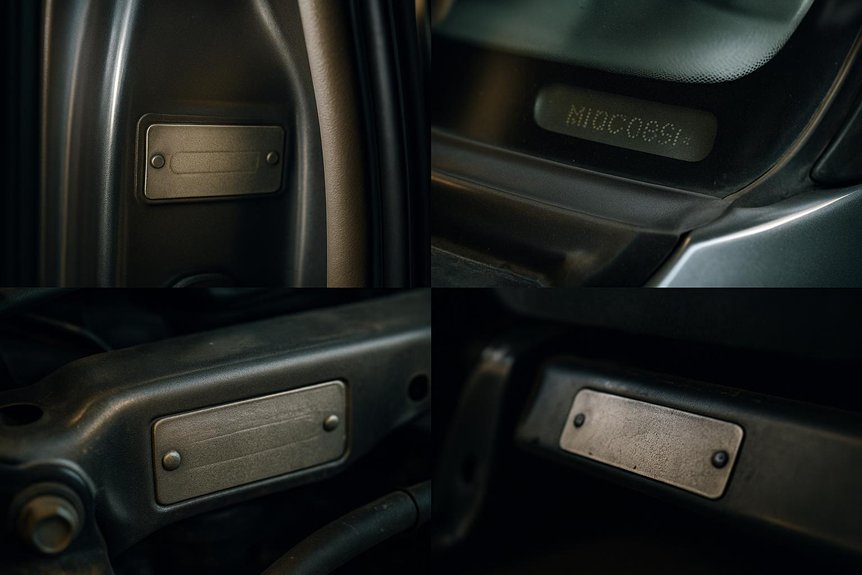
Need confidential VIN locations fast? You’ll use them to confirm identity, catch tampering, validate warranties, and protect resale value. First, get permission, follow local laws, wear gloves, secure the car, and disconnect power where required. Check door jambs, firewall, strut towers, radiator support, cowl, seat mounts, floor tunnel, frame rails, and trunk wells. Examples: Ford/Lincoln—strut towers; GM—cowl seams/rear rails; Toyota—firewall/right-front floor; Honda—seat mounts/upper rails. Photograph, note context, and verify fonts and spacing to spot inconsistencies—more specifics follow.
Why Manufacturers Use Confidential VINs
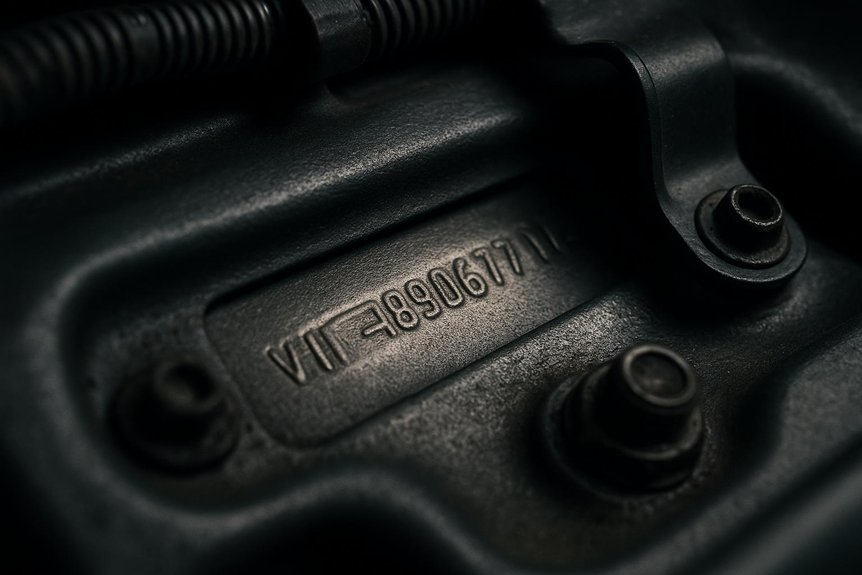
Although the public VIN tells most of the story, manufacturers use confidential VINs to verify a vehicle’s identity when tampering, theft, or cloning is suspected. You rely on these hidden stamps and stickers because they anchor a car’s true identity beyond dashboards and titles. They’re tucked where casual eyes won’t look, giving technicians and investigators a trustworthy baseline.
Manufacturers also use confidential VINs to validate warranty claims, track recalls accurately, and monitor quality trends across production. When parts get swapped or numbers don’t match, these markers restore clarity. They help your community spot fakes, protect resale value, and keep your shared standards intact. During a VIN verification inspection, professionals document these hidden locations to confirm the vehicle identification number matches the title and prevent fraudulent activities.
Legal and Safety Considerations Before You Search
Before you go hunting for hidden VINs, know the legal lines and safety risks. You’re responsible for obeying trespass, tampering, and privacy laws. If the vehicle isn’t yours, get written permission.
Many regions criminalize altering or removing VIN plates; even innocent mistakes can trigger fines or impound. Document your purpose, keep records, and verify local statutes before you touch anything.
Prioritize safety. Park securely, set the brake, and use proper lighting and gloves. Avoid sharp edges, hot components, and chemical residues.
If airbags, batteries, or high-voltage systems are involved, disconnect power per manufacturer guidance. When unsure, invite a licensed professional to assist.
Professional VIN verification services can perform thorough inspections while ensuring compliance with all documentation and legal requirements.
Common Hidden VIN Locations Across Most Vehicles
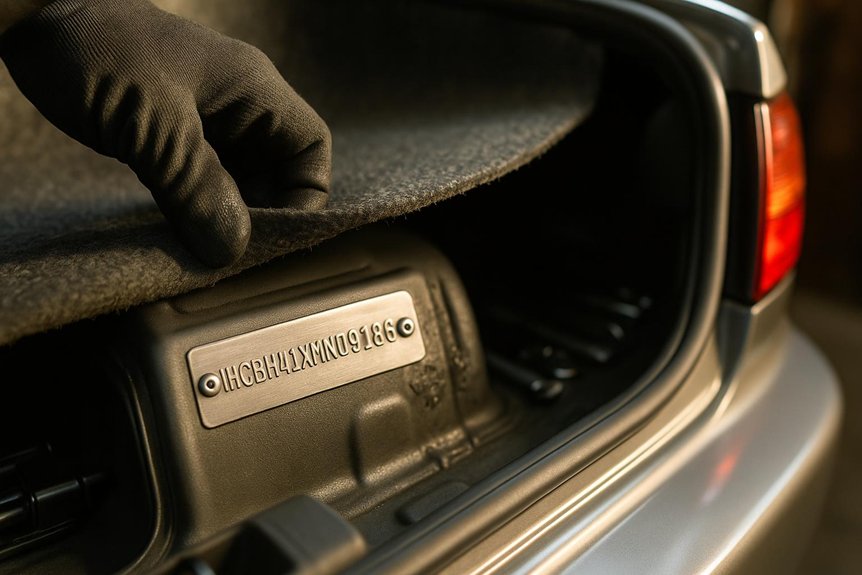
Even when a dash tag is missing or obscured, most vehicles hide backup VINs in predictable spots you can check quickly. You’re not alone—pros look in the same places.
Start at the driver‑side door jamb and latch pillar. Pop the hood: scan the firewall, strut towers, and radiator support. Check the cowl edge near the windshield.
Slide under the front seats or lift the carpet along the tunnel. Look at the frame rails, especially front right and rear sections. Open the trunk: spare‑tire well and inner quarters often carry stamps.
Glance at the steering column, glovebox liner, and underhood fenders. Professional VIN verification services use these same locations to confirm vehicle identity when the primary dashboard plate is damaged or suspect.
Brand-by-Brand Hidden VIN Reference
Often the fastest way to confirm a vehicle’s identity is to know where each brand hides its backup stamps and labels. You’re not alone—each maker follows familiar habits.
On Ford and Lincoln, check front strut towers and radiator supports. GM brands often mark cowl seams and rear frame rails. Toyota and Lexus favor firewall lips and right-front floor pans.
Honda and Acura tuck tags near seat mounts and upper rails. Nissan and Infiniti use apron flanges and trunk gutters. BMW and MINI stamp shock turrets; Mercedes-Benz marks front crossmembers.
Volkswagen and Audi prefer spare-well seams; Porsche favors front trunk rails.
Best Practices for Documenting and Verifying Findings
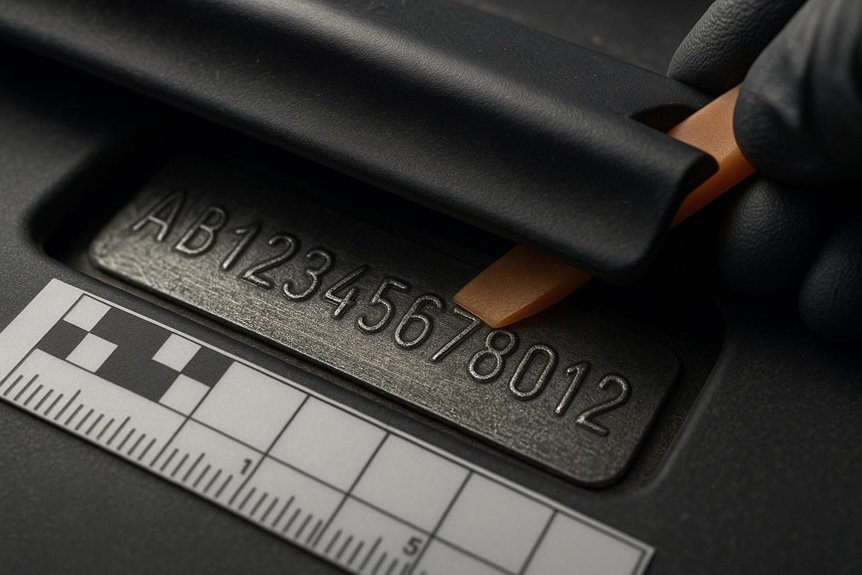
Now that you know where brands tend to hide secondary VINs, lock in your process for capturing what you find. Photograph the VIN in context, then zoomed, with a date/time stamp and a scale reference. Record location, orientation, fasteners, coatings, and anomalies. Note ambient conditions and access steps you took.
Cross-check against OEM sources, trusted databases, and prior cases. Verify character fonts, depth, spacing, and alignment. Compare all VIN appearances across the vehicle; flag mismatches. Preserve chain of custody: name files consistently, hash originals, and store redundantly. Share findings with your team for peer review. If uncertain, pause and escalate.
Frequently Asked Questions
How Do Extreme Climates Affect Durability of Hidden VIN Markings?
They can fade, corrode, or distort materials, so you’ll see reduced legibility and adhesion. You’ll protect markings by choosing resistant substrates, UV-stable inks, sealants, and regular inspections. Don’t skip cleaning, moisture control, and temperature buffering to keep everyone confident.
What Tools Safely Reveal Paint-Obscured or Corroded VIN Characters?
Use plastic scrapers, soft-bristle brushes, microfiber cloths, isopropyl alcohol, pH-neutral degreaser, and gentle rust remover. Employ a magnifying glass, LED flashlight, and oblique lighting. Avoid grinders. If needed, consult certified pros to protect legal integrity together.
Can Aftermarket Parts Accidentally Conceal or Destroy Hidden VINS?
Yes, aftermarket parts can conceal or damage hidden VINs. You should verify fitment, avoid drilling near factory stamp areas, use non-permanent adhesives, photograph locations before installs, and consult service manuals. Protecting VINs keeps your vehicle’s identity—and community trust—intact.
How Do Auction Houses Verify Hidden VIN Authenticity During Inspections?
You’ll see specialists cross-check manufacturer records, use borescopes and UV/forensic lights, compare stamp fonts and depths, scan ECU data, and review provenance. They document chain-of-custody, consult marque experts, and flag anomalies, ensuring your community’s trust and authenticity.
Are VINtage Restoration Practices Accepted by Insurers for VIN Legibility?
Yes, but only when restorations follow documented standards. You’ll need photos, before/after records, provenance, and compliance with state laws. Loop in your insurer early, use reputable restorers, avoid altering original stamps, and request underwriting approval in writing.