VIN Verification Equipment: Tools of the Trade
October 18, 2025
Confidential VIN Plates: Hidden VIN Locations by Manufacturer
October 18, 2025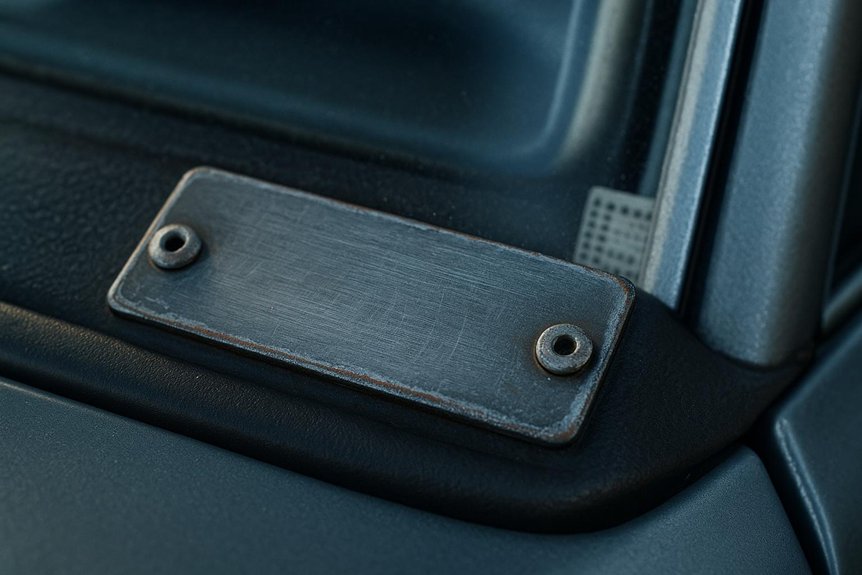
You spot VIN tampering by checking the dash plate’s factory placement, clean edges, and correct rivets—not hardware-store pop rivets or warped metal. Cross-check the full 17-character VIN across the windshield etch, door jamb sticker, firewall, engine, transmission, frame, and trunk. Verify uniform fonts, etch depth, spacing, and label materials. Look for overspray, tape lines, adhesive halos, or disturbed panels. Then confirm the VIN in NMVTIS/DMV records and paperwork for gaps or salvage flags. There’s more you can catch with a sharper checklist.
Physical VIN Plate and Rivet Integrity Checks
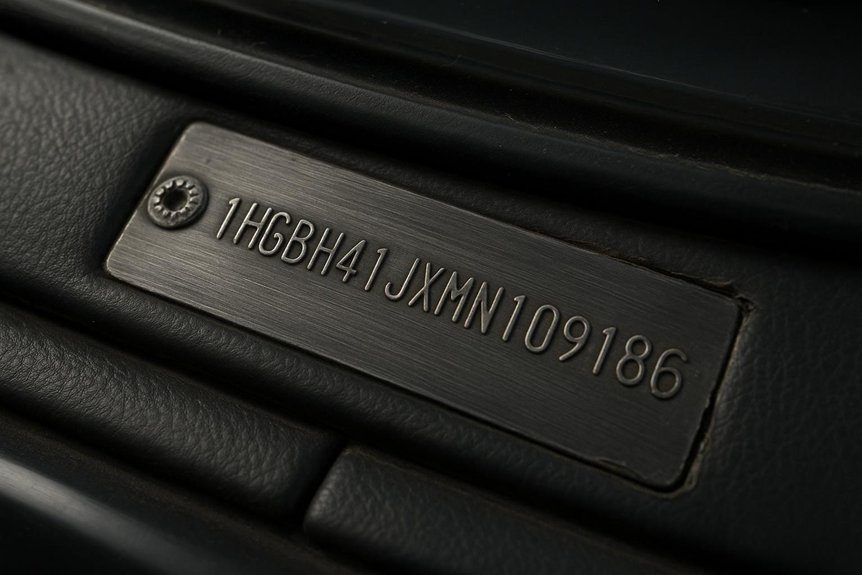
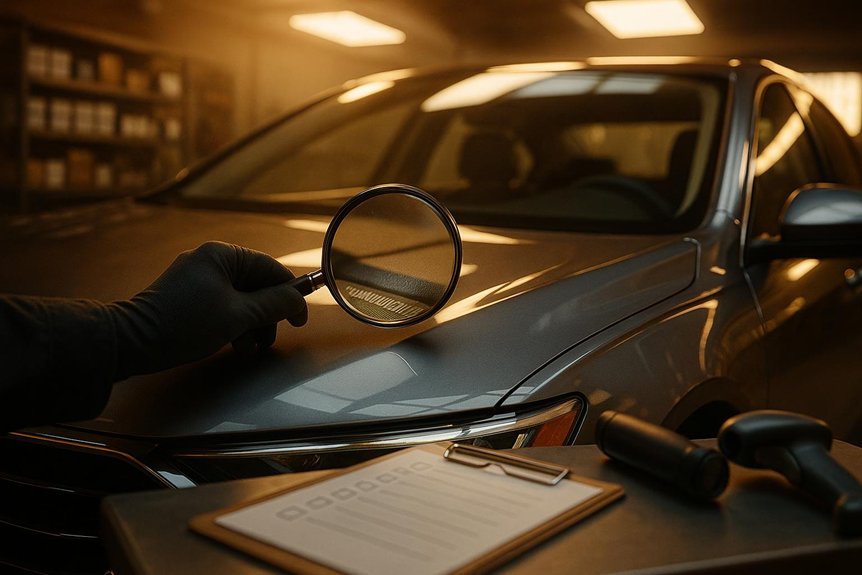
Even before you run database checks, start by inspecting the physical VIN plate and how it’s attached. You’re looking for factory-style placement, consistent fonts, clean edges, and unwarped metal. Trust your fingertips—lightly trace the plate; raised paint ridges, sharp burrs, or adhesive bleed suggest removal or overlay. Compare surface wear: a brand-new plate on a weathered dash is a red flag.
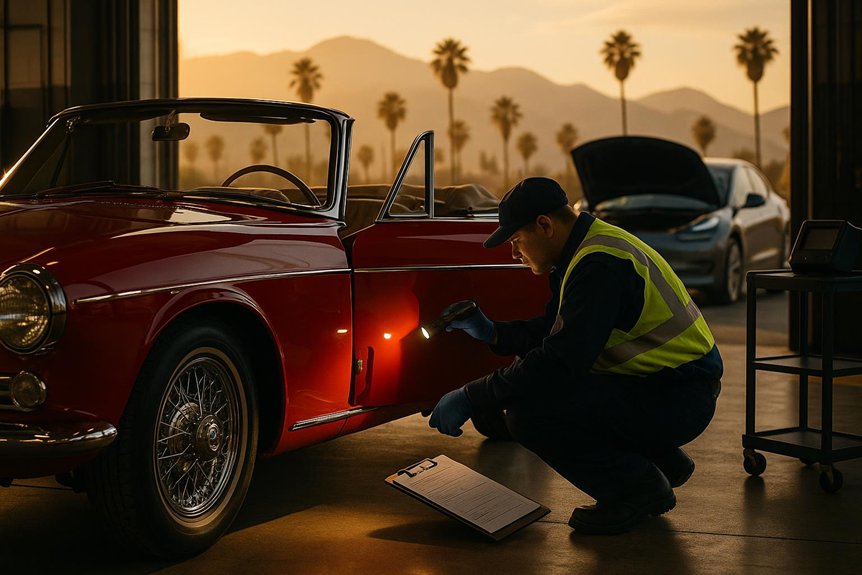
Now study rivet integrity. Factory rivets match make and era: correct heads, uniform depth, clean crimp, and matching finish. Beware hardware-store pop rivets, tool marks, ovalized holes, misaligned seating, or mismatched patina. Photograph anomalies and note lighting, angles, and context. These physical discrepancies are precisely why VIN verification exists—to ensure the vehicle identification number on the physical plate matches official title documentation and prevents fraud.
Cross-Referencing VINs Across All Vehicle Locations
Before you trust a single tag, confirm the VIN matches everywhere it should appear: the dash plate, windshield etching (if present), door jamb sticker, firewall stamp, engine block, transmission case, frame rail, and trunk or spare tire well. Work methodically; photograph each location so your team sees the same story. Compare all 17 characters, not just the last six.
Watch for characters swapped, omitted, or transposed. Note missing locations that should exist for the model year. Record mileage and service stickers that reference a VIN and confirm alignment. When something’s off, pause. Don’t rationalize discrepancies—document them and escalate. You’re safeguarding everyone.
This verification process identifies discrepancies in VIN records that may indicate tampering or fraud, serving as a critical protective measure during vehicle registration and title transfers.
Font, Etching, and Label Consistency Verification
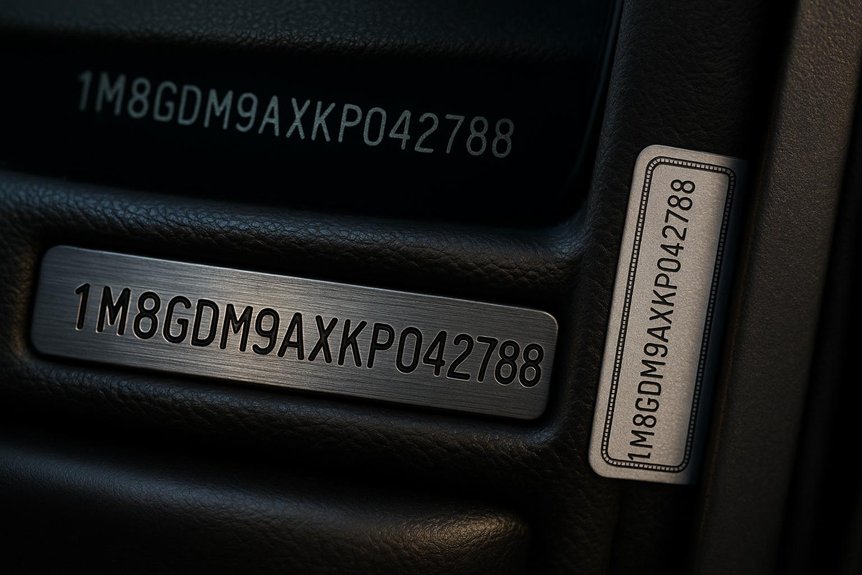
Small inconsistencies in typeface, etch depth, spacing, and label construction often reveal tampering. You’re looking for uniformity that matches the manufacturer’s standards and your team’s shared expectations. Compare character shapes, stroke thickness, and alignment.
Factory stamps and laser etches have consistent depth and clean edges; shaky grooves, burrs, or uneven burn indicate rework. Measure character spacing; irregular gaps suggest re-stamping. Check label substrates, corner radii, print crispness, and microtext—OEM labels resist smearing and UV fade.
Verify holograms, security weaves, and serial sequencing. Cross-check fonts and etch styles across all VIN instances; consistent style across locations shows authenticity and keeps everyone confident. Professional inspectors use state-of-the-art verification technology to compare suspect markings against comprehensive manufacturer databases, ensuring accurate detection of alterations.
Signs of Tampering: Paint, Adhesive Residue, and Panel Disturbance
While fonts can lie, surfaces rarely do: scrutinize paint edges, residues, and panel fit for the truth. Look for overspray, mismatched tones, or dry spray around the VIN plate and adjacent metal. Hard tape lines or sudden texture changes suggest repainting after plate removal. Run a fingernail along edges—feel for ridges.
Check adhesive halos, smeared glue, or brittle foam under labels or plates. Factory-applied adhesives lay uniform; patchy areas indicate rework. Inspect panel gaps near the cowl, dash, and door jambs. Uneven spacing, fresh fasteners, or disturbed seam sealer point to prior access. Trust your senses—and our shared standards.
Database Verification, Paper Trail Review, and Next Steps
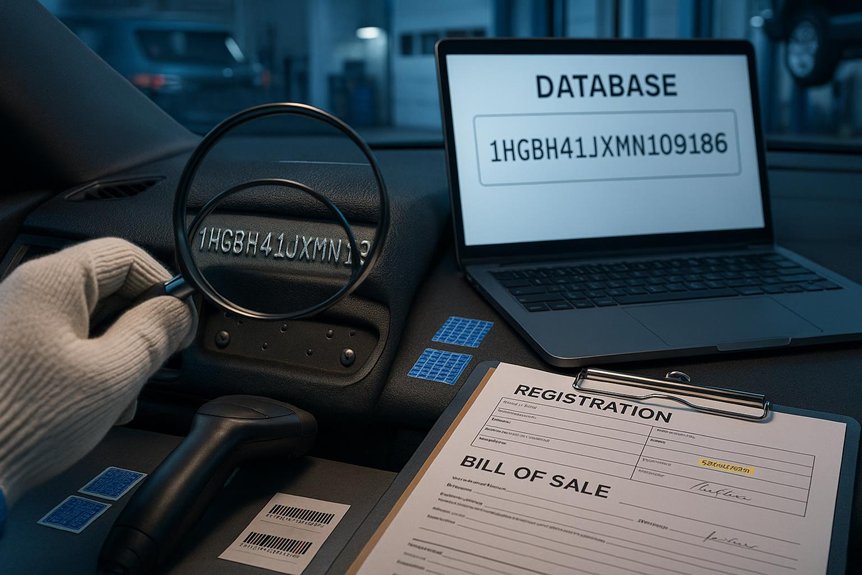
Once you’ve inspected the physical clues, verify the VIN against trusted databases and the vehicle’s paperwork. Run checks through NMVTIS, NICB, and your jurisdiction’s DMV system. Confirm the VIN format, check digits, and model year decode.
Match titles, bills of sale, service records, and recalls to the same VIN and ownership timeline. Note gaps, rapid title transfers, salvage branding, or odometer jumps.
If anything feels off, pause the inspection. Photograph discrepancies, secure the vehicle, and escalate to your supervisor or law enforcement per protocol. Document findings objectively.
If everything aligns, record results, brief the owner, and proceed to the next inspection step confidently.
Frequently Asked Questions
What Legal Consequences Can Owners Face for Unknowingly Buying a Tampered-Vin Vehicle?
You could face vehicle seizure, registration revocation, fines, and insurance denial; you might avoid criminal charges if you prove good faith. Act quickly: report it, cooperate with authorities, keep records, and seek legal help—your community’s got your back.
How Can Buyers Spot VIN Cloning Scams Before Purchase?
Verify the VIN on the dash, door, and title match; run it through NICB and Carfax; compare mileage and photos; insist on in-person viewing; pay with traceable methods; meet at DMV; trust your gut and community.
Are Certain Vehicle Makes or Years More Targeted for VIN Fraud?
Yes. You’ll see late‑model luxury SUVs, trucks, and high‑demand imports targeted most, plus popular fleet sedans. Thieves favor years with weaker immobilizers (early‑2000s to mid‑2010s). You belong here—trust your instincts, verify histories, and compare VINs everywhere.
Does Insurance Cover Losses From Vehicles Later Found With Altered VINS?
Yes, but coverage varies. You’ll usually be protected if you bought in good faith and carry thorough/extensive coverage. Report it immediately, cooperate with investigators, and lean on your insurer’s fraud unit. Keep purchase records to strengthen claims.
What Steps Should I Take if I Suspect VIN Tampering During a Private Sale?
Stop the deal immediately, trust your gut, and walk away. Verify the VIN with a title check, NMVTIS, and Carfax. Photograph inconsistencies, contact local police or DMV, and bring a friend or mechanic for support.