
VIN Verification Renewal: When Re-Verification Is Required
October 18, 2025
VIN Number Decoder: Understanding All 17 Characters
October 18, 2025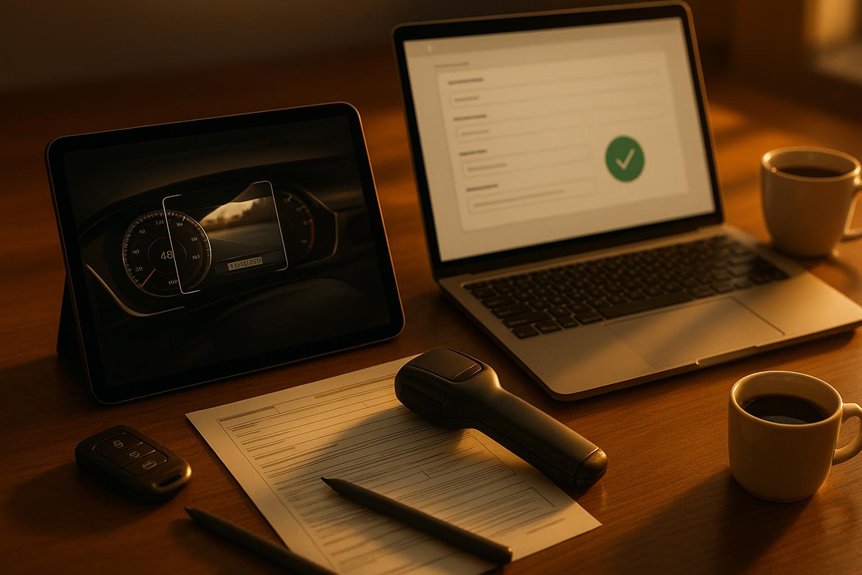
You can complete California VIN inspections electronically in minutes. Scan the VIN, snap required photos, confirm vehicle details, and sign digitally. The system validates formats, flags mismatches, and timestamps entries, producing a REG 31 packet. You’ll cut paperwork, avoid rekeys and courier runs, speed same-day verifications, and track status by vehicle or staff. With encrypted transmission, role-based access, and SOC 2/NIST-aligned controls, you’ll stay compliant and secure. Keep going to see the step-by-step flow and partner criteria.
How Electronic VIN Inspections Work
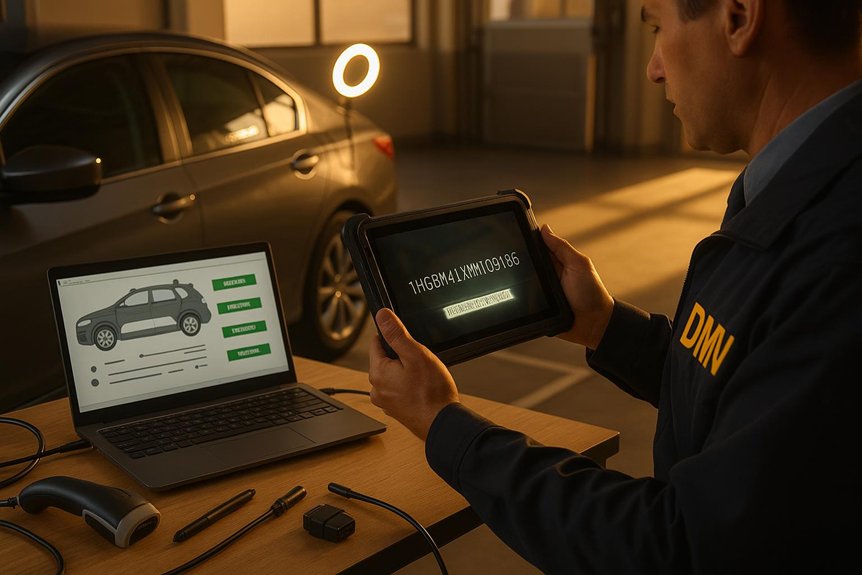
Kick off an electronic VIN inspection by capturing the vehicle’s details with a mobile device or web app: you scan the VIN barcode, snap required photos (VIN plate, odometer, emissions label), and confirm vehicle attributes.
Next, the system checks formats, flags mismatches, and prompts you to correct anything before submitting. You verify location and date, add your digital signature, and attach supporting documents.
The platform encrypts data, timestamps it, and generates a compliant REG 31 packet. You submit electronically to the proper channel. Notifications keep you aligned, while an audit trail logs actions so your team—and partners—can trust every step.
This streamlined VIN verification procedure leverages state-of-the-art verification technology to deliver rapid turnaround times while maintaining accuracy and security throughout the entire process.
Benefits for Dealers, Fleets, and Private Owners
Whether you manage a showroom, a multi-state fleet, or a single car, digital VIN verification streamlines your REG 31 workflow. You cut paperwork, reduce rekeys, and submit forms in minutes, not days. Photos, notes, and signatures travel with each record, so your team stays aligned.
You move faster: same-day verifications, fewer repeat visits, and smoother title transfers. You save money by eliminating courier costs and minimizing idle vehicles. You gain visibility with dashboards that track status by vehicle, location, or staff. Most importantly, you create a consistent process your people trust—so dealers, fleet managers, and private owners feel connected and confident.
The verification process confirms your VIN matches the title, validates the vehicle exists beyond paperwork, and acts as a protective measure against theft and fraud.
Security, Compliance, and REG 31 Requirements
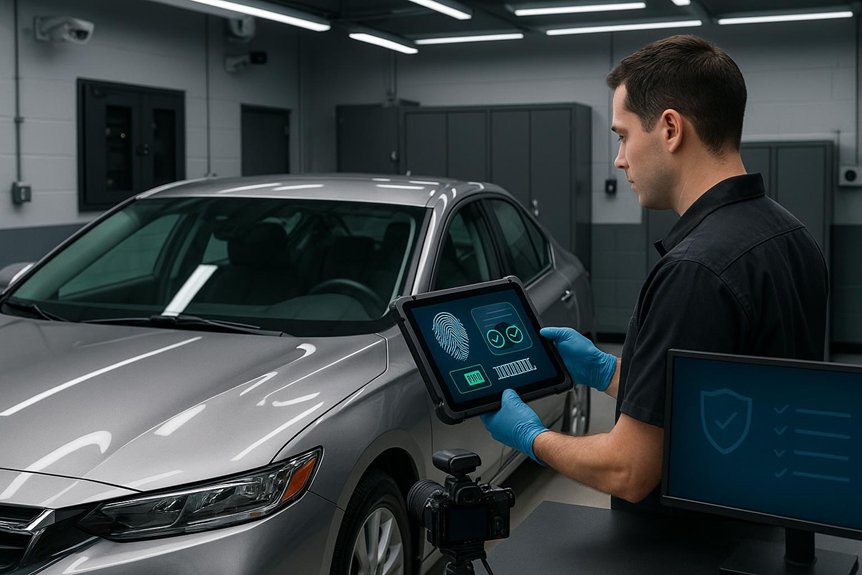
Although speed matters, security and compliance make digital VIN verification viable. You want assurance that your data, customers, and reputation are protected. Choose platforms that use encrypted transmission, role-based access, and auditable logs. They should meet DMV, state, and federal privacy rules, including data minimization and retention limits.
REG 31 requires accurate VIN capture, verifier credentials, and tamper-evident records. You’ll need authenticated sign-offs, time-stamped entries, and secure storage that preserves chain of custody. Guarantee the solution validates document integrity, flags mismatches, and prevents alteration after submission.
Physical inspection must document key items including vehicle configuration, the public VIN, federal safety label, and emissions label to ensure the REG31 form confirms inspection accuracy.
When everyone follows the same standards, you belong to a trusted, compliant ecosystem.
Step-by-Step Process for Digital Submission
With security and compliance in place, you can move into the workflow that gets a REG 31 submitted electronically without friction. First, sign in to your portal and confirm your role permissions.
Next, launch a new REG 31, select the vehicle, and auto-pull record data. Capture VIN imagery and scan supporting documents; the system validates characters and flags mismatches. Enter odometer, body type, and location details. Apply your digital signature, then preview the packet. Resolve alerts, attach proof of inspection, and lock fields.
Submit to DMV electronically, receive a timestamped receipt, and archive the file so your team stays aligned and audit-ready.
Choosing a Reliable Digital Verification Partner
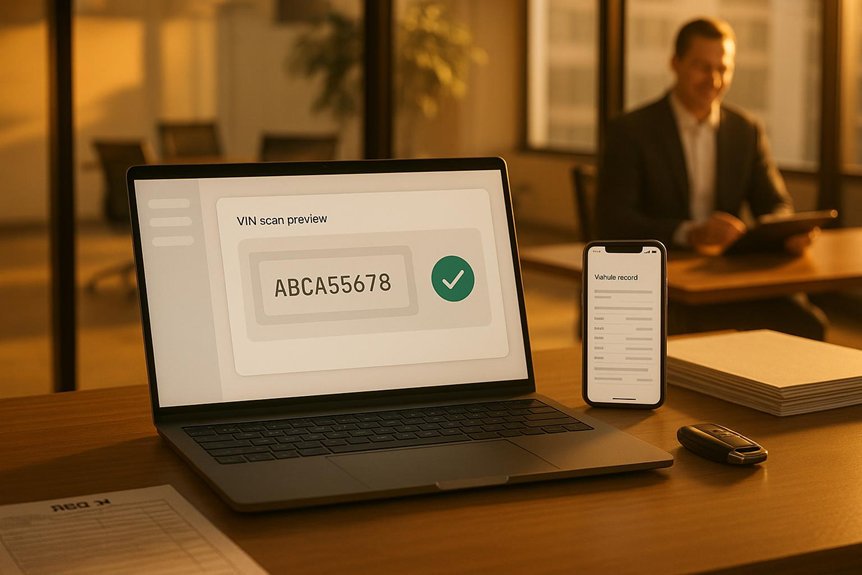
Two factors lead every short list: proven compliance and real-world uptime. You need a partner that meets DMV, NIST, and SOC 2 standards, publishes audit trails, and handles identity checks without friction. Ask for independent penetration tests and a clear incident response plan.
Prioritize integrations that fit your DMS and e-sign tools, plus sandbox access so your team can validate flows together. Demand transparent SLAs, human support, and proactive status alerts. Review data retention, encryption, and role-based access. Compare pricing for predictable volume.
Finally, talk to peer customers. If their teams feel supported, you’ll join a community that ships confidently.
Frequently Asked Questions
What Happens if the Digital VIN Inspection Fails or Flags Inconsistencies?
It triggers a manual review. You’ll get guidance to correct errors, submit supporting documents, or schedule a re‑inspection. Fix mismatches—typos, photos, or title data—and resubmit. Stay responsive; you’re not alone, and support will walk you through.
Are There Additional Fees Beyond the Standard REG 31 Submission Cost?
Yes. You might pay convenience, platform, or payment processing fees, plus potential reinspection or correction charges. Ask upfront for a fee breakdown, bundle options, and refund policies so you feel included, informed, and confident about every cost.
How Long Are Digital VIN Verification Records Retained for Audits?
They’re typically retained for three to five years, aligning with common audit windows. You’ll have reliable access during that period, so you can prove compliance, resolve questions quickly, and feel confident your team’s documentation stands together when reviewed.
Can I Correct Typos After Submitting the Electronic REG 31?
Yes, you can correct typos, but you’ll submit an amended REG 31. Act quickly: contact your approving agency, reference the original submission, and follow their resubmission steps. Keep proof, note timestamps, and confirm the update posts.
Do Out-Of-State Vehicles Qualify for Digital VIN Verification Services?
Yes, many out-of-state vehicles qualify, as long as they’re physically present for inspection and meet state criteria. You’ll schedule, present proper ownership documents and ID, and guarantee VIN accessibility. You’re welcome here—we’ll guide you through every step smoothly.