
Digital VIN Verification: Electronic REG 31 Submission
October 18, 2025
Federal Motor Vehicle Safety Standards and VIN Verification
October 18, 2025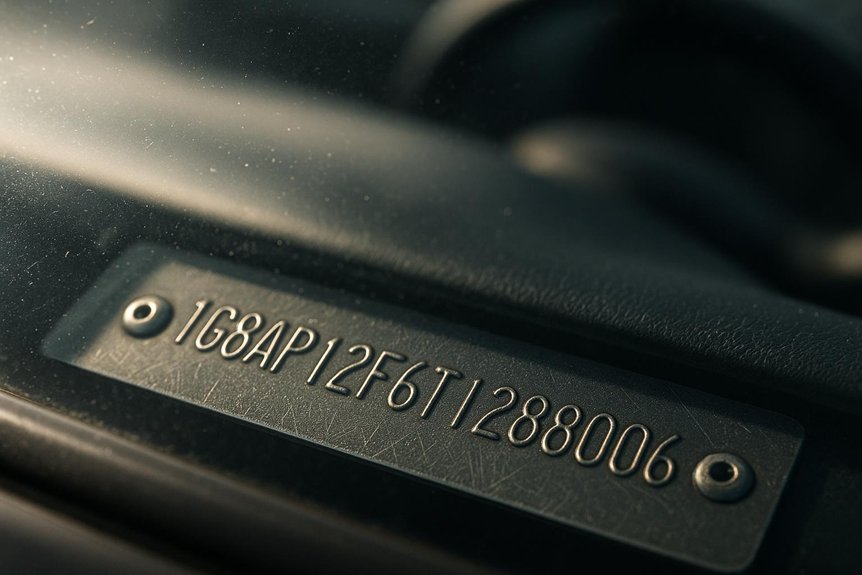
A VIN is your car’s 17‑character fingerprint, proving what it is and powering recalls, theft recovery, warranty, parts matching, and history checks. Characters 1–3 (WMI) show region, country, and maker. Characters 4–8 describe body, engine, safety, and more. Character 9 is the check digit that validates the VIN. Character 10 marks model year, 11 the assembly plant, and 12–17 the unique serial. Decode each spot to confirm identity and spot inconsistencies—there’s a lot more you can confidently use.
What a VIN Is and Why It Matters
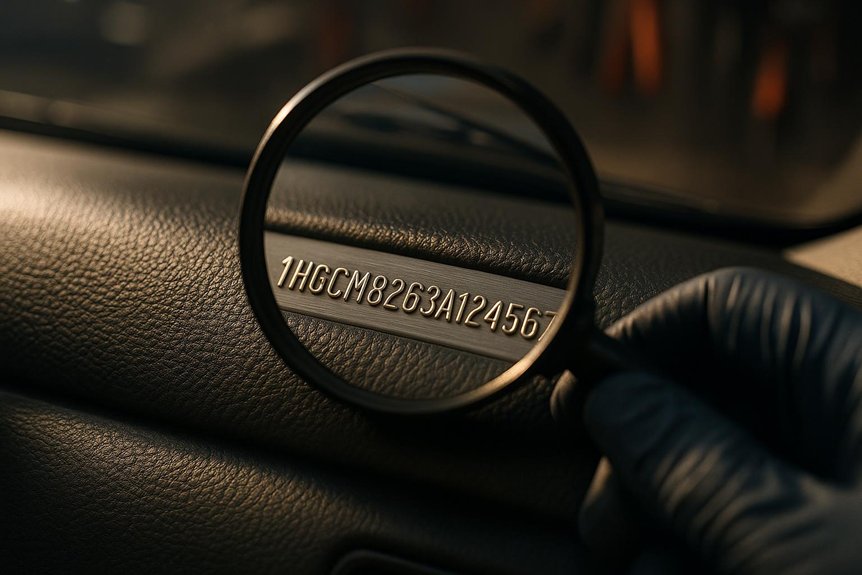
Every vehicle carries a unique 17-character code called a Vehicle Identification Number (VIN). You’ll find it on your dashboard or door jamb, linking you to your car’s true identity. Think of it as your vehicle’s fingerprint—official, permanent, and shared across service shops, insurers, and registries.
Why it matters: your VIN anchors recalls, theft recovery, warranty coverage, parts compatibility, and accident history. It proves what your car is, not just what it looks like. When you buy, sell, insure, or maintain a vehicle, the VIN keeps everyone aligned and honest. Use it to verify records, avoid surprises, and feel confident in your community’s roads. If you’re bringing a vehicle from another state or country, a physical VIN inspection confirms that the number matches your ownership documents and establishes your vehicle’s California record.
The 17 Characters at a Glance
While it looks like a random string, a VIN’s 17 characters follow a strict map: each position tells you something specific about the vehicle. You’re not guessing—you’re reading a code the industry shares.
Characters 1–3 identify origin and maker. Characters 4–8 outline the model, body, engine, and safety features. Character 9 is a check digit that validates the whole VIN. Character 10 marks the model year. Character 11 shows the assembly plant. Characters 12–17 are the vehicle’s unique serial number.
Once you see this layout, you’re in the know. Keep this framework handy; it’s your quick-reference key. If you need formal documentation of your VIN details, a VIN verification service can provide official confirmation for registration, title transfers, or insurance purposes.
Decoding Characters 1–3: World Manufacturer Identifier (WMI)
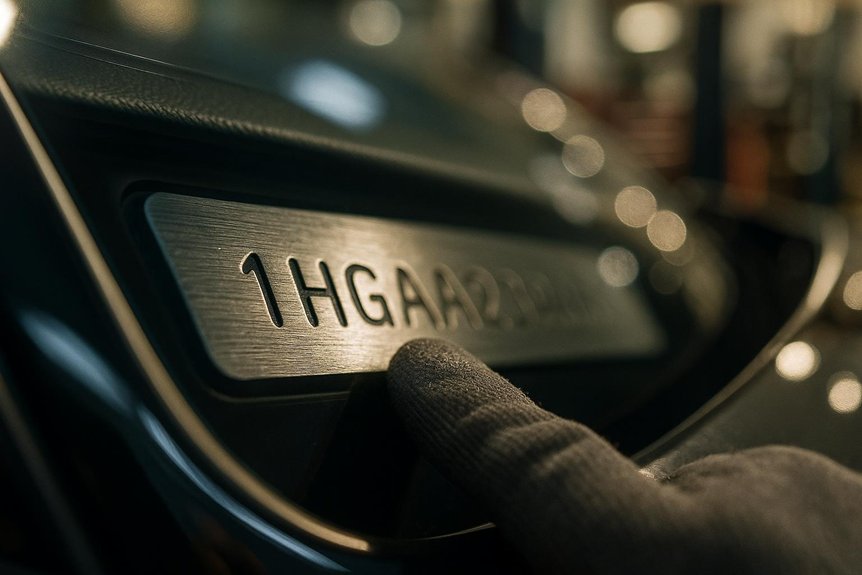
Before you plunge into the rest of the VIN, commence with characters 1–3: the World Manufacturer Identifier (WMI). These three characters anchor your vehicle’s identity, linking it to a region, country, and manufacturer family. You’re not decoding alone—this code connects you to a global standard.
Character 1 signals the region (like 1–5 for North America, J for Japan, W for Germany). Character 2 narrows to the country or maker group. Character 3 refines the division or vehicle category. Together, they confirm who built your car and where. Check the WMI against trusted databases to verify authenticity and spot inconsistencies quickly. Professional VIN verification services can also confirm the vehicle identification number matches the title and identify discrepancies in VIN records across databases.
Decoding Characters 4–9: Vehicle Descriptor and Check Digit
Next, you’ll decode characters 4–9, which outline the vehicle’s attributes and validate the VIN. You’re not alone—these six characters help everyone speak the same language about a vehicle.
Characters 4–8 form the Vehicle Descriptor Section (VDS). They capture body style, engine type, restraint system, transmission, and trim or series. Makers assign these codes, but patterns stay consistent within brands, so you can compare confidently.
Character 9 is the check digit. It guards against typos and fraud. Manufacturers weight and sum the other characters, then reduce the total to a single digit (or X for 10). If yours doesn’t match, investigate.
Decoding Characters 10–17: Model Year, Plant, and Serial Number
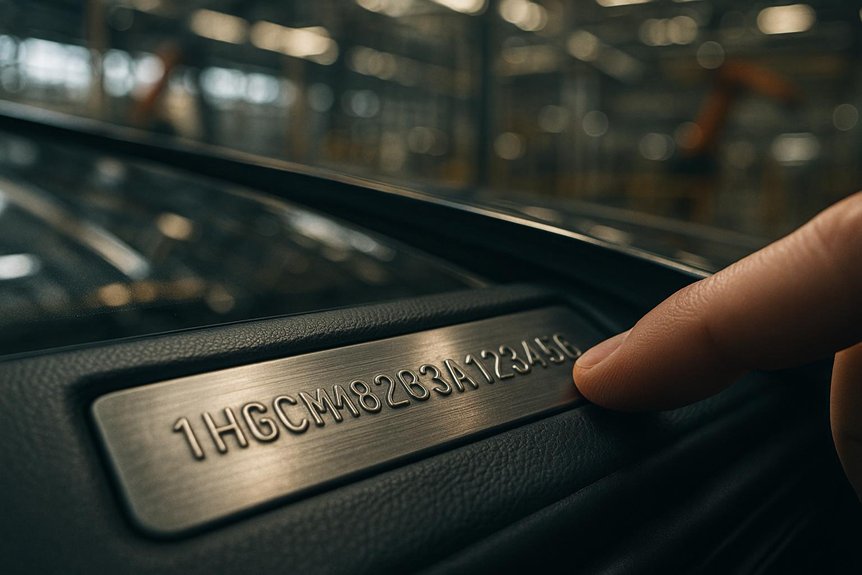
The home stretch of the VIN tells you when and where the vehicle was born and which one it’s in line. Character 10 marks the model year: letters and numbers cycle (e.g., A=2010, B=2011, Y=2000, 1=2001).
Character 11 identifies the assembly plant, linking you to the factory community that built your ride. Characters 12–17 form the serial number, the unique sequence that distinguishes your vehicle from every sibling on the line. Read them together and you’ll place your car in time, space, and sequence—proof you’re part of an informed crew that knows exactly what’s under the skin.
Frequently Asked Questions
How Do I Find My VIN Without Physically Checking the Car?
Check your registration, insurance card, title, service records, or online account with your automaker. You can also call your dealership or lender. Don’t worry—you’re not alone; we’ve all needed a quick VIN without visiting the car.
Can Two Vehicles Share the Same VIN Accidentally?
No, two legitimate vehicles don’t share the same VIN. If you see a duplicate, it’s likely a clerical error, cloning, or fraud. Verify with registration, title, and manufacturer records, and loop in your community—DMV, insurer, and police.
Is It Safe to Share My VIN Online?
Yes, but be thoughtful. You can share a VIN to sell or check history, yet avoid posting with your address or plate. Use reputable platforms, blur documents, and monitor listings so your community stays safe and confident.
How Do VINS Differ for Classic or Pre-1981 Vehicles?
They differ because pre-1981 vehicles often lack standardized 17-character VINs. You’ll see shorter, maker-specific formats, inconsistent placements, and limited decoding. Verify with manufacturer records, club registries, and titles. You’ll feel supported leaning on classic-car communities for authenticity checks.
Which Apps or Tools Accurately Decode VINS for Free?
You can trust NHTSA’s VIN Decoder, VINcheck.info, NICB VINCheck, Edmunds, and AutoCheck’s free insights. You’ll quickly confirm make, model, year, recalls, and theft records, feeling confident you’re aligned with the community’s reliable, no-cost tools.