
DMV Office Parking Lot VIN Verification: Before Your Appointment
October 18, 2025
Damaged VIN Number: What Inspectors Can Accept
October 18, 2025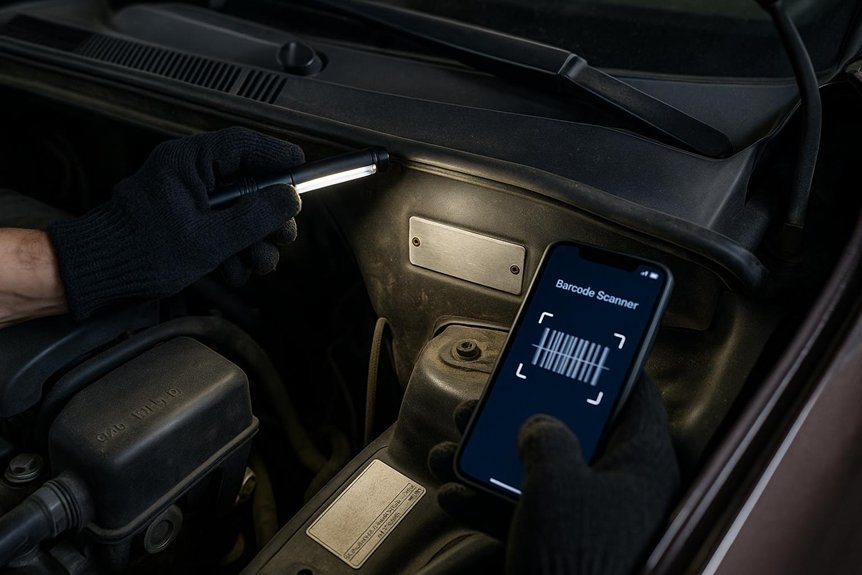
If your VIN plate’s missing, you can still prove identity. Check hidden factory stampings on the door jamb, cowl, frame rails, axle, and engine/trans pads using light and solvent. Gather build sheets, warranty cards, and heritage reports to match dates and codes. Schedule a DMV or highway patrol inspection for an assigned VIN if required. Coordinate with your insurer and expect law enforcement database checks. Compile bills of sale, titles, and service records to align history. There’s a clear path forward next.
Hidden VIN Stamps and Factory Locations to Check
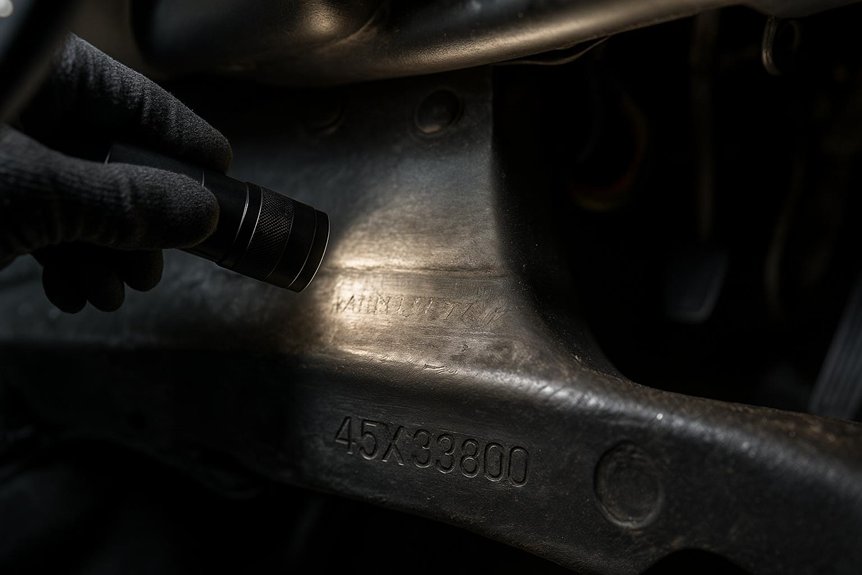
Although the dashboard tag might be gone, you can still confirm identity by checking the factory-stamped VIN in less obvious spots. Start at the driver-side door jamb and latch pillar; look for clean, original stampings. Check the cowl, firewall, or radiator support near factory seams.
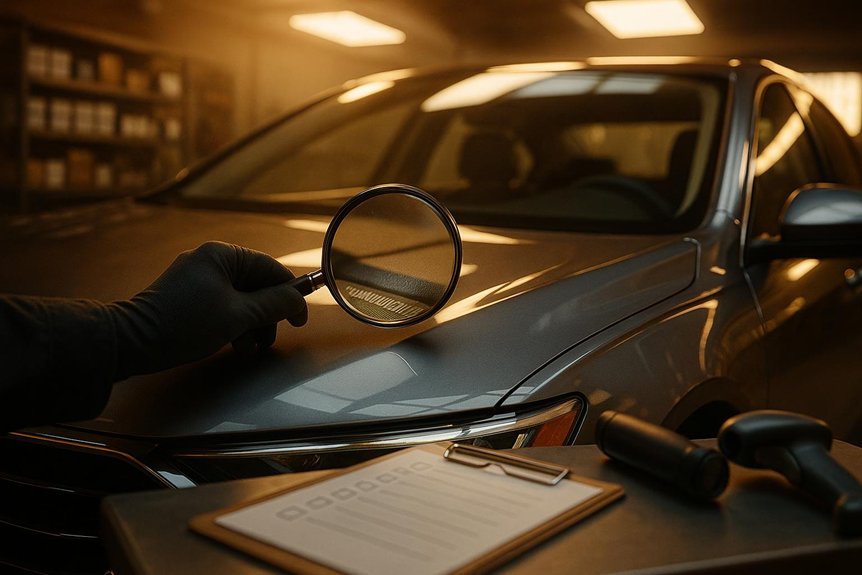
Slide under the chassis and inspect the frame rail tops, crossmembers, and rear axle tube. Peek at the steering box, transmission bellhousing, or engine block pad—matching sequences matter. Use a light, mirror, and solvent to reveal faint characters. Photograph everything. If stampings are layered in paint or undercoat, gently strip to bare metal and document. For professional assistance, experienced automotive experts can verify these hidden VIN locations using state-of-the-art verification technology.
Manufacturer Records and Historical Documentation
When physical stamps come up short, you can anchor the car’s identity with paper trails: factory build sheets, warranty cards, window stickers, and dealer invoices. You’re not alone—clubs and registries help decode these documents and confirm option codes, paint, trim, and delivery data.
Order a manufacturer heritage report, decode broadcast sheets, and cross-check engine and transmission stamps against period-correct specs. Compare paperwork dates, selling dealer locations, and component casting dates for consistency. Photograph everything, note document provenance, and keep copies organized.
When records align, you strengthen authenticity, preserve value, and connect your car’s story to a community that recognizes the same truths. If your historical documentation proves ownership but the vehicle lacks a visible VIN plate, you may need a physical inspection documented on a REG31 form to complete registration with the DMV.
State Inspections, Assigned VINs, and Re-Vinning Procedures
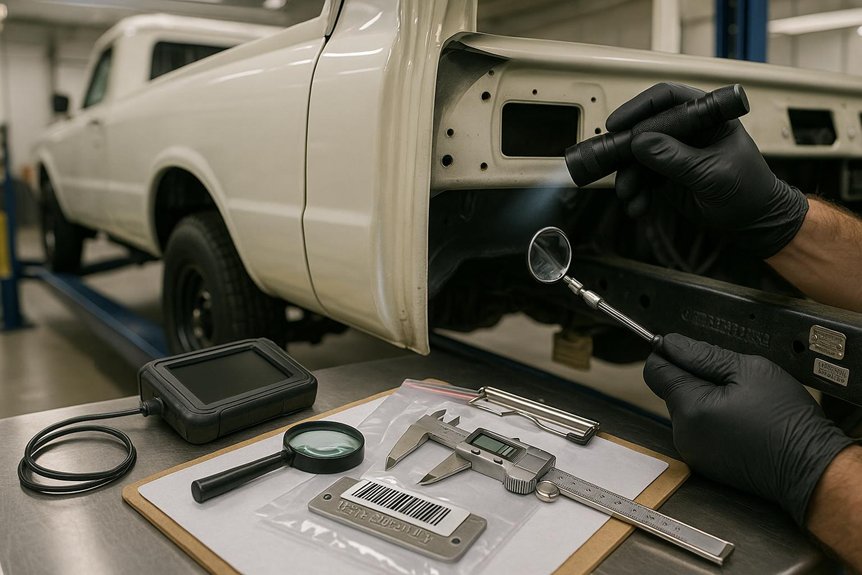
Even if the original tag is gone, every path back to legality runs through your state’s inspection and VIN assignment process. You’ll apply through DMV or highway patrol, schedule an inspection, and present bills of sale, prior titles, or affidavits.
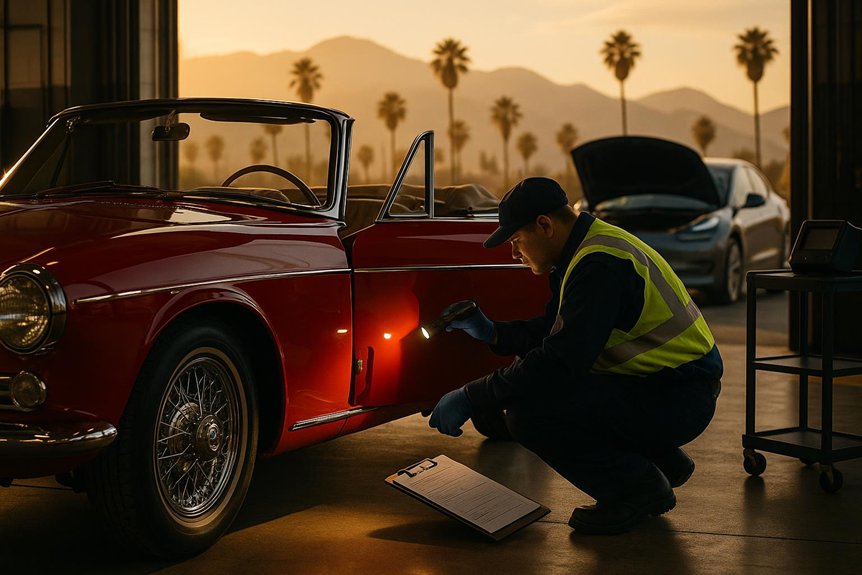
Inspectors verify the vehicle’s identity, check concealed stampings, and compare frame, engine, and body features. If it passes, you’ll receive an assigned VIN and installation instructions.
Re-vinning typically means affixing a state-issued plate or decal to approved locations. You’ll document the installation, pay fees, and update your title. Keep copies of forms and photos. You’re not alone—builders and restorers navigate this process together.
Licensed private businesses can perform the physical VIN inspection at your location, offering a more convenient alternative to waiting at DMV or CHP offices.
Insurance, Law Enforcement, and Database Cross-Checks
Because a missing VIN raises red flags, insurers, police, and registry databases all scrutinize the vehicle’s identity before you hit the road. You’ll work with your insurer to document identifiers they accept—chassis stamps, engine numbers, photos, and inspection reports—and they’ll run industry databases to flag theft, salvage, or tampering.
Expect law enforcement to verify physical markers, compare national hot sheets, and confirm nothing’s altered. Your motor vehicle agency cross-checks internal records and nationwide registries to align component numbers and prior assignments.
Keep communication open, show consistent evidence, and invite oversight. When records match, you gain coverage, registration, and community confidence.
Paper Trails: Bills of Sale, Titles, and Legacy Service Records
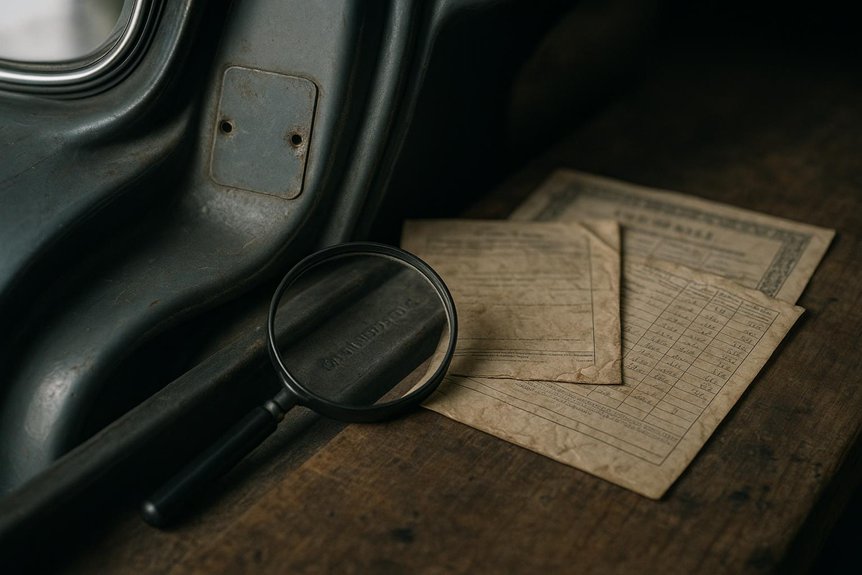
All that external scrutiny only works if your own paperwork tells a coherent story. Gather every bill of sale, title copy, registration, and lien release you can find. Align dates, owners, mileage, and locations; gaps signal trouble, but patterns build trust. Scan everything, label files consistently, and back them up.
Pull legacy service records from prior shops, dealer networks, and parts suppliers; match repair dates to odometer entries and addresses. Note engine or chassis numbers referenced in invoices—they can anchor identity when a VIN plate’s gone. When something doesn’t match, annotate why. You’re proving stewardship, not perfection, and that invites others’ confidence.
Frequently Asked Questions
Can UV Light or Forensic Techniques Reveal Tampered or Removed VIN Plates?
Yes, UV light and forensic methods can reveal tampering or removal. You’ll spot disturbed paint, adhesive residues, altered rivets, or ground marks. Investigators also lift stamped numbers from frames or dashboards using etching, magneto-optical, and oblique lighting techniques.
Are Microdot or Aftermarket Identification Systems Acceptable Proof of Identity?
Yes, but acceptance varies by jurisdiction and insurer. You’ll strengthen your case with documented installation, manufacturer certificates, and police verification. Combine microdots or aftermarket IDs with title history, photos, and affidavits. Check local rules first; we’ve got your back.
How Do International Import Rules Handle Vehicles With Missing VIN Plates?
They typically deny entry unless you provide official alternative identifiers and provenance. You’ll gather manufacturer records, customs affidavits, police clearances, and certified inspections. Coordinate early with import authorities and a licensed broker, so your paperwork aligns and you’re welcomed.
What Role Can Manufacturer Club Registries Play in Verifying Provenance?
They provide community-backed provenance by matching build records, archival photos, and member histories to your car’s identifiers. You tap shared expertise, authenticate rare features, trace ownership chains, and obtain club letters that reassure buyers, insurers, and authorities while fostering belonging.
Can Blockchain-Based Title Records Help Confirm a Vehicle’s Identity?
Yes—blockchain titles can help confirm identity by creating a tamper-evident ownership trail. You verify hashes, cross-check transfers, and align service records. Still, you’ll pair it with inspection reports, engravings, and club archives to feel fully confident together.