
Missing VIN Plate: Alternative Verification Methods
October 18, 2025
Failed VIN Verification: Common Reasons and Solutions
October 18, 2025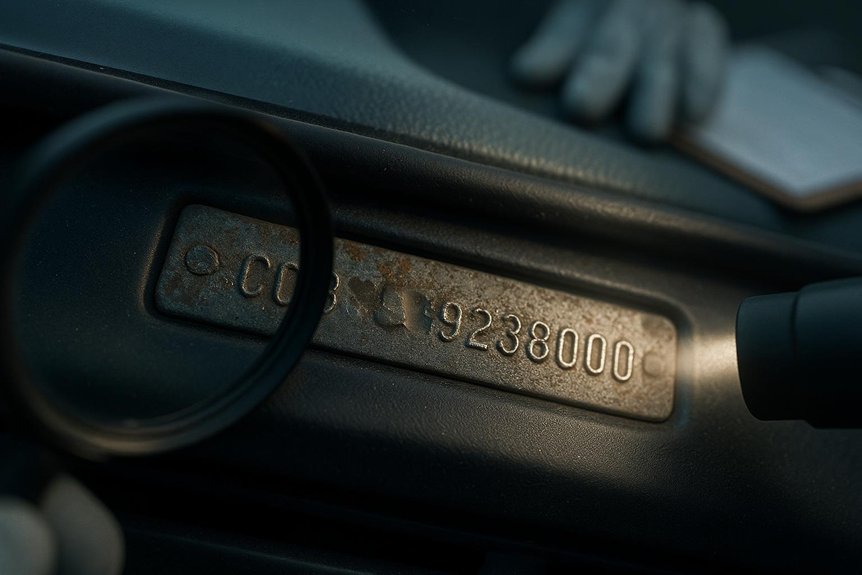
Inspectors can accept a damaged VIN if the visible sequence is consistent, the length is correct, and it matches your title, registration, and manufacturer labels. They’ll look for normal wear vs. tampering, cross-check service records, recalls, and databases, and verify secondary VIN spots like the door jamb, firewall, frame rail, or engine block. Document with clear photos, rubbings, and supporting paperwork, then request a certified VIN inspection. You’ll also see how to spot red flags and confirm authenticity.
When a Partially Readable VIN Is Still Valid
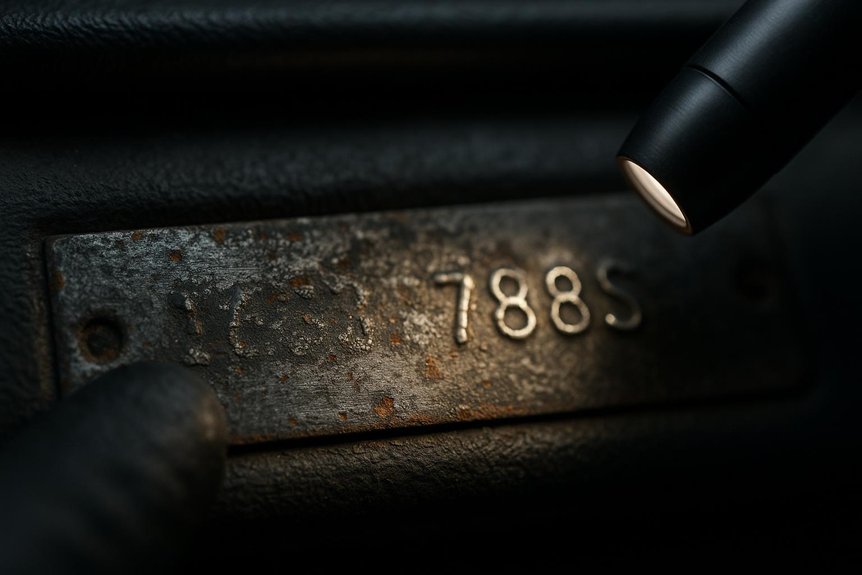
Sometimes a VIN that’s scuffed or partly obscured is still legally usable if enough characters remain to uniquely identify the vehicle. You don’t need every digit pristine. Inspectors look for a consistent sequence, correct length, and match across visible locations and documents. If the readable portion, combined with records, points to one unique car, you’re within bounds.
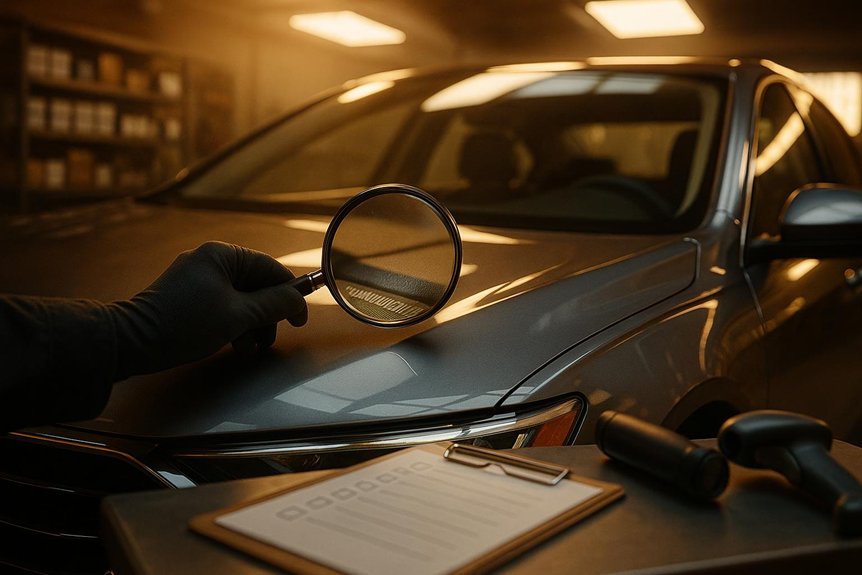
You can help by photographing the VIN, cleaning gently, and comparing what you see to the title, registration, and manufacturer labels. Bring any service records that show the same sequence. If characters are missing, note their positions. You’re proving continuity, not perfection—enough to belong on the road. The verification process confirms that the vehicle identification number matches the title and helps identify discrepancies in VIN records across databases.
Signs of Tampering vs. Normal Wear
Two clues separate wear from tampering: how the VIN looks and how the metal around it behaves. You’re looking for natural, even aging—light scratches, consistent fading, and surface rust that matches the surrounding panel. Dig marks, sharp tooling lines, or oddly clean patches suggest someone tried to alter or lift digits. Uneven character depth, misaligned stamps, or mixed font styles are red flags.
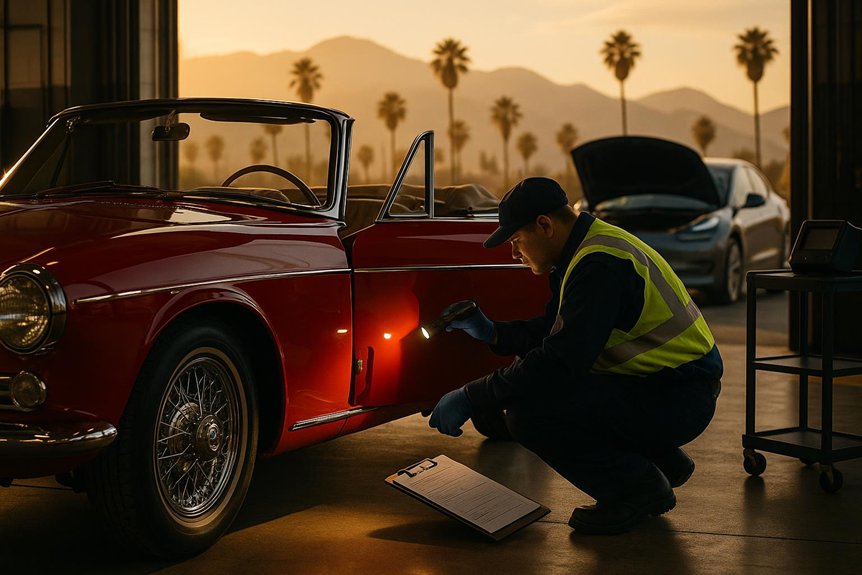
Check the plate’s attachment. Factory rivets and spot welds look uniform; mismatched rivets, fresh sealant, or distorted edges don’t. Heat discoloration, sanding swirls, or wavy metal means rework. Trust your instincts—you’re part of a community that values honest identification. Professional inspectors document these findings on the REG31 form, which serves as official proof that your vehicle’s identification matches the title and meets California’s registration requirements.
Alternative Verification Methods Inspectors Use
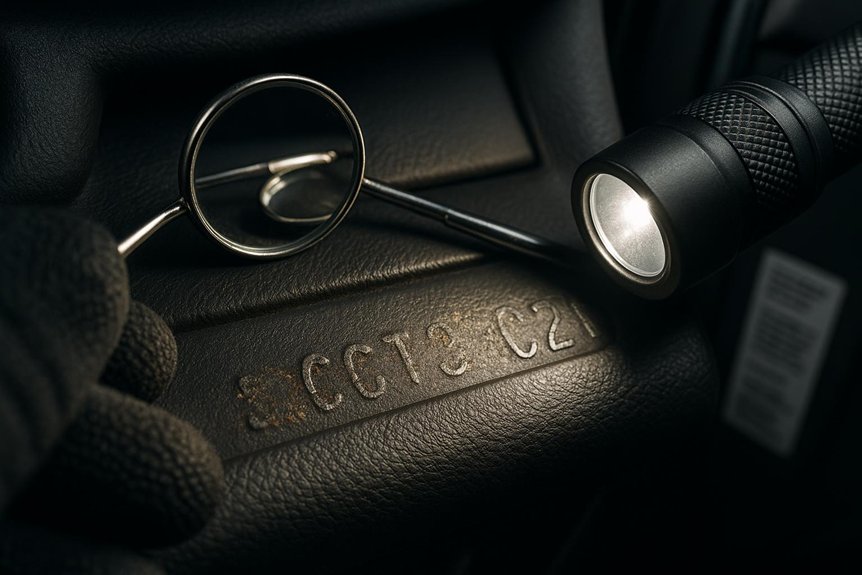
If the stamped VIN or plate raises doubts, inspectors don’t stop there—they cross-check the vehicle’s identity using independent sources. They’ll verify registration history, title records, and recall campaigns to see if details align.
They may compare engine and transmission numbers to factory data, review emissions or safety inspection logs, and confirm build options using manufacturer databases. Photos from prior sales or insurance files can help match paint, trim, and mileage. They’ll also consult theft reports and lien databases.
You’re part of the process: bring service receipts, keys, and prior paperwork. Together, you can establish continuity and show the vehicle’s story holds up.
Many inspectors rely on a comprehensive VIN database to validate vehicle information when physical markings are compromised or unclear.
Finding Secondary VIN Locations on Your Vehicle
While the dash VIN gets most attention, you can confirm identity by checking hidden or secondary locations that manufacturers place for redundancy. You’re not alone—inspectors and owners use these spots to verify a vehicle’s story.
Start with the driver’s door jamb label and the firewall. Look at the engine block pad, radiator support, and strut towers. Check the frame rail inside the wheel well. Lift carpet near the driver’s seat for stamped body numbers. Inspect trunk gutters and spare-tire wells.
On trucks, examine the frame near the steering box or rear rail. For motorcycles, check the steering neck and engine cases.
Steps to Document and Certify a Damaged VIN
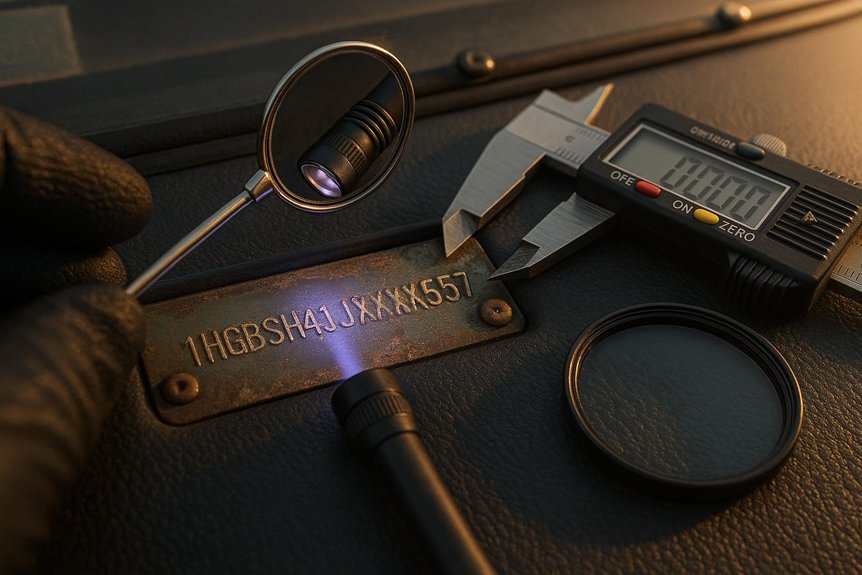
Start with clear photos of the damaged VIN and its surroundings, capturing wide, medium, and close shots under good lighting. Include the dashboard, door jamb, engine bay, and any secondary VINs. Record the date, location, and your contact info on each image’s filename.
Next, make rubbings or high-resolution scans if legible. Note corrosion, paint, or impact marks. Gather supporting documents: title, registration, service records, prior inspections, and recall or build sheets.
Request a certified VIN inspection from your DMV or authorized law enforcement. Bring the vehicle, documents, and images. Stay present, answer questions, and request a written report certifying identification. Keep organized copies.
Frequently Asked Questions
Can I Legally Drive a Car With an Unreadable VIN?
No, you generally can’t legally drive it. You risk tickets, impound, or suspicion of theft. Check other VIN locations, carry ownership documents, and schedule an inspection or VIN verification. Repair or reaffix the plate through your DMV.
How Much Does VIN Recertification or Reassignment Typically Cost?
You’ll typically pay $50–$200 for VIN recertification or reassignment, but it varies by state and whether law enforcement or DMV handles it. Expect extra costs for inspections, forms, and plate rivets. Call your DMV to confirm.
Will Insurance Deny Coverage Due to a Damaged VIN?
Yes, they might—if the VIN’s unreadable or mismatched, insurers can deny or delay coverage. Act fast: document the damage, get law enforcement or DMV verification, request VIN recertification, and alert your insurer to keep protection seamless.
Do Classic or Imported Vehicles Follow Different VIN Rules?
Yes. You’ll follow different VIN rules for classics and imports. You’ll often rely on chassis plates, engine numbers, or federalization labels. You’ll bring supporting documents, prior titles, and customs papers. Check your state’s DMV guidance.
What Criminal Penalties Apply for Altered or Missing VINS?
You face felonies for altering, removing, or possessing vehicles/parts with tampered VINs: fines up to $250,000 and prison up to 5–15 years, plus seizure. Always document ownership, verify numbers, and seek counsel to protect yourself.