Damaged VIN Number: What Inspectors Can Accept
October 18, 2025
Lost REG 31 Form: Getting Replacement Verification Documents
October 18, 2025
Failed VIN verifications usually come from typos, transposed characters, or 0/O and 1/I mix-ups. Check every VIN on the dash, driver’s door jamb, engine bay, and frame, and match them to your title, registration, and insurance. Photograph each location clearly to avoid glare or worn tags causing check-digit errors. Watch for salvage branding, imports with nonstandard formats, or altered plates. If numbers won’t decode or don’t match, coordinate with DMV, CHP/inspectors, or a dealership—there’s more you can do next.
Why VIN Checks Fail: From Typos to Title Errors
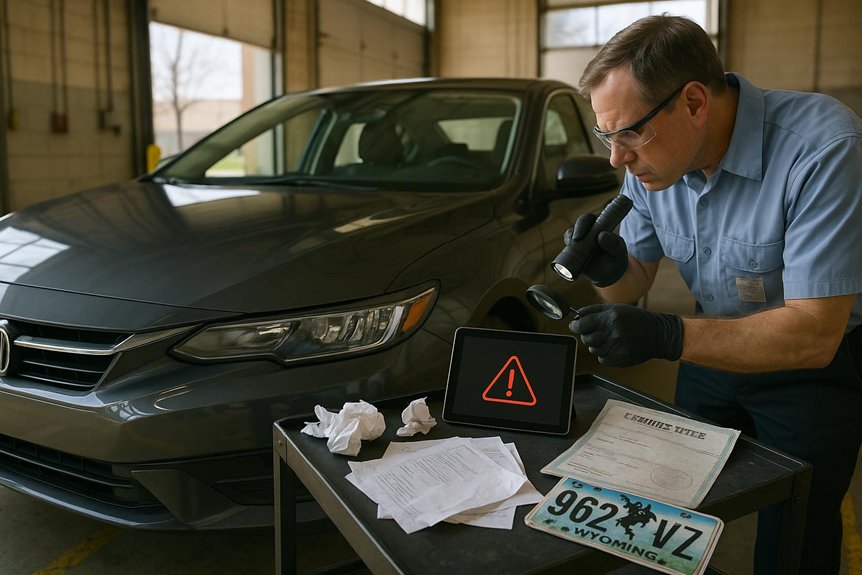
Although VIN checks seem straightforward, they often fail for simple reasons: typos, transposed characters, or confusing similar-looking digits like 0/O and 1/I. You might also run into mismatched model years when databases lag, aftermarket rebuilds not yet recorded, or VINs with invalid check digits due to a single wrong entry.
Salvage or flood branding can trigger flags if prior titles weren’t updated across states. Imported vehicles sometimes carry nonstandard VIN formats, causing automatic rejections. Stolen-vehicle holds, lien records, or odometer rollbacks can stall verification, too.
When results feel off, pause, trust your instincts, and confirm the data source. Common verifier errors include misidentifying vehicle year or recording incorrect VIN details, which can lead to failed verifications and unnecessary CHP referrals.
How to Locate, Read, and Match VINs Across Vehicle and Documents
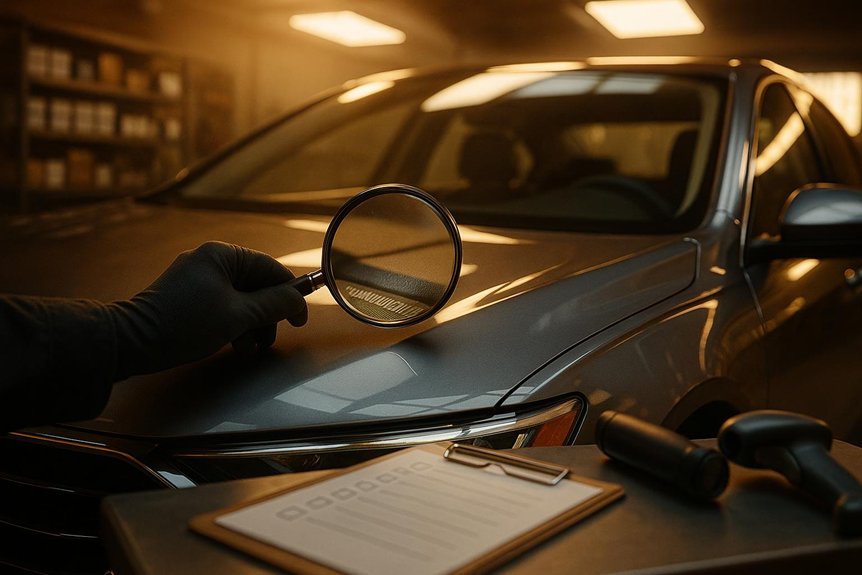
Start with the VIN you can see, then confirm the ones you can’t. Look at the dashboard plate through the windshield, then the driver’s door jamb sticker. Check the engine bay tag or stamp, and, if accessible, the frame or chassis stamp. Read carefully: VINs use digits and capital letters but never I, O, or Q.
Match each VIN to your title, registration, and insurance card. Compare character-by-character, including check digit (position 9) and model year (position 10). Photograph each location and note where you found it. If something doesn’t match, pause. Recheck print clarity, character shapes, and spacing before seeking help.
The verification process confirms the vehicle identification number matches the title and identifies discrepancies in VIN records across databases to prevent theft and fraud.
Photo and Plate Issues: Fixing Glare, Wear, and Mismatched Tags
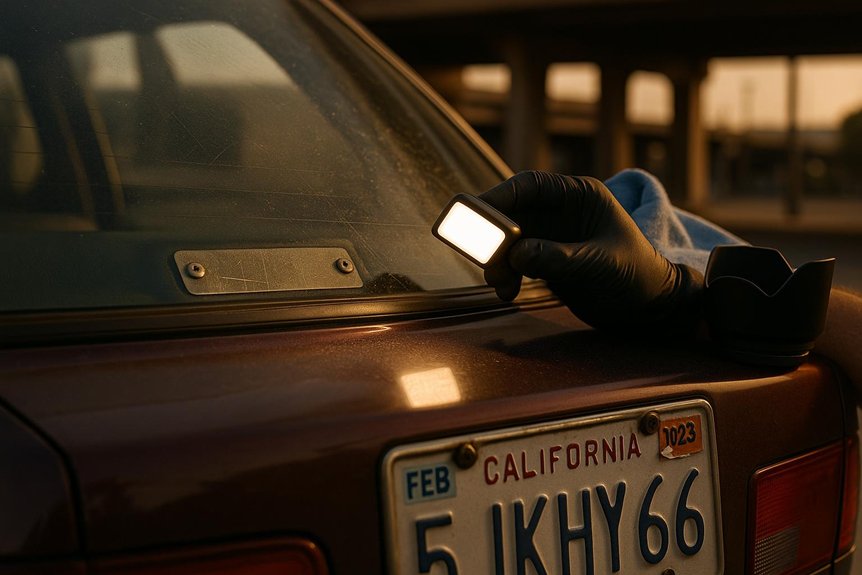
Even small photo or plate issues can derail a VIN check, but you can fix most of them fast. Tackle glare by shooting at an angle, turning off flash, and using shade or a diffuser.
Clean the plate and VIN pad gently with a microfiber cloth; remove dirt, not paint. For worn characters, add indirect light and take multiple close-ups, then a wider shot for context. Compare tags: windshield VIN, door jamb label, engine bay plate, and registration stickers.
If tags don’t match, recheck positions and dates, then reshoot. Add a timestamp, keep file names clear, and submit crisp, unedited originals. Professional VIN verification services use state-of-the-art technology and comprehensive databases to quickly resolve documentation issues when DIY methods fall short.
Handling Serious Discrepancies: Cloning, Alterations, and Non-Decoding VINs
When a VIN fails for reasons beyond glare or smudges, treat it as a red flag and slow down. You’re not alone—serious discrepancies happen, and your careful response protects the whole community.
Watch for cloning: a valid VIN on the wrong vehicle, mismatched trim, or conflicting build data. Suspect alterations if rivets look tampered with, fonts vary, or the plate sits crooked.
For non-decoding VINs, check length, character order, and model year logic; some classics and imports use different standards. Document every detail, compare all VIN locations, and pause transactions.
Trust your instincts. Prioritize safety, transparency, and shared accountability.
Working With DMVS, Inspectors, and Dealerships to Resolve Verification Problems
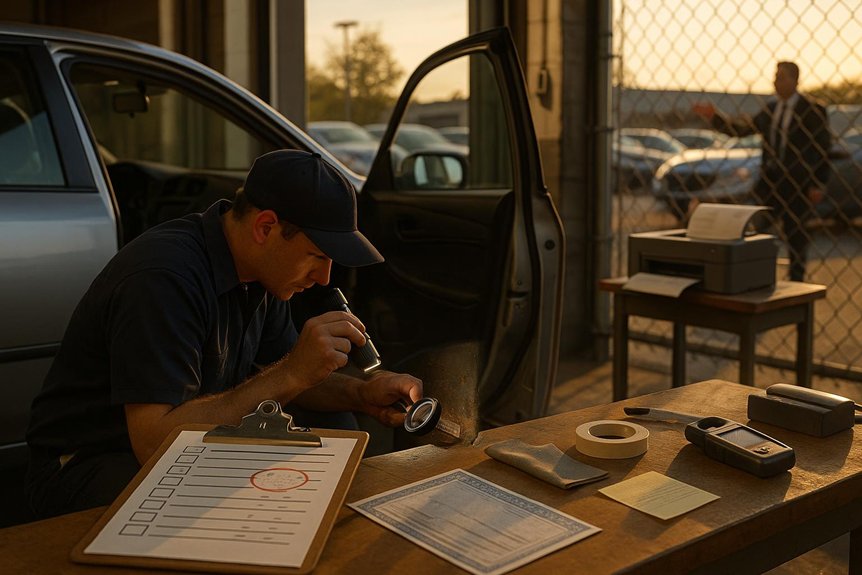
If your checks raise more than smudges and glare, your next step is coordination, not guesswork. Start by calling your DMV’s VIN desk; ask what documents and photos they require and whether a certified inspection is needed. Schedule a mobile inspector or visit an approved station, bringing titles, service records, and any prior reports.
Loop in the dealership’s title clerk. Request build sheets, recall histories, and manufacturer letters confirming VIN placement and corrections. Keep a shared checklist and file numbers. Document every conversation. If data conflicts persist, escalate with a supervisor or compliance unit. Stay courteous, persistent, and team-oriented—people help helpful people.
Frequently Asked Questions
How Do VIN Verification Failures Affect Insurance Coverage or Premiums?
They can delay coverage activation, trigger policy cancellations, or raise premiums due to perceived risk. You’ll face claim denials until the VIN’s corrected. Act fast: contact your insurer, verify records, coordinate with DMV, and provide documentation to restore trust.
Can a Failed VIN Check Impact Loan Approvals or Refinancing?
Yes. Lenders may pause or deny approvals if a VIN check fails, since title, theft, or discrepancy flags raise risk. You’ll likely need to resolve errors, verify documentation, or complete inspections before approval or refinancing proceeds smoothly.
What Are Costs and Timelines for Professional VIN Inspections?
Professional VIN inspections typically cost $50–$200 and take 15–60 minutes on-site, with reports delivered same day to 48 hours. You’ll schedule online or by phone; mobile inspectors come to you, keeping the process simple and inclusive.
Are There State-Specific Grace Periods After a Failed VIN Verification?
Yes, but they vary by state. You’ll typically get 10–30 days to correct issues, request reinspection, or appeal. Check your DMV’s rules, keep receipts, and schedule fixes quickly so you stay on track with your community’s standards.
How Do Out-Of-State or Imported Vehicles Handle Verification Reciprocity?
You’ll usually face limited reciprocity; most states require their own VIN inspection, even for out‑of‑state or imported vehicles. Bring prior verification, customs or foreign docs, and translations. Call your DMV to confirm accepted forms so you feel prepared.