
Airport VIN Verification: Fly and Buy Vehicle Services
October 18, 2025
Mechanic Shop VIN Verification: During Your Service Appointment
October 18, 2025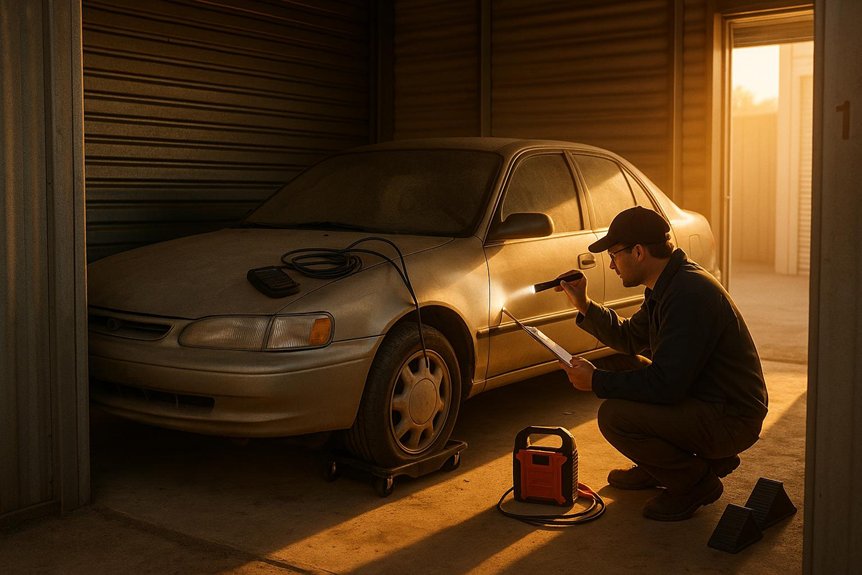
You can verify a non-running vehicle’s VIN in a storage unit by scheduling an on-site visit with an inspector or hiring a licensed mobile verifier. Coordinate access with the storage manager, have your title/registration ready, clear and light the VIN areas, and be present with ID. Take clear VIN photos and guarantee the number matches all documents. If access is restricted, consider a curbside meet, moving to a public lot, or supervised alternatives. Next, you’ll see how to prepare smoothly and avoid delays.
On-Site VIN Checks: Bringing Inspectors to Your Storage Unit
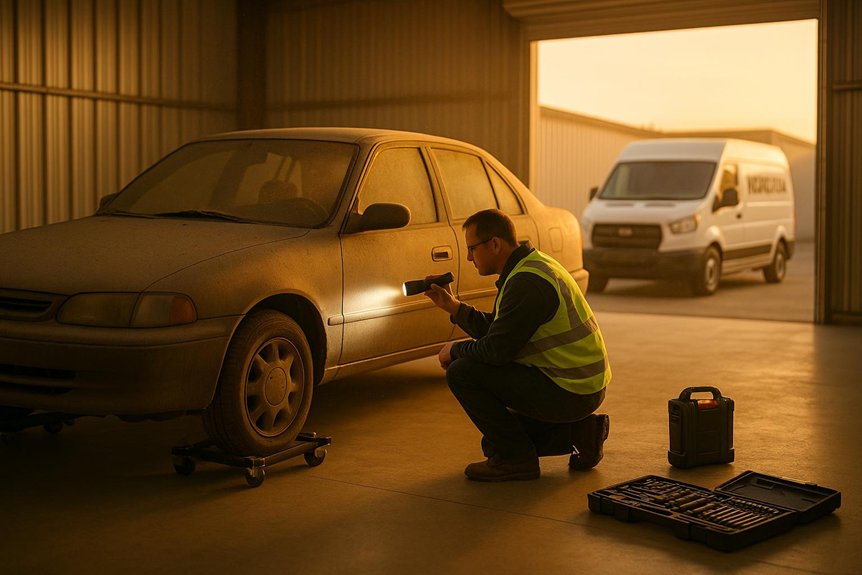
If bringing a vehicle to the DMV isn’t practical, you can arrange an on-site VIN inspection at your storage unit. You won’t feel alone in the process—inspectors do this every day and meet you where you are.
You’ll schedule a visit, confirm access details, and have the title or registration ready. Clear the vehicle’s VIN plate area, open doors or hoods as needed, and guarantee lighting and safe footing.
Ask your storage manager about visitor policies and temporary gate codes. Be present with your ID. Inspectors verify the VIN matches documents and note the condition. You’ll receive the completed form for registration.
Mobile VIN verification services typically charge between $100-$200 to come to your location, which can be worth the convenience when dealing with non-running vehicles in storage.
Mobile VIN Verification Services and What to Expect
While on-site inspections at storage units are common, mobile VIN verification services bring the same process to wherever your vehicle sits—driveway, workplace, auction lot, or roadside. You book a licensed verifier, confirm fees, and share your location.
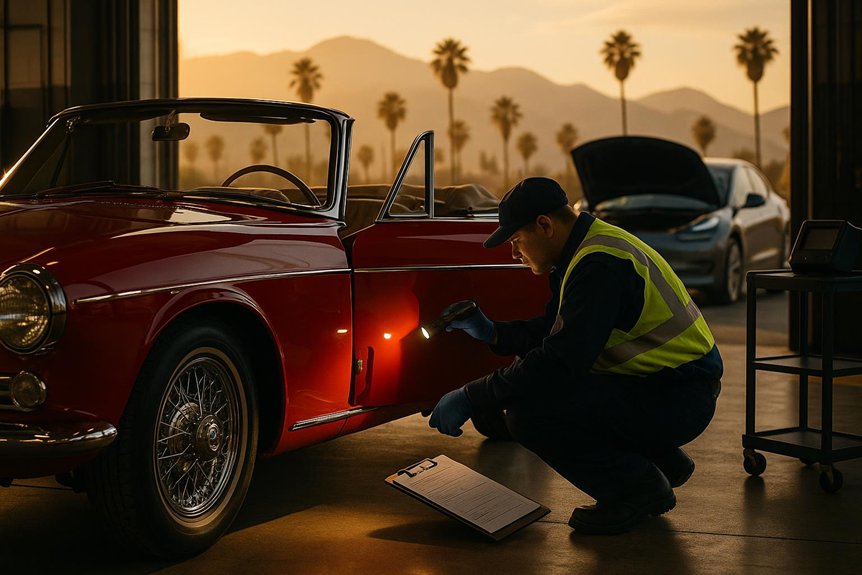
They arrive with forms, a flashlight, and a scanner. You’ll show ID, proof of ownership, and access to stamped VIN plates. Expect a quick walk-around, VIN matching, odometer and emissions equipment checks if required, and photos only to document the inspection.
If the VIN is legible and consistent, they complete and sign the verification on-site, so you can move forward with confidence together. The inspector will complete the REG31 form confirming the accuracy of the inspection, which you should review for any errors before submitting to the DMV.
Using Paperwork and Photos to Support a VIN Verification

Even before a verifier arrives, gather documents and snap clear photos to streamline the VIN check. Pull your title, registration, bill of sale, any lien release, and prior inspection records. Print or save clean copies. Match every digit across documents.
Take sharp, well-lit photos of the VIN plate, engine stamp, door jamb label, and dashboard VIN through the windshield. Include a wide shot showing their locations, plus close-ups with the numbers legible. Capture license plates and any ownership stickers. Rename files clearly—VIN_part_location_date. Keep them in a shared folder so everyone stays aligned. Present everything together; you’ll build trust and speed approval.
This preparation helps the verifier confirm the vehicle identification number matches the title and ensures compliance with DMV registration standards.
Access, Safety, and Visibility: Preparing a Non-Running Vehicle
With your documents and photos squared away, turn to the physical setup so a verifier can reach, view, and work around a non-running vehicle without risk. Clear a straight path from the door; remove boxes, cords, and tripping hazards.
Park with the driver’s door and VIN areas accessible—dash, door jamb, frame, or engine bay. Sweep, light the unit well, and bring a flashlight. Chock wheels, set the brake, and disconnect the battery if needed.
Keep a low-profile jack, stands, and a moving dolly ready. Provide gloves, eye protection, and absorbent pads. Post your unit number, greet on time, and stay nearby to assist.
Alternatives When Inspectors Can’t Enter the Facility
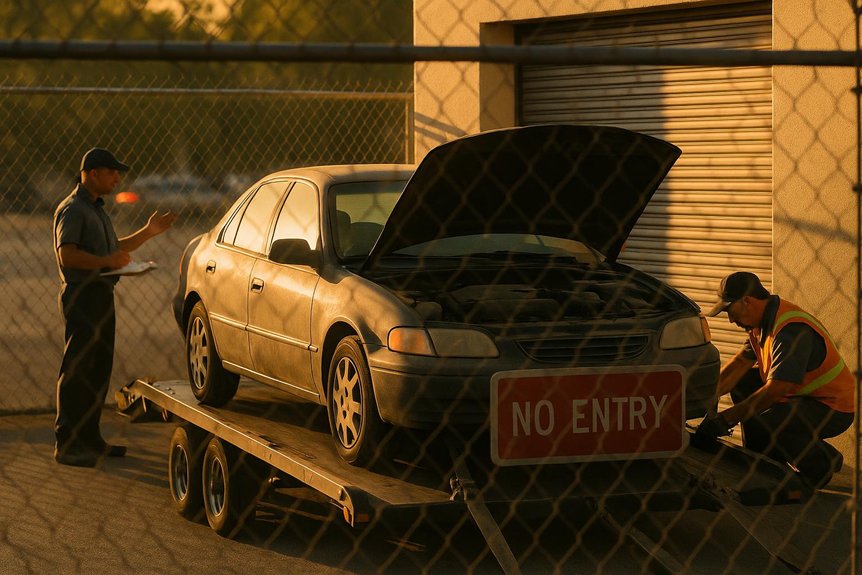
Roadblocks happen—when an inspector can’t get past the gate or facility rules, you still have options. Ask your manager about a supervised curbside meet: you roll the vehicle to the entrance, they verify, everyone stays compliant. If that’s not allowed, request a mobile DMV- or law-enforcement-approved verifier who meets you offsite.
Schedule a flatbed or tow dolly to move the car to a public lot for a quick VIN check. If it won’t roll, use wheel skates. Document the VIN plate with time-stamped photos and a signed storage log—some jurisdictions accept this with an affidavit. Coordinate early; keep everyone looped in.
Frequently Asked Questions
How Do VIN Verification Requirements Vary by State for Stored Vehicles?
They vary widely: some states require in-person inspections, others accept notarized forms or law enforcement checks. You’ll confirm ownership, show ID, and present the VIN. Call DMV first, schedule mobile verification if allowed, and keep your community’s guidelines handy.
What Documents Prove Ownership if the Title Is Missing or Damaged?
You can prove ownership with a registration card, bill of sale, lien release, prior title copy, insurance documents, notarized affidavit, or DMV record printout. Bring ID. Check your state’s forms; they’ll guide you together through replacement.
Are There Fee Waivers for Low-Income Owners Needing VIN Verification?
Yes, many jurisdictions offer fee waivers or reduced VIN verification costs for low-income owners. You’ll apply with proof of income or assistance eligibility. Ask your DMV or local law enforcement—they’ll guide you to the right forms and programs.
Can Insurance Be Activated Before VIN Verification on a Non-Running Vehicle?
Yes, you often can start insurance before VIN verification, but coverage may be limited. Call your insurer, share the temporary or partial VIN, clarify it’s non-running, and confirm proof requirements. You’ve got options—your situation’s valid and supported.
How Long Do VIN Verification Results Remain Valid Before Registration?
Typically, your VIN verification stays valid 60–90 days, but it varies by state. Check your DMV’s window and don’t wait—book your registration soon so you’re in compliance and cruising with the community worry-free.