Mechanic Shop VIN Verification: During Your Service Appointment
October 18, 2025
Missing VIN Plate: Alternative Verification Methods
October 18, 2025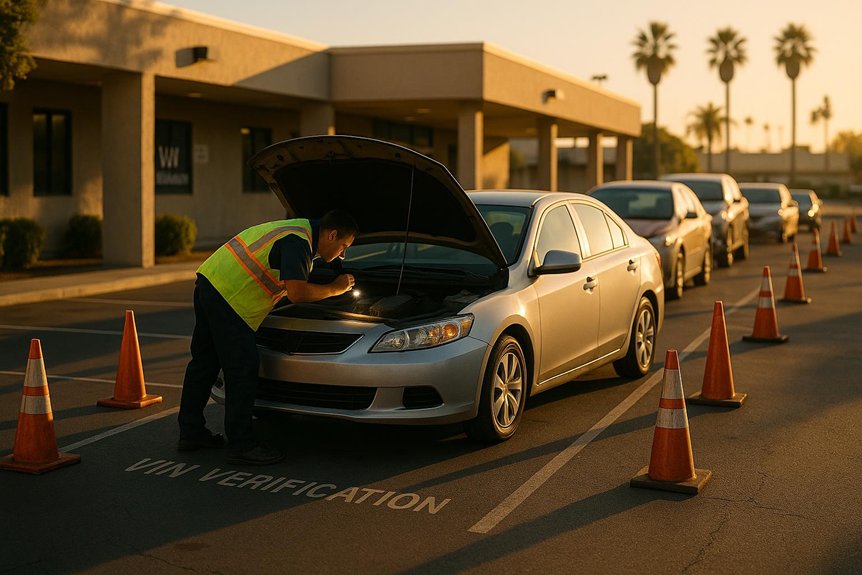
Before your DMV parking lot VIN verification, bring a valid photo ID, title or out‑of‑state registration, proof of insurance, bill of sale, and your appointment confirmation. Clean the windshield, dashboard, and door‑jamb VIN label, unlatch all doors, and make sure the hood and trunk open. Follow “VIN Verification” signs, queue in the inspection lane, and keep paperwork handy. Inspectors will compare VIN plates, check for tampering, and may ask you to turn wheels or open panels.
What To Bring for On-Site VIN Inspection
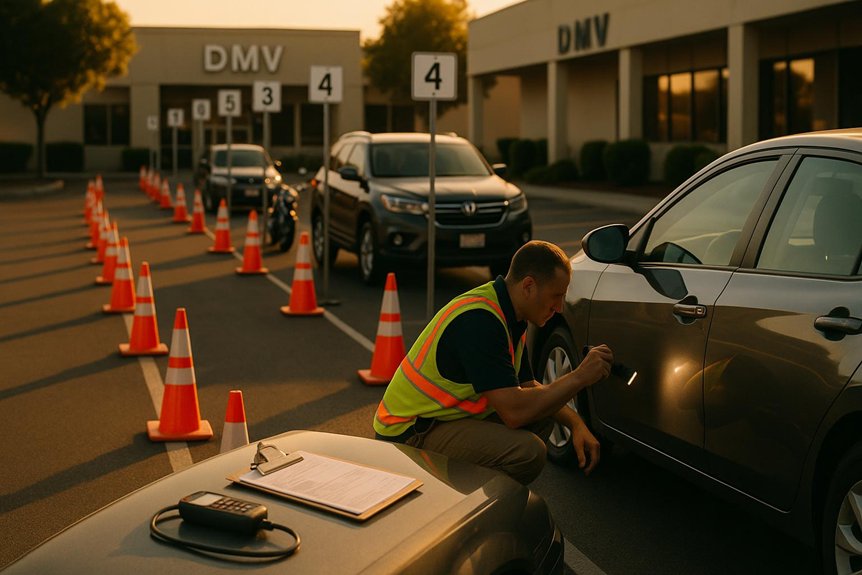
Before you head to the inspection site, gather the essentials: a valid photo ID, the vehicle’s current title or out-of-state registration, proof of insurance (if required in your state), and any bill of sale or purchase documents.
Bring your appointment confirmation, printed or on your phone, plus any DMV forms your state requires for VIN verification.
Have payment ready—card, check, or cash—based on local rules.
Pack a pen, a phone with photos of key documents, and a small notepad.
If someone else is bringing the vehicle, carry a notarized authorization.
Keep everything in one folder so you move smoothly and feel prepared.
The inspector will record details on the REG31/VIN verifier form, including the vehicle year, make, model, and VIN to confirm it matches your title.
Preparing Your Vehicle Before You Arrive
With your documents squared away, turn your attention to the car itself. Clean the windshield and dashboard so inspectors can see the VIN plates clearly. Wipe the driver’s door jamb and make certain the VIN sticker is legible. Unlock all doors and disable child locks.
Pop the hood latch to confirm it works smoothly. Check that the trunk opens if a secondary VIN is inside. Remove bike racks, covers, and clutter that block plates or labels. Bring a small flashlight. Guarantee plates are visible and tires aren’t blocking curb access. Have keys handy, fuel in the tank, and remain ready to assist respectfully. If your vehicle is 1980 or newer, ensure the Federal Safety label is intact and visible, as vehicles without this label cannot be verified.
Where to Park and How the Curbside Check Works
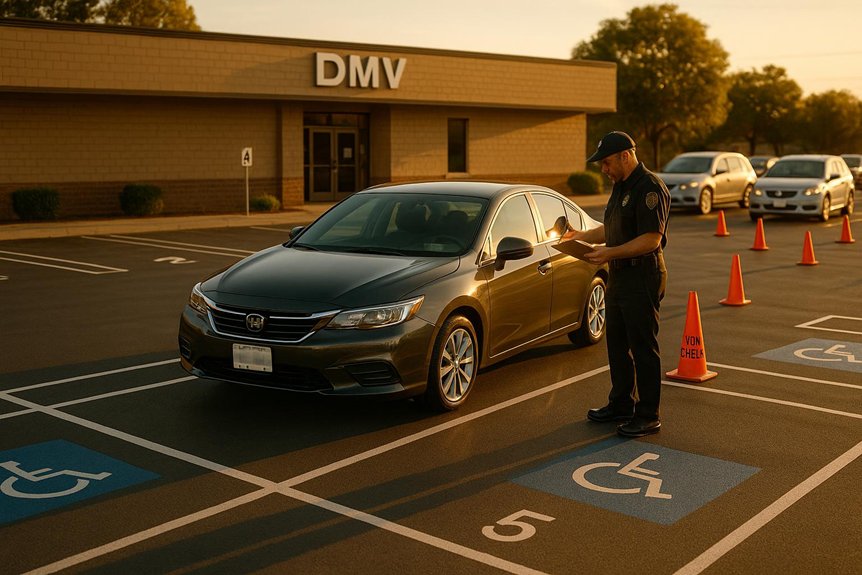
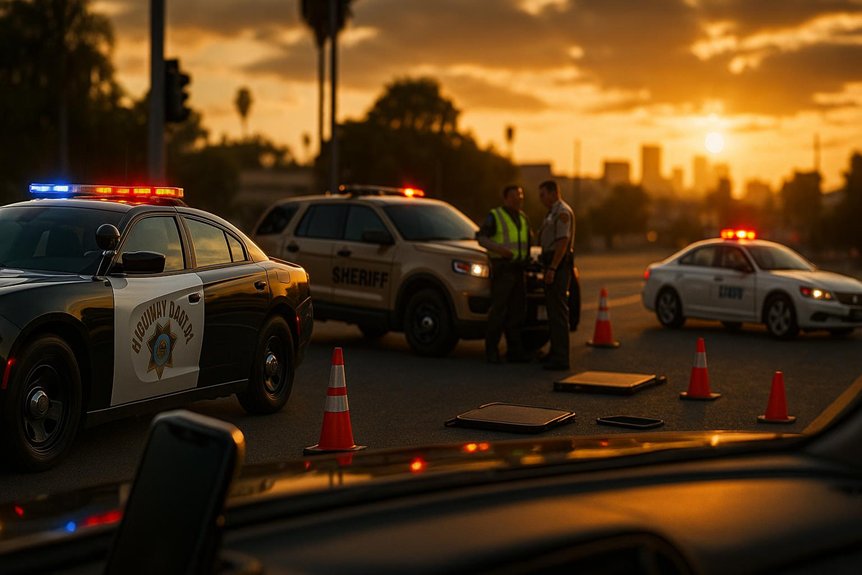
Two simple choices guide parking: follow the DMV’s posted “VIN Verification” signs or queue in the designated inspection lane. You’ll see cones or arrows leading you; stay in your lane and keep your engine running unless directed otherwise. Park where attendants wave you in, leave space for doors to open, and keep your ID and paperwork within reach.
During curbside check-in, an attendant approaches your window, confirms your appointment, and verifies your plate and basics. You’ll stay in the car unless told to step out. Follow brief hand signals, shift to park, and pop the hood or hatch only when asked. This physical inspection confirms your vehicle existence and ensures the VIN matches your title. You’re in good hands.
What Inspectors Look For and How They Verify
Expect a focused, step-by-step check of identity and tamper evidence. You’ll greet the inspector, share your ID and paperwork, and stand by while they match your documents to the vehicle.
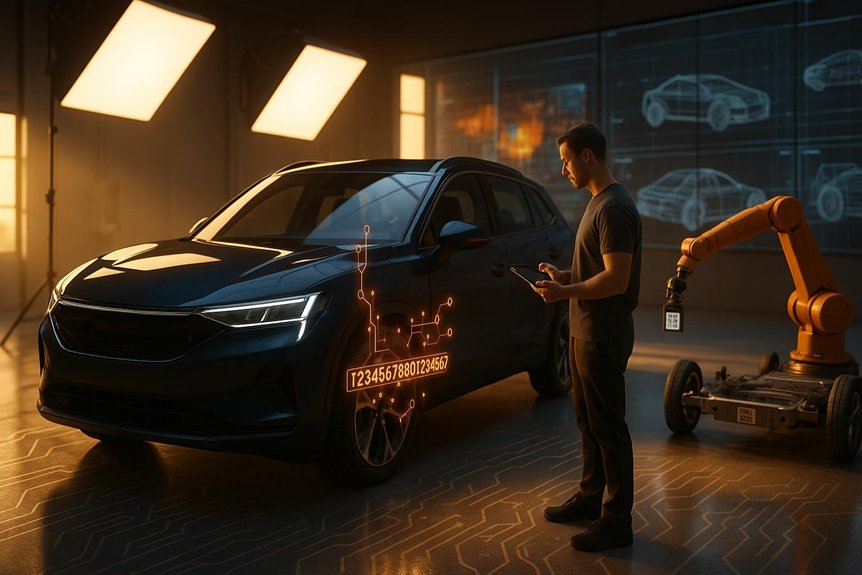
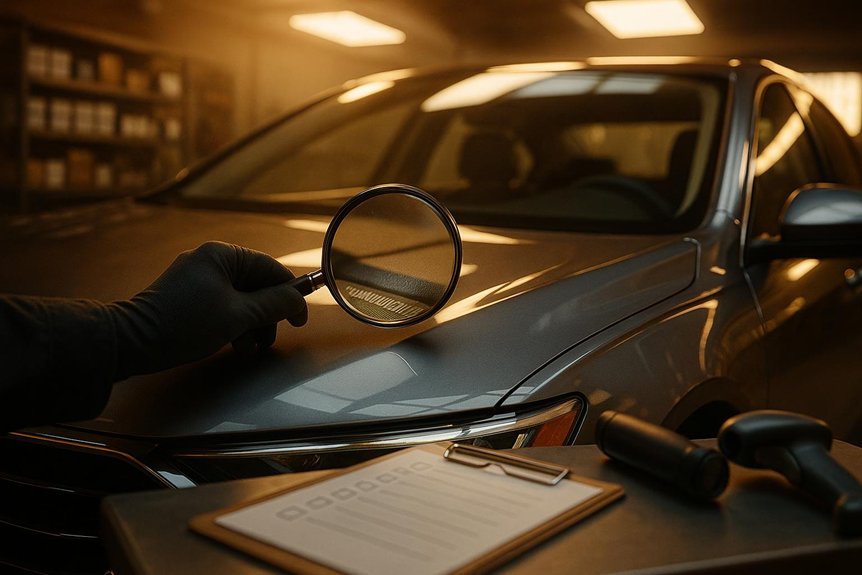
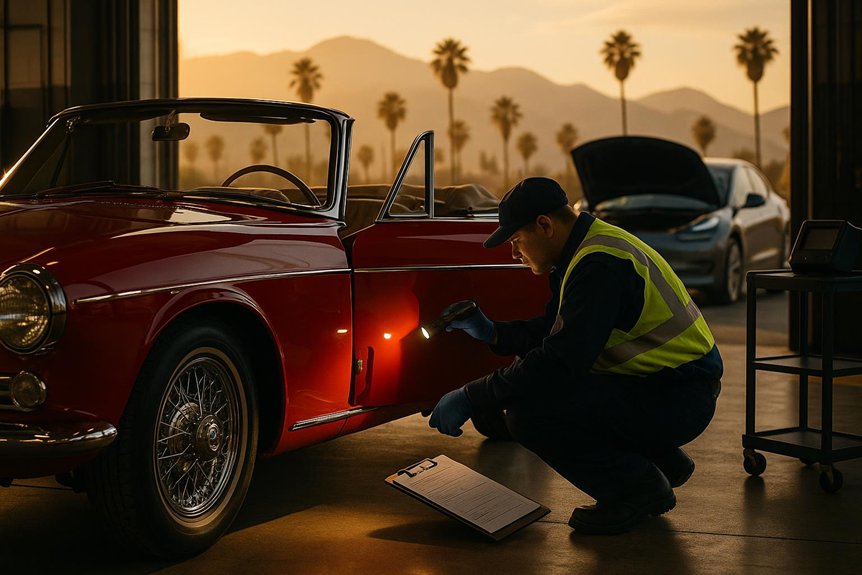
They’ll locate every VIN plate or sticker—dash, door jamb, engine bay, frame—and compare characters, spacing, and fonts. They’ll scan for rivet style, adhesive residue, scratches, repaint lines, or warped labels.
They’ll note secondary identifiers: emission labels, build plates, odometer reading, and federal certification decals. If something’s obscured, they’ll ask you to open panels or turn wheels.
When numbers align and no tampering appears, they record results and confirm completion.
Common Mistakes That Delay Your Visit and How to Avoid Them
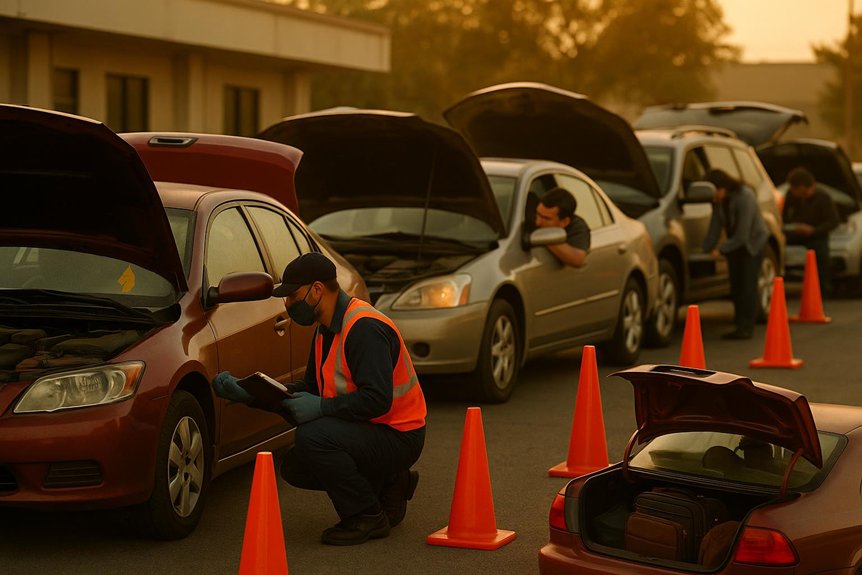
Nine avoidable slip-ups cause most VIN verification delays: showing up without the title or out-of-state registration, bringing expired or mismatched IDs, arriving with a dirty or blocked VIN plate, low tire angle that hides the frame stamp, dead battery or unlatched hood, aftermarket tint or plate covers obscuring labels, missing smog/emissions sticker, unreadable odometer, and no appointment where required.
You’ve got this. Pack the title/registration and valid ID. Clean VIN plates and labels. Park with wheels turned out. Charge the battery and disengage the hood. Remove covers that block labels. Check emissions and odometer readability. Book appointments early. Arrive united, ready, and confident.
Frequently Asked Questions
Can Someone Else Bring My Vehicle for the VIN Verification?
Yes, someone else can bring your vehicle for the VIN verification, as long as they have the keys and required documents. You’ll still need to be reachable. Coordinate details together so everything feels smooth, supportive, and community-minded.
Do Motorcycles and Trailers Follow the Same Curbside Process?
Yes, motorcycles and trailers use the same curbside process. You’ll park in the designated inspection area, bring ID and paperwork, stay with your vehicle, and follow staff directions. If requirements differ locally, they’ll guide you kindly.
What Happens if It Starts Raining During Verification?
If it rains, you’ll pause or move to a sheltered lane. Staff guide you, prioritize safety, and keep your place. Bring documents inside a waterproof sleeve, stay with your vehicle, and follow directions so everyone’s verification continues smoothly.
Is There a Fee for Parking Lot VIN Checks?
Yes, many DMV locations charge a small VIN verification fee; parking’s usually free. You’ll pay at the window or kiosk. Check your state’s DMV page for exact pricing, accepted payments, and any fee waivers. You’ve got this.
Can I Reschedule if I’M Running Late to the DMV?
Yes, you can reschedule if you’re running late. Use the DMV’s online portal or call ahead. Don’t stress—you’ve got options. Grab the next available slot, confirm the new time, and bring your documents so everything flows smoothly.