
Lost REG 31 Form: Getting Replacement Verification Documents
October 18, 2025
Multiple VIN Locations: Which One Is Primary?
October 18, 2025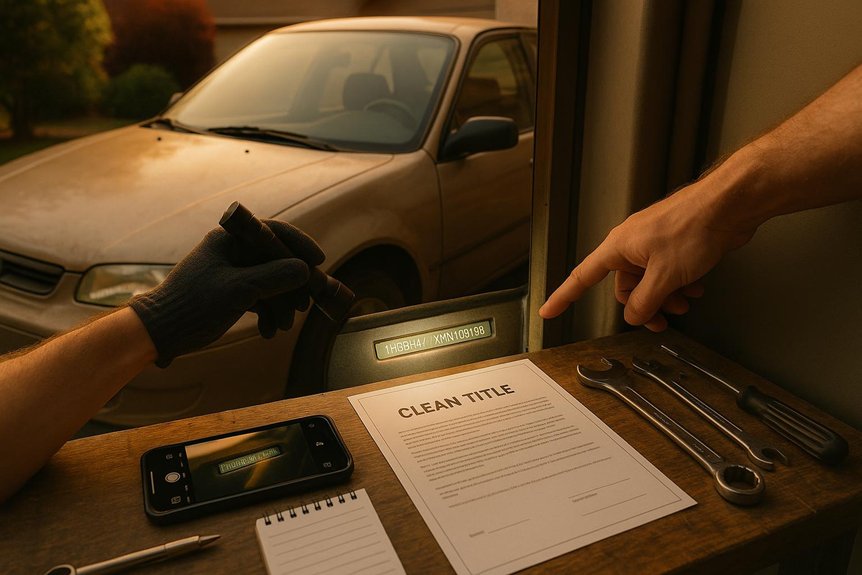
If your VIN doesn’t match the title, confirm the true VIN on the car: check the windshield plate, driver’s door jamb, frame/firewall, and engine areas. Photograph each location and gather your title, registration, bill of sale, ID, insurance, lender docs, and maintenance records. Book a DMV visit, complete VIN correction/inspection forms, pay fees, and keep receipts. Involve police if tags look tampered or theft is suspected, or hire a title specialist for complex cases. Here’s how to proceed confidently.
Common Causes of VIN–Title Mismatches
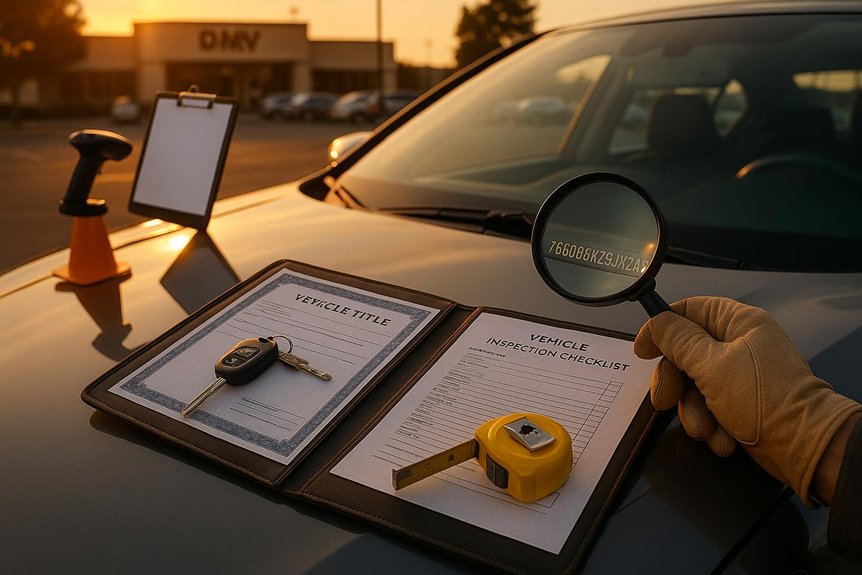
When a vehicle’s VIN doesn’t match the title, it usually traces back to simple, fixable issues. You’re not alone—these mismatches happen more than you’d think.
Common causes include data-entry errors at the DMV or dealership, especially transposed numbers or mistyped letters. Aftermarket parts, like a replacement dashboard or door, can carry a different VIN tag.
Prior repairs or rebuilds may introduce conflicting paperwork. Title cloning or clerical duplication can attach another car’s number to yours. Older cars often suffer from faded or corroded plates.
Handwritten bills of sale, salvage branding, or prior owner mistakes also create gaps that confuse records. These discrepancies in VIN records across databases can be identified and corrected through proper verification procedures.
How to Verify the Correct VIN on Your Vehicle
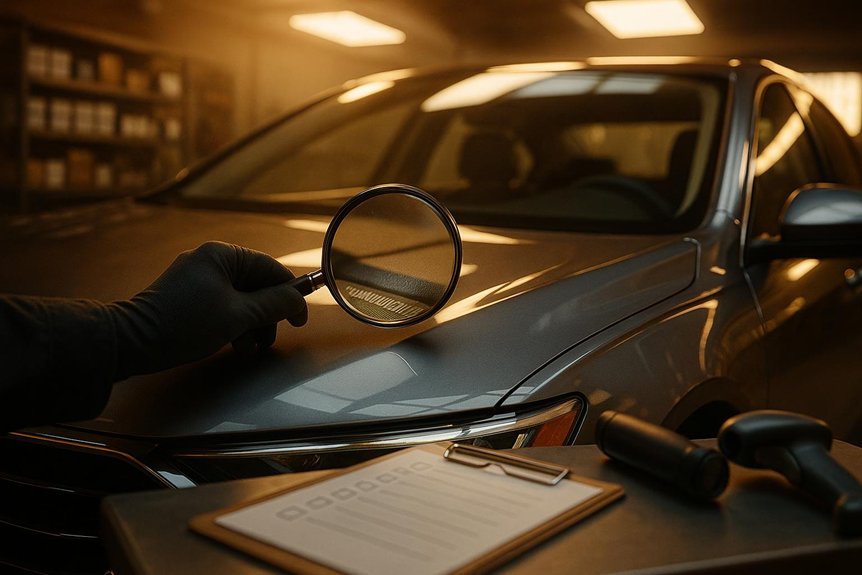
Knowing the common reasons mismatches happen, your next step is to confirm the vehicle’s true identity by checking every place the VIN appears. Start at the windshield plate on the driver’s side, then the driver’s door jamb label. Pop the hood to find the stamped frame or firewall VIN.
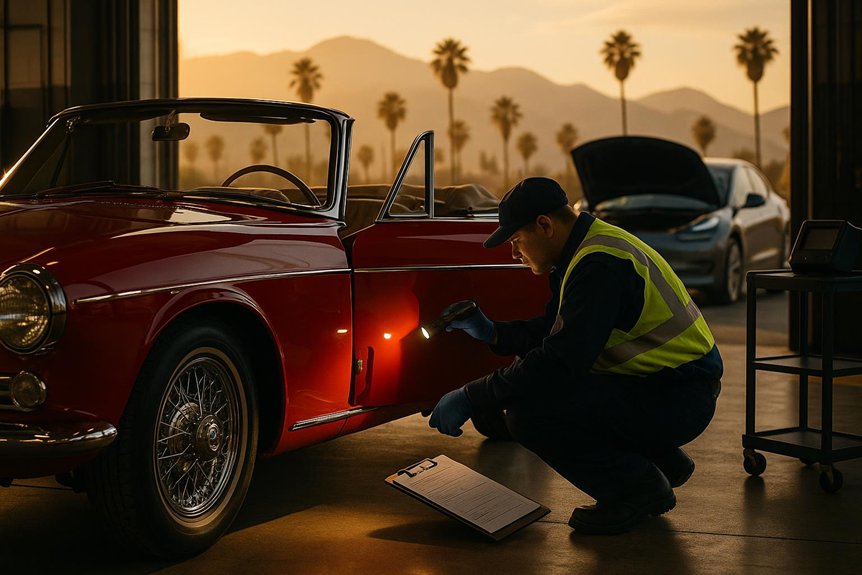
Check the engine block and front strut tower areas if present. Look in the rear wheel well or trunk floor on some models. Compare characters one by one—watch 0 vs O, 1 vs I. Note any tampering: loose rivets, scratched plates, mismatched fonts, uneven stamp depth, or paint disturbances. Document findings carefully. If you need assistance confirming your vehicle’s identity, professional VIN verification services can provide expert validation using state-of-the-art technology and comprehensive databases.
Documents and Records to Gather Before You Act
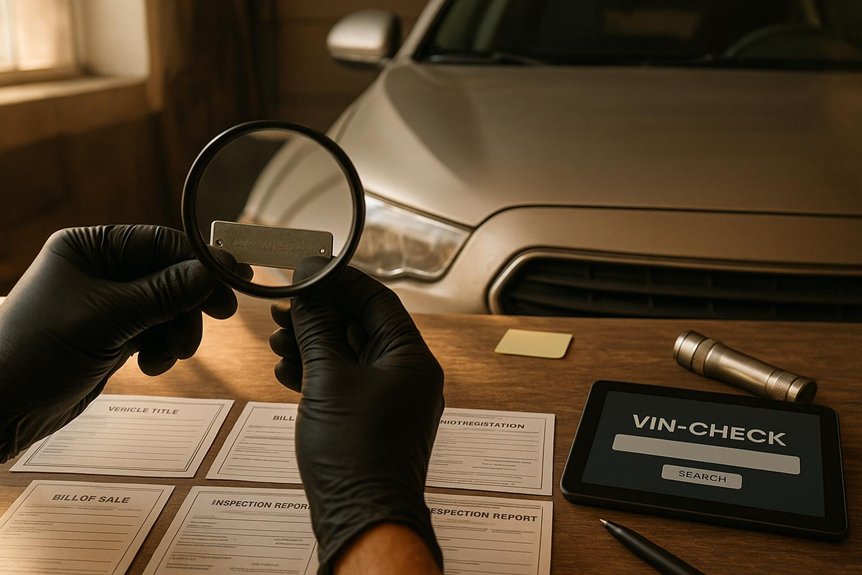
Before you call the DMV or confront a seller, gather every document that ties the car to its identity. You’re building a clear, shared picture, so pull the title, registration, bill of sale, and any prior titles. Add your driver’s license, insurance card, and lender paperwork. Print photos of each VIN location and the plate, plus close-ups of any mismatches.
Collect maintenance records, emissions or safety inspection reports, recall letters, and warranty documents. Include auction sheets, dealer buyer’s order, window sticker, and Carfax/AutoCheck. Save emails, texts, voicemails, and ads. Keep originals safe; make legible copies and a single, chronological packet to present confidently. If your title shows a different VIN than the one stamped on your vehicle, you’ll need a VIN verification to correct the discrepancy and confirm physical possession for DMV records.
Step-By-Step Process to Resolve With the DMV
Although every state’s procedure varies, you’ll follow a predictable sequence to fix a VIN/title mismatch through the DMV: verify each VIN on the vehicle and your documents, schedule an appointment, and bring your complete packet.
At check-in, explain the discrepancy calmly and ask for a VIN inspection or correction form. Complete the forms neatly. Present your ID, title, registration, bill of sale, and any supporting records. If required, let the clerk or inspector confirm the VIN on-site. Pay correction fees and request a receipt. Review the DMV’s temporary paperwork. Track your case online.
When the corrected title arrives, confirm every digit.
When to Involve Law Enforcement or a Title Specialist
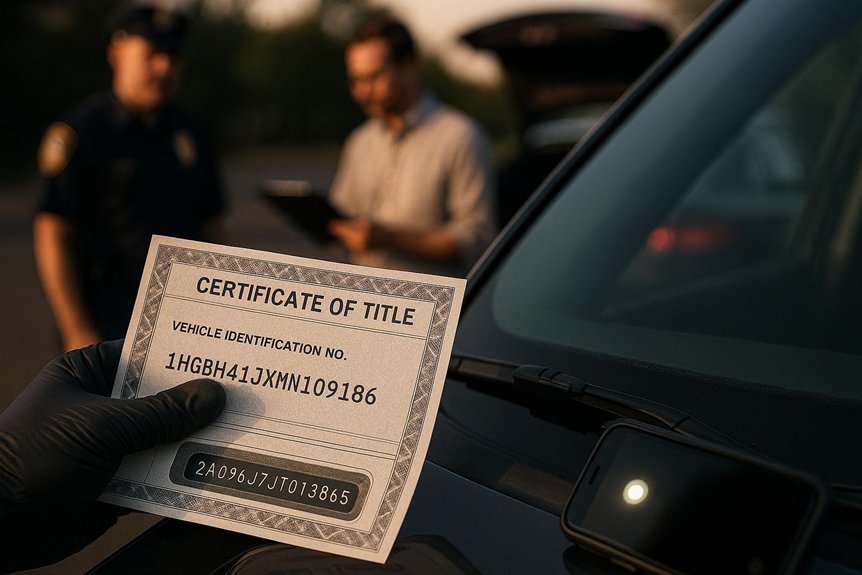
If the DMV hits a wall or the mismatch hints at more than a clerical error, it’s time to bring in backup. Loop in law enforcement when the VIN plate looks tampered, numbers are scratched, parts don’t match, or the car’s history pings as stolen. Don’t confront sellers; let officers handle it and request an incident number.
Contact a licensed title specialist when records are messy, states are involved, or you need bonded title guidance. They’ll decode paperwork, coordinate with agencies, and document your good-faith steps. Keep copies, timelines, and seller communications. You’re not alone—lean on experts to protect your ownership path.
Frequently Asked Questions
How Does a VIN Mismatch Affect Insurance Coverage or Claims?
It can delay or deny coverage and claims because insurers can’t verify the car. You risk cancellation, higher premiums, or fraud flags. Report it immediately, share documents, request corrections, and keep records so your protection and community trust stay solid.
Can I Sell or Trade a Car With a VIN Mismatch?
You generally can’t sell or trade it until you fix the mismatch. Dealers and buyers reject it. Verify the true VIN, correct the title with DMV, keep repair documents, then disclose transparently. Your honesty builds trust and smooths everything.
What Costs Should I Expect to Resolve a VIN Discrepancy?
Expect title correction fees ($15–$60), VIN inspection ($0–$100), notary ($10–$25), replacement title ($20–$50), possible bond ($100–$500+), and admin/time costs. You’ll also cover mechanic verification if needed ($50–$150). You’ve got this—we’re in it together.
How Long Does Vin–Title Correction Typically Take?
It typically takes 2–8 weeks. You’ll move faster if you gather proof early, schedule DMV/state inspections, and respond quickly. Expect delays with out-of-state records or liens, but you’ve got this—stay organized, ask questions, and lean on community support.
Will a VIN Mismatch Appear on Vehicle History Reports Permanently?
No, a VIN mismatch doesn’t always appear permanently. Once corrected and documented, major services often update reports. You should keep proof, request report updates, and monitor periodically so your records reflect your car’s true story together.