
Trust and Estate Vehicles: Inherited Car VIN Verification
October 18, 2025
Company Car to Personal: VIN Verification for Vehicle Transfer
October 18, 2025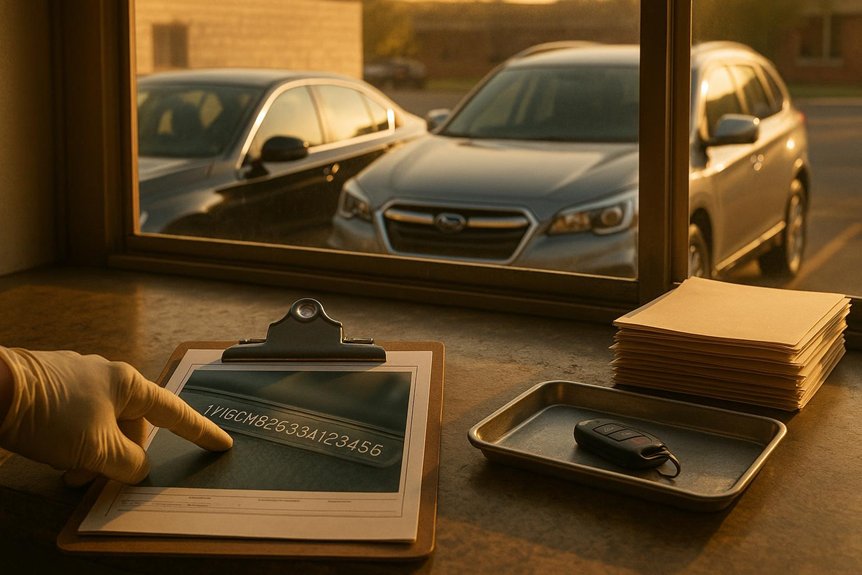
Verify each vehicle’s 17‑character VIN on the dash, door jamb, and insurance card, photograph it, note mileage, and confirm with the lender/insurer to avoid disputes. Plan the title shift from joint to single name, matching your court order and updating insurance the same day. Settle or refinance any loan, get a lien release, and keep payoff records. Follow your state’s DMV steps, fees, forms, and any VIN inspection. Track deadlines with a checklist to stay aligned and discover what’s next.
Understanding VIN Verification in a Divorce Context
Even if emotions run high, pause to verify each vehicle’s VIN before you negotiate or file. You’re safeguarding trust and keeping your community of supporters on the same page.
Check the 17-character VIN on the dashboard plate, driver’s door jamb, and insurance card. Make sure all records match exactly—no swapped digits, missing characters, or altered plates. Photograph the VIN, note mileage, and keep copies of registration and maintenance logs.
Ask your lender or insurer to confirm the VIN they’ve on file. If something doesn’t match, flag it immediately. You’ll prevent disputes, protect equity, and honor the fairness you both deserve.
In California, a physical inspection by a certified verifier ensures the VIN on your vehicle matches the title, which is essential when transferring ownership after a divorce settlement.
Title Transfer Basics: What Changes When You’re Splitting Assets
One key shift in a divorce is how vehicle titles move from joint ownership to a single name—and what that means for liability, taxes, and timing. You decide who keeps the car, then update the title to reflect that person alone.
Removing a name clarifies responsibility for insurance, tickets, and registration fees. You’ll likely sign a release or bill of sale and complete your state’s title application. Check community or equitable distribution rules to match the court order.
Mind deadlines; late filings trigger penalties. Keep copies of orders and forms. If you’re transferring an out-of-state vehicle, you’ll need the original title or registration card along with smog certification for most gas-powered vehicles. Finally, coordinate insurance updates the same day the title changes.
Handling Loans and Liens Before You Move the Title

Before you change a name on the title, tackle any loan or lien tied to the vehicle. Confirm the current payoff amount, who’s responsible, and how you’ll satisfy or refinance it.
Call the lender together if possible; shared conversations reduce surprises and keep everyone aligned. If one of you keeps the car, request a refinance in that person’s name. If you’re selling, arrange payoff at closing and obtain a lien release.
Keep records: payoff letter, release, and confirmation of account closure. Don’t hand over keys or sign transfer lines until the lienholder clears the title. Protect each other’s credit throughout.
Once liens are satisfied, schedule a VIN verification service to document the vehicle’s identity and ensure all paperwork matches before completing the title transfer.
State-Specific Rules, Fees, and Required Forms
Although divorce sets the stage, your DMV sets the rules. You’ll follow your state’s path for VIN verification, fees, taxes, and signatures. Some states require a VIN inspection for out‑of‑state titles or older vehicles; others don’t. Expect title transfer fees, possible sales or use tax, and a notarized title if your state mandates it.
Check your DMV’s divorce-specific guidance. You may need a certified divorce decree, completed title application, odometer disclosure, proof of insurance, photo ID, and a release of interest from your ex. Bring any required lien release. Pay with accepted methods. Use your DMV’s checklist so you feel prepared together.
Timing, Documentation, and Steps to Prevent Disputes
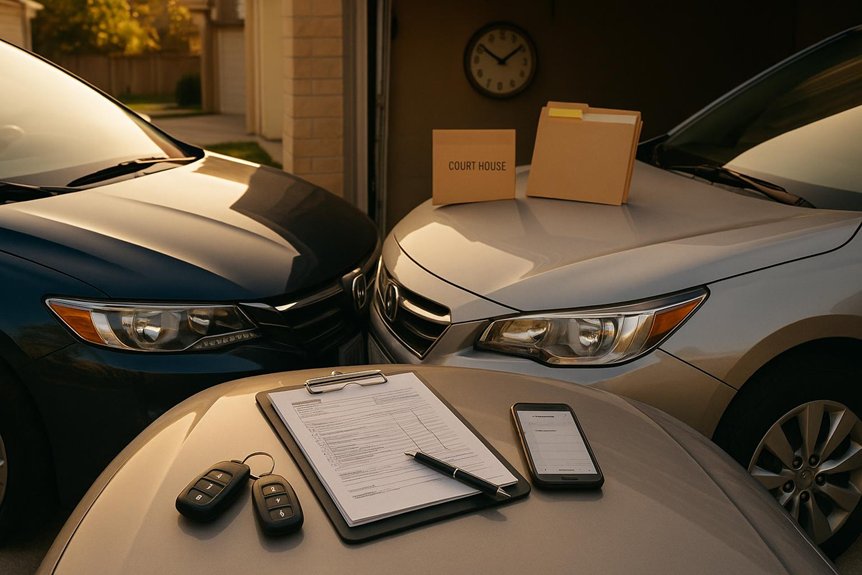
Start early and lock down the paper trail to keep the transfer smooth and drama‑free. Mark deadlines on a shared calendar: VIN inspection date, title signing, notary visit, DMV submission, insurance change, and plate return if required.
Gather the title, lien release, settlement order, IDs, odometer disclosure, and bill of sale. Confirm VINs match on the vehicle, title, and forms. Sign in ink the DMV accepts, with witnesses or notarization as required. Keep scanned copies in a shared folder.
Notify lenders and insurers the same day. Use a simple checklist and written confirmations. If conflict flares, pause and document. You’re building trust.
Frequently Asked Questions
How Do We Value the Vehicle for Equitable Distribution Before Transfer?
Use fair market value: get a professional appraisal or use guides like Kelley Blue Book and NADA, considering mileage, condition, options, and local market. Document everything, agree on a number, and share costs to keep things cooperative.
Who Pays Insurance During the Transition and After Title Transfer?
You typically keep insurance until the title changes; afterward, the new owner pays. Confirm this in your settlement. Notify your insurer promptly, update garaging address, and remove/add drivers. Ask for written proof to keep everyone protected and connected.
Can We Swap Vehicles Instead of Transferring a Single Car Title?
Yes, you can swap vehicles. You’ll each retitle and register the other’s car, update insurance, and document the exchange in your settlement. Coordinate loans or liens, taxes, and emissions. Communicate clearly so everyone feels heard, supported, and respected.
How Do We Handle Personalized Plates and Registration During Divorce?
You keep the personalized plates if state rules allow; otherwise, surrender or transfer them. Update registration to the awarded owner promptly. Notify DMV and insurer, sign release of interest, and coordinate fees. Document everything in your divorce decree.
What Happens if the Vehicle Was a Gift or Inheritance?
If the vehicle was a gift or inheritance to you alone, it’s usually separate property. You’ll keep it, but you must prove it. Gather the title, gift letter, will, or trust, and maintain clear documentation.