
VIN Number Decoder: Understanding All 17 Characters
October 18, 2025
NMVTIS Database: What VIN Verifiers Actually Check
October 18, 2025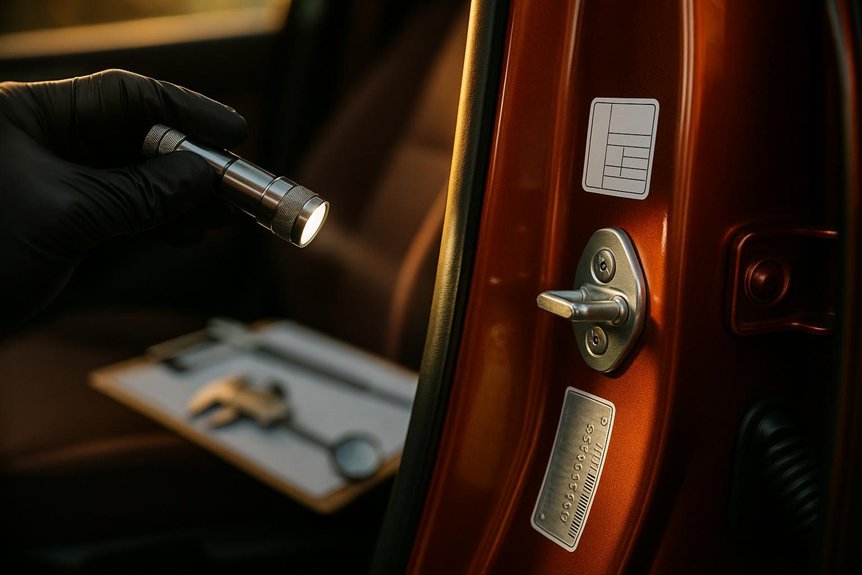
FMVSS set U.S. vehicle safety rules for crash avoidance, crashworthiness, and post-crash integrity, and NHTSA enforces them. You must certify vehicles and verify the 17‑character VIN (WMI, VDS, VIS) with the check digit to confirm the maker, type, restraints, and build details. Match the VIN to the certification label, build date, and FMVSS statements, and use NHTSA’s VIN decoder. For imports, confirm admissibility and labels. Getting this right avoids delays, penalties, and registration issues—and there’s more to apply.
Understanding FMVSS: Scope, Structure, and Enforcement
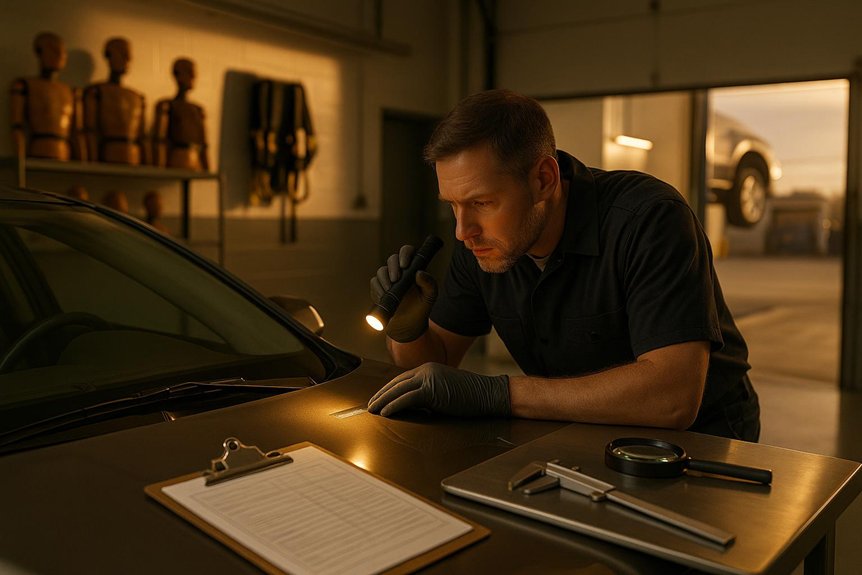
Even if you’ve never read a regulation, you’ve felt the impact of the Federal Motor Vehicle Safety Standards (FMVSS). You share the road with millions, and FMVSS keeps that community safer. You’ll find its scope covers crash avoidance, crashworthiness, and post-crash integrity across vehicles and equipment.
You navigate a clear structure: numbered standards set performance benchmarks, while test procedures verify results. NHTSA writes the rules, investigates defects, and enforces compliance through audits, penalties, and recalls. Manufacturers must certify; you benefit when they do. When issues arise, agencies coordinate fixes quickly. Proper VIN verification ensures that each vehicle meets these federal standards and maintains accurate documentation throughout its lifecycle.
Decoding the VIN: Components, Standards, and Global Alignment
After grasping how FMVSS sets and enforces safety performance, you can read its companion on every vehicle: the 17-character Vehicle Identification Number. You decode it in three parts. The World Manufacturer Identifier (positions 1–3) tells you who built it and where. The Vehicle Descriptor Section (4–9) outlines model, body, restraint, engine, plus a check digit that validates integrity. The Vehicle Identifier Section (10–17) covers model year, plant, and serial number.
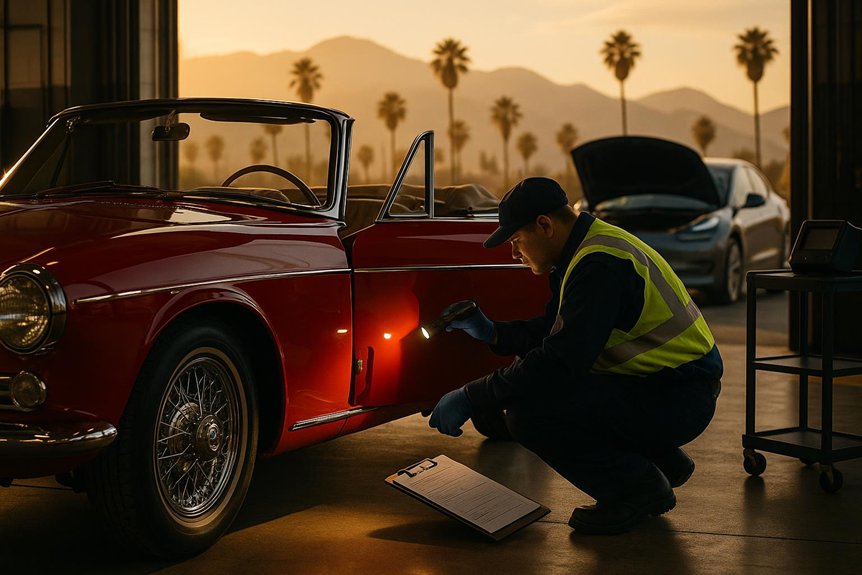
You’ll see ISO 3779/3780 align global formats, while regional rules refine details. Using trusted decoders and manufacturer references, you confirm accuracy and speak the same language as safety-minded peers. When registering an out-of-state vehicle in California, a VIN verification serves as a DMV inspection that physically confirms the vehicle identification number matches the title to prevent theft and fraud.
Where FMVSS Meets VIN Verification in Manufacturing and Imports
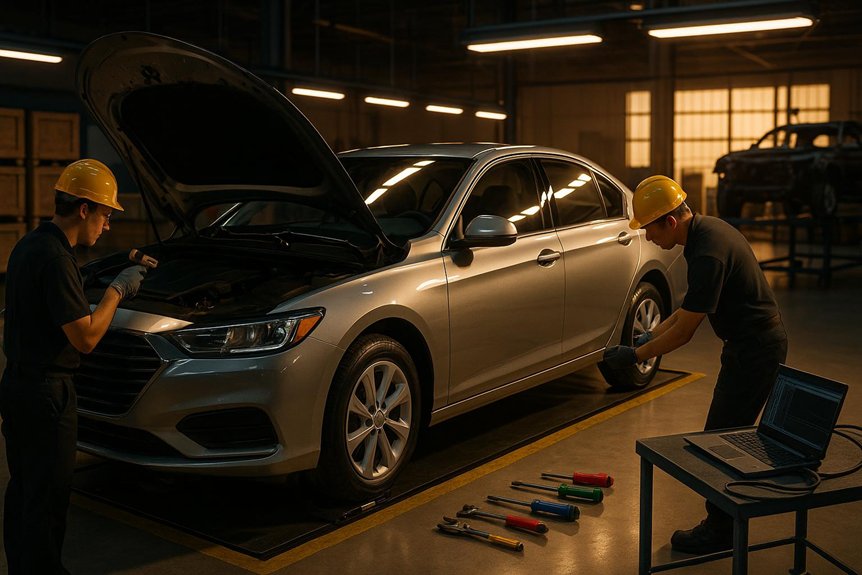
Think of FMVSS and VINs as a lock-and-key pair that governs how vehicles enter and move through the U.S. market. You use the VIN to signal identity, origin, and build details; you rely on FMVSS to prove the vehicle’s safety pedigree. Together, they align production intent with regulatory trust.
In manufacturing, your VIN encodes the certifying manufacturer, vehicle type, and restraint systems that map to FMVSS scope. In imports, your VIN supports declarations, conformity labels, and bond releases. When your VIN structure matches FMVSS applicability, you reduce delays, penalties, and rework. That’s how you show you belong in a compliant, transparent supply chain. Vehicles 1980 or newer without a Federal Safety label cannot pass VIN verification in California, creating another checkpoint that ties federal manufacturing standards to state-level registration compliance.
Practical Steps for Dealers, Inspectors, and Buyers to Ensure Compliance
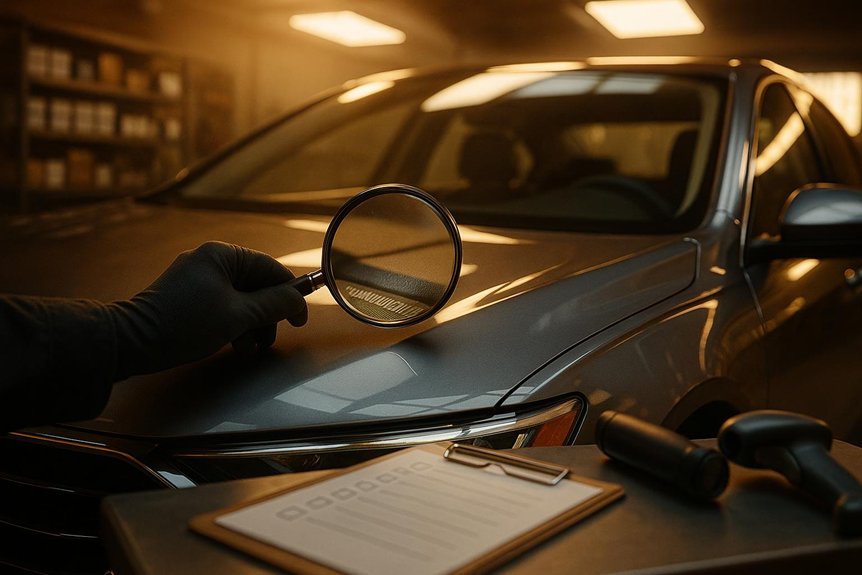
While compliance can seem technical, you can manage it with a clear checklist: confirm the VIN’s structure (WMI, VDS, VIS) against NHTSA’s VIN decoder, match the VIN to the certification label and FMVSS statements on the driver’s door or pillar, and verify the build date and vehicle type align with applicable standards.
Next, compare dash, windshield, frame, and title VINs; inconsistencies signal risk. Photograph labels and stamped VINs. Note any recalls and required FMVSS equipment (airbags, lighting, TPMS). For imports, confirm admissibility and any conformity work. Record who inspected, when, and what you verified. When unsure, pause the deal. You protect everyone—including yourself.
Tools, Databases, and Documentation Workflows for Traceability and Audits
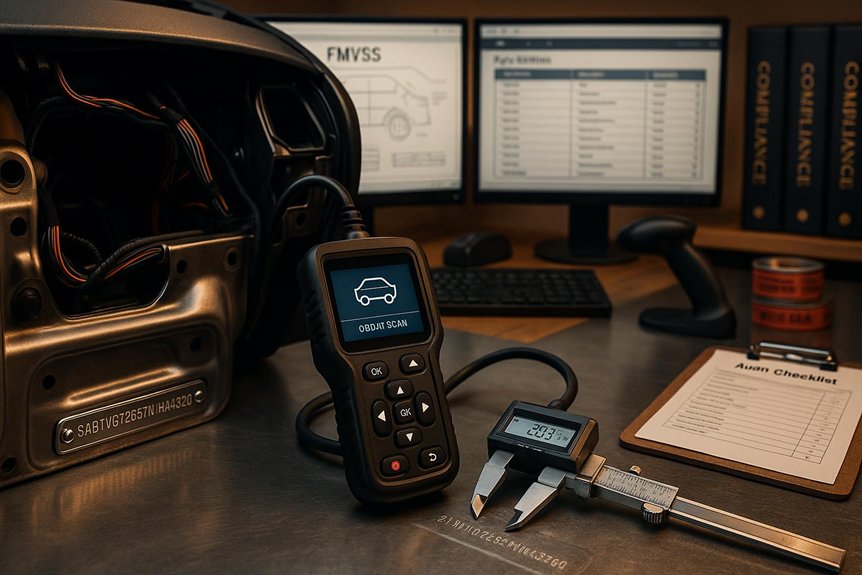
Because audits demand a clear trail, you’ll lean on a stack of tools that capture, verify, and preserve VIN and FMVSS evidence. Start with authoritative databases: NHTSA’s VIN decoder, manufacturer databases, NMVTIS, and recall portals. Use OCR and barcode scanners to collect VINs, then validate against build sheets and certification labels.
Centralize everything in a compliant repository—SharePoint, Google Drive, or a QMS—with version control and retention rules. Map each VIN to FMVSS references, test results, photos, and signatures. Automate timestamps and access logs. Standardize checklists and naming conventions. Run periodic internal audits, flag gaps, and document fixes so your team stands audit-ready together.
Frequently Asked Questions
How Do FMVSS Changes Affect Classic or Antique Vehicle Restorations?
They shape what you can legally drive and how you restore. You’ll research era-correct standards, retrofit safety items sensitively, document modifications, and coordinate inspections. Prioritize authenticity, reliability, and community wisdom so your build feels welcomed, compliant, and road-ready.
What Are the Penalties for Fraudulent VIN Plate Replacement?
You face fines, criminal charges, possible jail time, and vehicle seizure for fraudulent VIN plate replacement. Don’t risk it—stick with lawful documentation, certified inspections, and community‑trusted experts to protect your ride, reputation, and everyone’s shared passion.
How Do Recalls Interact With Grey-Market Vehicle VINS?
Recalls rarely cover grey-market VINs; you’ll often lack official eligibility. You can check manufacturer databases, but they might refuse service. Work with community-trusted import specialists, document equivalents, and ask for goodwill repairs or regional recall equivalents to stay supported.
Can Aftermarket Modifications Invalidate FMVSS Compliance Post-Sale?
Yes, certain aftermarket modifications can invalidate compliance if they affect safety systems. You should choose certified parts, keep documentation, and verify state rules. When in doubt, consult a trusted shop to guarantee, secure, or ascertain your build stays compliant and welcomed.
How Do State-Level Inspections Diverge From Federal VIN Verification Rules?
They diverge because states stack extra checks—emissions, safety items, odometer, theft and salvage history—on top of identity confirmation. You’ll follow local forms, timelines, and fees, and inspectors may require photos or physical audits. You’ve got this community-driven process.