VIN Verification Vs Carfax: What California DMV Actually Requires
October 18, 2025
What Is a VIN Verification? Complete Guide for First-Time California Residents
October 18, 2025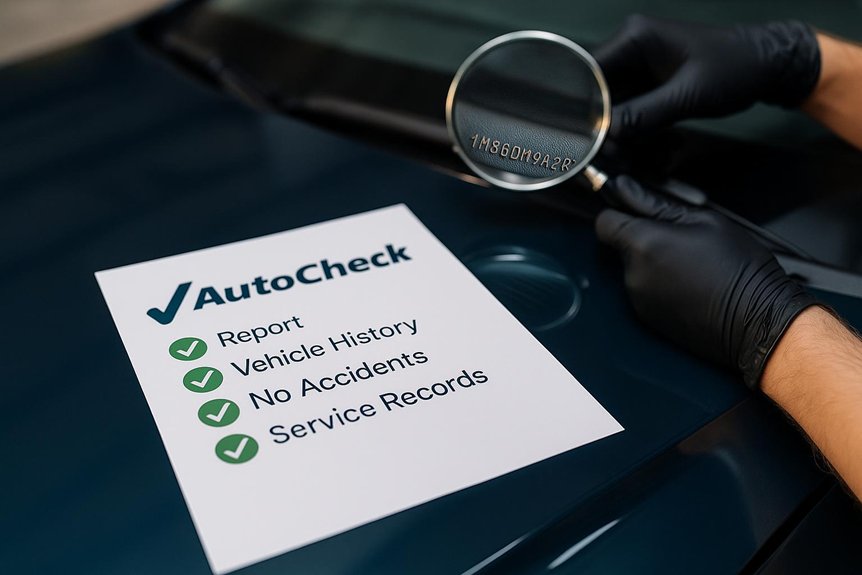
AutoCheck reports only capture officially documented incidents, missing unreported accidents, private repairs, and sophisticated fraud schemes like title washing and VIN cloning. These digital records can’t detect physical tampering signs—misaligned rivets, inconsistent fonts, or VIN plate alterations—that trained inspectors spot immediately. While AutoCheck screens for database red flags, it doesn’t verify your vehicle’s actual VIN matches its title or hasn’t been cloned from a clean history. Understanding how fraudsters exploit these specific gaps will help you protect yourself from costly mistakes.
Understanding What AutoCheck Reports Actually Cover
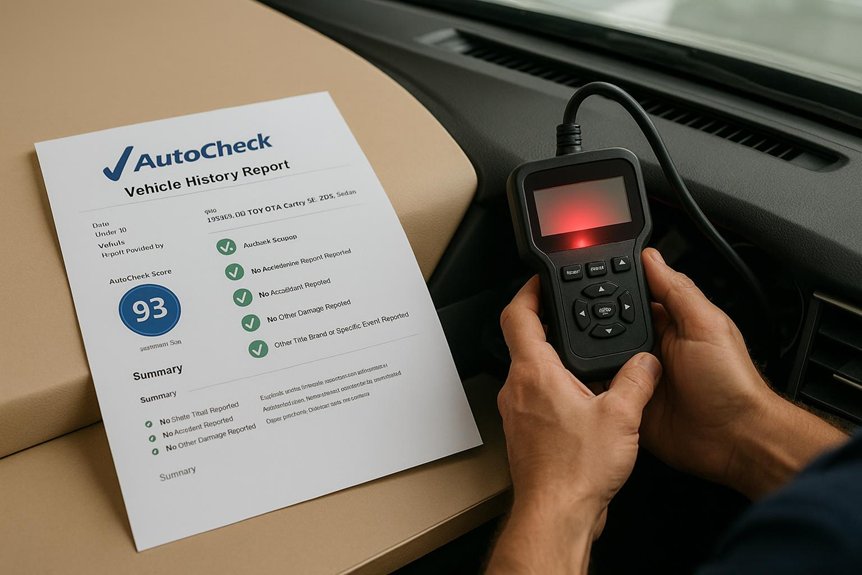
When you pull an AutoCheck report on a used vehicle, you’re getting valuable data from a massive database that compiles information from DMVs, insurance companies, and auction houses across North America. You’ll see accident history, title problems, odometer readings, and ownership transfers—all essential details that help you make informed decisions alongside fellow smart buyers.
However, AutoCheck reports have limitations you need to understand. They only capture incidents that were officially reported and entered into their database. If a previous owner repaired damage privately or an accident wasn’t filed through insurance, it won’t appear. Similarly, title washing across certain state lines can sometimes slip through. That’s why savvy car buyers like us know that AutoCheck reports are just one piece of the verification puzzle. What these reports can’t do is confirm that the VIN matches the title through a physical inspection—a critical step that requires a trained verifier to examine the actual vehicle identification number on your car.
Common Gaps in Vehicle History Reporting Systems
Although AutoCheck and similar reporting services aggregate data from thousands of sources, significant information gaps persist across the industry. You’ll find that many accidents go unreported when police aren’t involved, leaving substantial damage invisible to these systems. Private repairs paid out-of-pocket won’t appear either, as shops aren’t legally required to report work to databases.
State reporting requirements vary dramatically, creating blind spots in vehicle histories. Some jurisdictions don’t share title information promptly, while others maintain separate systems that don’t communicate effectively. You’re also vulnerable to VIN cloning schemes, where thieves transplant stolen vehicle identities onto salvaged cars. These sophisticated frauds often bypass history reports entirely, making independent VIN verification essential for protecting yourself and your investment. A physical VIN inspection conducted by a licensed verifier confirms you’re viewing the actual vehicle described in ownership documents, catching discrepancies that database reports simply cannot detect.
How Title Washing and VIN Cloning Bypass Standard Reports
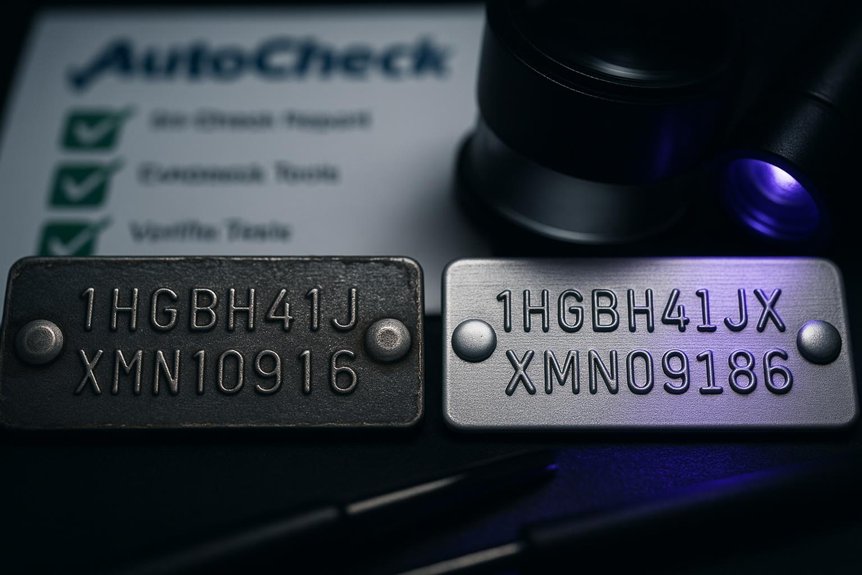
Title washing represents one of the most financially damaging schemes that standard vehicle history reports routinely miss. When fraudsters transfer a damaged vehicle’s title across state lines, they exploit inconsistencies between jurisdictions to erase salvage brands. You’ll find yourself looking at a “clean” AutoCheck report while the car’s actual history remains hidden in another state’s database.
VIN cloning poses an equally serious threat to your investment. Thieves steal the identity of a legitimate vehicle and apply it to a stolen or salvaged car. Your history report will show the clean record of the original vehicle, not the compromised one you’re examining. These sophisticated schemes specifically target the gaps between vehicle history databases and physical VIN verification, leaving you vulnerable without proper inspection. A physical VIN inspection documented on the REG31 form serves as a critical gatekeeper against these fraudulent activities by confirming the vehicle’s actual identification number matches its title documentation.
The Role of Physical VIN Inspection in Fraud Detection
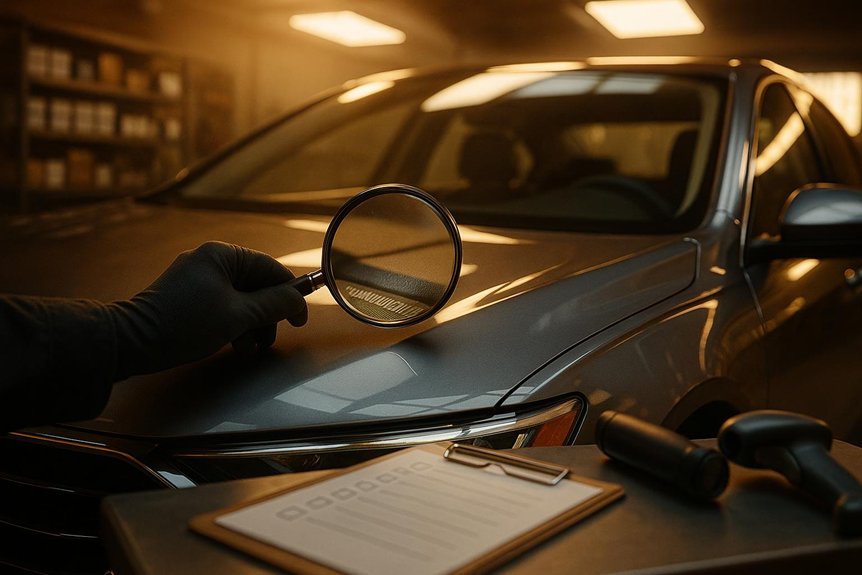
Physical VIN inspection reveals tampering that digital reports can’t detect. When you’re part of the informed buyer community, you understand that examining the actual VIN plate matters. You’ll spot signs of alteration—misaligned rivets, scratches around the plate, or inconsistent fonts—that database checks miss entirely.
Your trained eye catches what algorithms can’t: whether the VIN etched on the windshield matches the dashboard plate, if the door jamb sticker shows identical numbers, and whether any plates look suspiciously new on older vehicles. Smart buyers like you know that fraudsters physically alter VINs to match stolen vehicle reports. Professional VIN verification serves as a protective measure against illegal activities by identifying discrepancies in VIN records that might not appear in digital databases.
Combining Vehicle History Reports With Professional VIN Verification
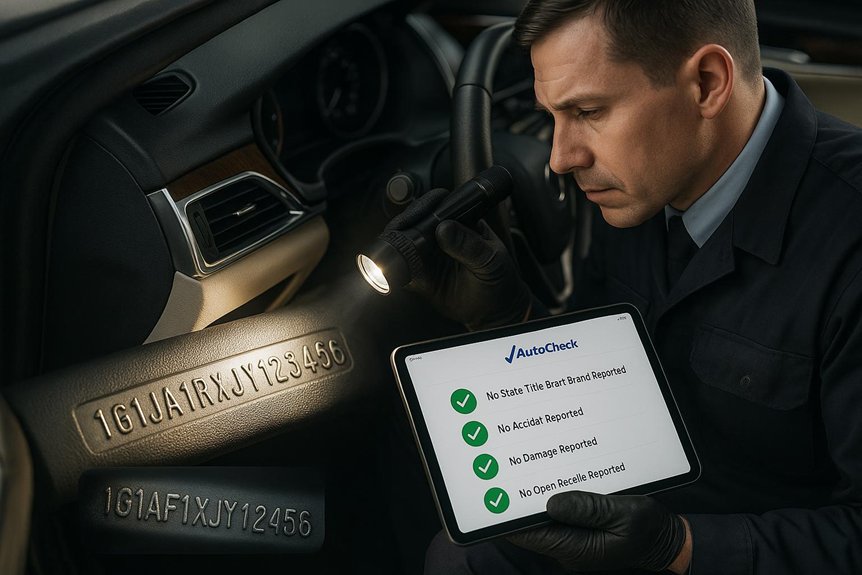
Two verification methods work better than one when protecting your investment. You’re joining thousands of smart buyers who layer AutoCheck reports with professional VIN inspections for complete vehicle verification.
AutoCheck reveals digital footprints—title transfers, accident claims, and ownership records. Professional VIN verification catches physical tampering that databases miss. Together, they create an exhaustive safety net.
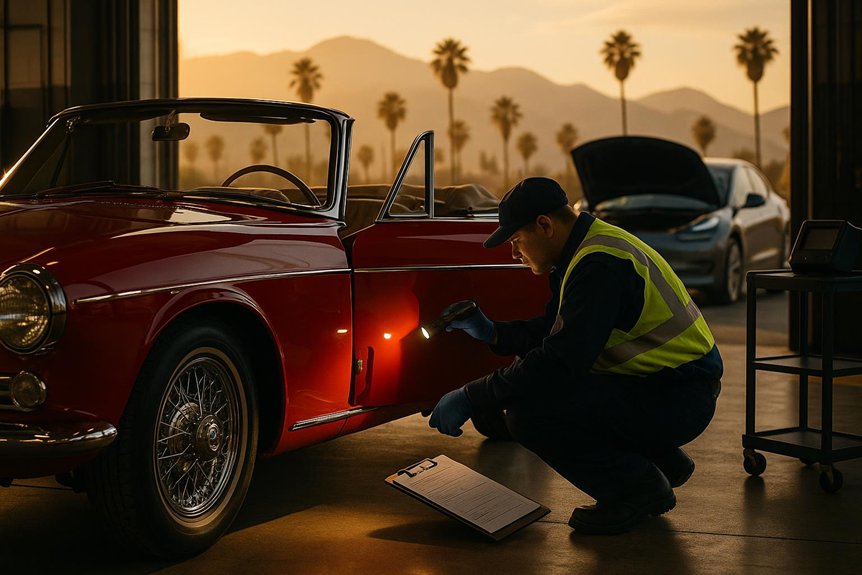
Request the AutoCheck report first to screen obvious red flags. If the vehicle passes, schedule a certified inspector to examine VIN plates, door jambs, and engine stampings. They’ll confirm the numbers match and haven’t been altered.
A professional verifier will also check the Federal Safety label status, odometer reading, and other critical vehicle identifiers during the inspection.
This dual approach costs slightly more upfront but prevents expensive mistakes. You’re not being paranoid—you’re being thorough. Real car enthusiasts know that multiple verification steps separate confident purchases from regrettable ones.
Frequently Asked Questions
How Much Does a Professional VIN Verification Typically Cost?
You’ll typically pay between $10 and $75 for professional VIN verification, depending on your location and provider. Mobile services cost more but offer convenience. Many DMV offices provide this service at the lower end of that range.
Are Autocheck Reports More Reliable Than Carfax for Detecting Fraud?
Neither AutoCheck nor Carfax is definitively more reliable for fraud detection—they’re both limited by their data sources. You’ll want to use both reports together and combine them with professional VIN verification for the most thorough, exhaustive, or extensive protection.
Can I Perform My Own VIN Inspection Without Professional Help?
You can definitely check your VIN yourself! Look for tampering signs, match dashboard and door jamb numbers, and verify they’re consistent with documentation. However, professionals spot subtle alterations you’ll likely miss, especially on high-stakes purchases.
How Long Does a Complete VIN Verification Process Usually Take?
A complete VIN verification typically takes 15-30 minutes when you’re working with a professional inspector. You’ll find the process moves quickly—they’ll check the VIN plate, documentation, and hidden numbers to verify everything matches properly.
Do Insurance Companies Require VIN Verification Before Issuing Policies?
Most insurance companies don’t require formal VIN verification upfront—they’ll typically accept your vehicle’s VIN from registration documents. However, they may request verification if there’s any discrepancy or if you’re insuring a rebuilt or salvaged vehicle.